
 E-Paper



Photos: A socially distanced hajj in Mecca— a first in modern history
The hajj, one of the world's biggest annual gatherings, has convened for the year in the Saudi Arabian city of Mecca under the shadow of an ever-present threat posed by the novel coronavirus. In past years pilgrims have faced a host of viral illnesses, with some falling sick, but a raft of measures are in place for the relatively modest number allowed to attend this year. Just 10,000 Muslims, from within Saudi Arabia have been allowed to perform the pilgrimage this year, a pale comparison to the nearly 2.5 million from last year.
Updated on: Jul 30, 2020 7:39 PM IST


Share via


Copy link

1/7
 View Photos in a new improved layout
Updated on Jul 30, 2020 7:39 PM
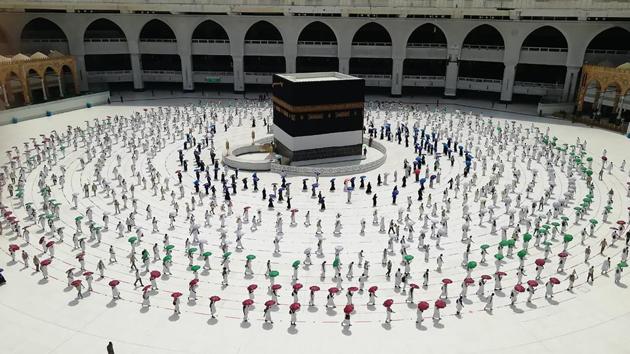
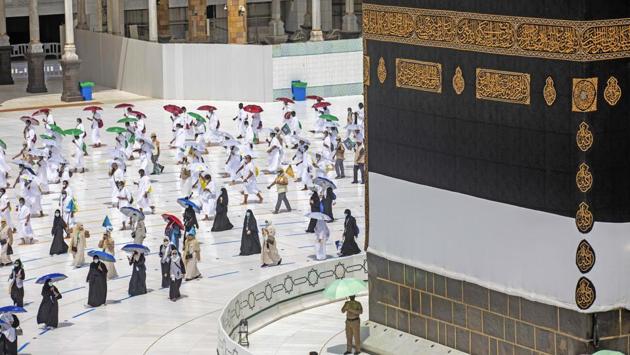
Hundreds of pilgrims circle the Kaaba, the cubic building at the Grand Mosque, while maintaining social distancing during the hajj pilgrimage in Mecca, Saudi Arabia, on , July 29. This year, for the first time in modern history, Saudi officials have drastically restricted the number of pilgrims allowed to participate and enforced strict new health measures in light of the coronavirus. (AP)
2/7
 View Photos in a new improved layout
Updated on Jul 30, 2020 7:39 PM
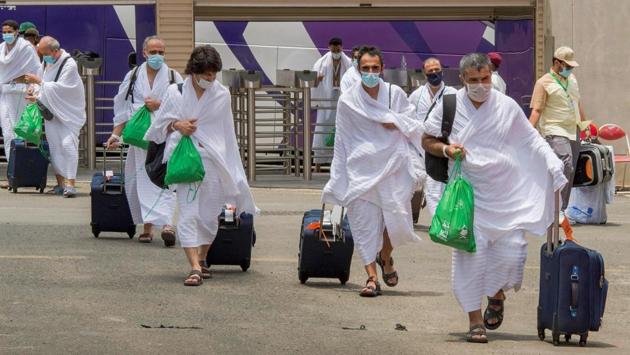
Pilgrims arrive to Mount Arafat, also known as Jabal al-Rahma (Mount of Mercy), southeast of Mecca on July 29. Just 10,000 Muslims, all resident in the Saudi kingdom, are being allowed to perform the hajj this year . That’s 0.4% of last year’s 2.5 million attendees from across the globe who converged on Mecca for one of the world’s biggest annual gatherings. (Saudi Ministry of Media / AFP)
3/7
 View Photos in a new improved layout
Updated on Jul 30, 2020 7:39 PM
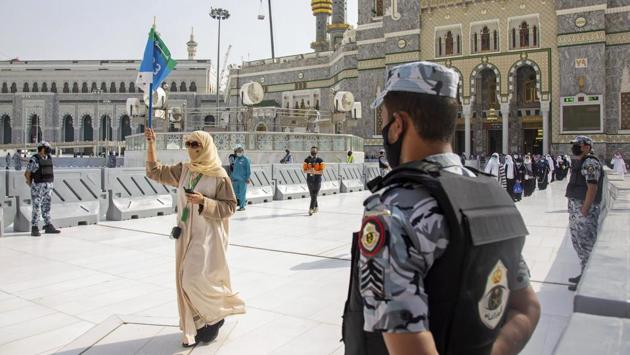
Security personnel standby as a batch of pilgrims arrive at the Grand Mosque in Mecca on July 29. The hajj, which started on Wednesday, is intended to bring about greater humility and unity among Muslims. Hajj is one of the five pillars of Islam, obligatory once in a lifetime for all who are able. Pilgrims often save money for years and apply repeatedly for a spot. (Saudi Media Ministry via AP)
4/7
 View Photos in a new improved layout
Updated on Jul 30, 2020 7:39 PM
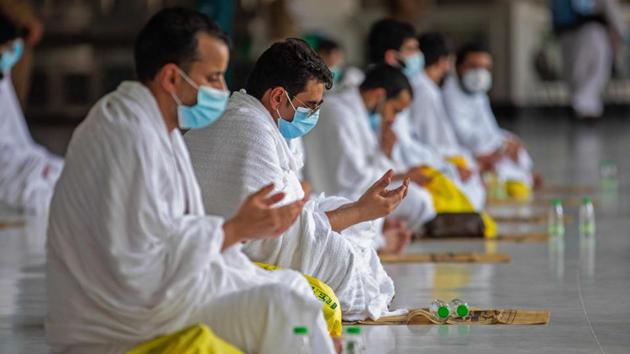
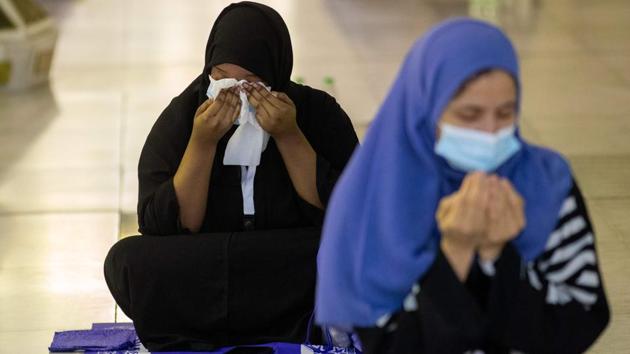
Muslim pilgrims wearing protective masks pray at the Grand Mosque in Mecca on July 29. Normally, religious tourism -- of which hajj is only a part -- brings in revenue equivalent to about 2.7% of Saudi Arabia’s GDP. But the crowds of people from all over the world are also potential incubators of disease, so the government halted them at the start of the pandemic, Bloomberg reported. (Saudi Ministry of Media / AFP)
5/7
 View Photos in a new improved layout
Updated on Jul 30, 2020 7:39 PM
The hajj will be the first large-scale gathering in Mecca’s grand mosque in months. Only pilgrims between the age of 20 and 50 without chronic diseases were considered. Before travelling to Mecca, they observed a week-long home quarantine, followed by a four-day quarantine in a Mecca hotel. (Saudi Ministry of Media / AFP)
6/7
 View Photos in a new improved layout
Updated on Jul 30, 2020 7:39 PM
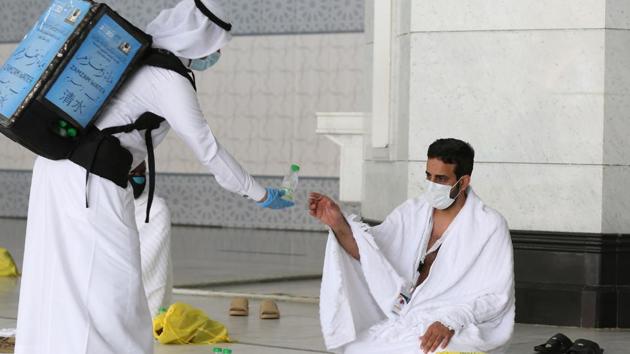
Face masks were the ubiquitous addition this year to the ‘Ihram,’ or ritual attire worn during the pilgrimage. Mask-clad pilgrims performed the ‘tawaf,’ a ritual walk around the Kaaba, in small groups, following carefully spaced routes marked on the white marble floor. Workers have been continuously cleaning and disinfecting the holy site, in uniforms resembling those of hospital staff. (AP)
7/7
 View Photos in a new improved layout
Updated on Jul 30, 2020 7:39 PM


