
 E-Paper



Photos: Al-Bitran, a village of amputees and minefields in Iraq
The Iraqis who pick over their country's old battlefields for military scrap metal and wiring have few other ways to make a living, but the task comes with enormous risks. So numerous are the wounds inflicted by mines and ordnance in Jurf al-Milh, east of Basra city, that the southern Iraqi village is better known as al Bitran, which means "the amputees" in the local Arabic dialect. Hundreds of villagers here have lost limbs to mines and unexploded ordnance from the Iraq-Iran war of 1980-1988.
Updated on: Apr 27, 2018 9:23 AM IST

Share via


Copy link

1/10
 View Photos in a new improved layout
Updated on Apr 27, 2018 9:23 AM
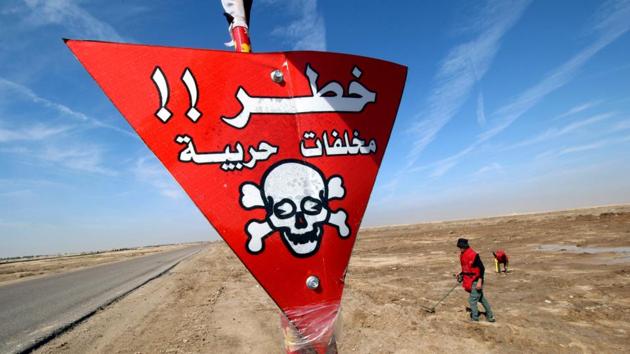
A demining team works close to a danger sign near the village of Al-Bitran, in Shalamjah district, Iraq. The Iraqis who pick over their country’s old battlefields for military scrap metal and wiring have few other ways to make a living, but the task comes with enormous risks. (Essam Al-Sudani / REUTERS)
2/10
 View Photos in a new improved layout
Updated on Apr 27, 2018 9:23 AM
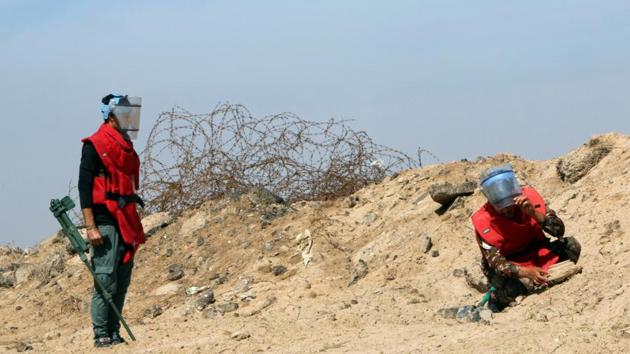
So numerous are the wounds inflicted by mines and ordnance in Jurf al-Milh that the southern Iraqi village is better known as al Bitran, which means “the amputees” in the local dialect. Hundreds of villagers have lost limbs to mines and unexploded ordnance from the Iraq-Iran war of 1980-1988. (Essam Al-Sudani / REUTERS)
3/10
 View Photos in a new improved layout
Updated on Apr 27, 2018 9:23 AM
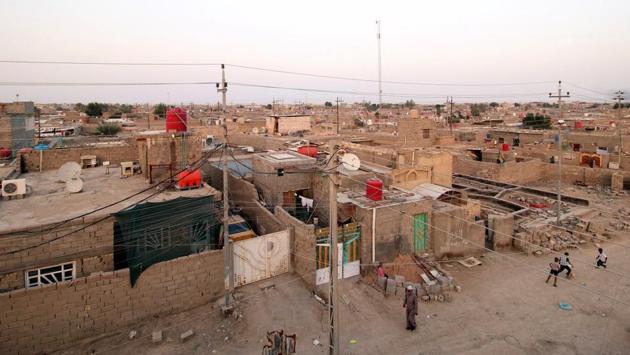
Al-Bitran, east of Basra, is near the Shatt al-Arab waterway which marks the border with Iran. The first victims were mainly sheepherders who took their herds to graze in areas not marked as minefields, even though they were strewn with unexploded bombs and artillery shells. (Essam Al-Sudani / REUTERS)
4/10
 View Photos in a new improved layout
Updated on Apr 27, 2018 9:23 AM
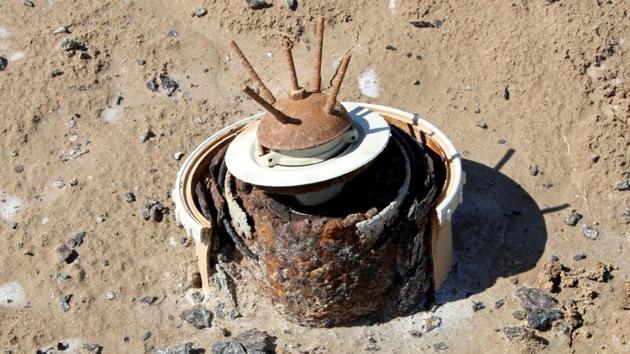
Sheno Abdullah is one of those who lost a leg in an explosion. “In 1980, when the war began, Iranian planes dropped bombs on our region at dawn, everybody left but a few,” he recalled. “When the war ended, people returned, but they didn’t know that the land was full of mines,” he said, speaking at the small mosque where he serves sometimes as muezzin. (Essam Al-Sudani / REUTERS)
5/10
 View Photos in a new improved layout
Updated on Apr 27, 2018 9:23 AM
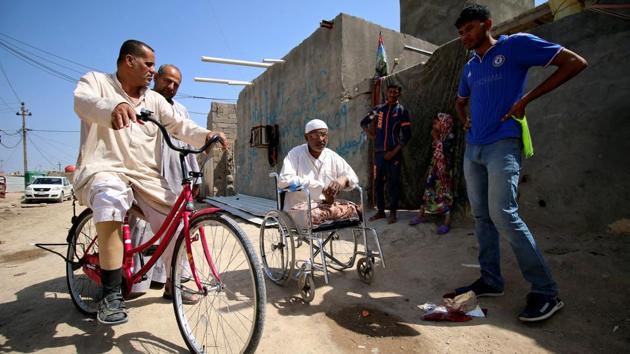
Rafed, a man disabled by a landmine explosion, rides his bicycle in the village. In 1991, the village, like the rest of Iraq, descended deeper into poverty as a result of international sanctions imposed on the country following the occupation of Kuwait. (Essam Al-Sudani / REUTERS)
6/10
 View Photos in a new improved layout
Updated on Apr 27, 2018 9:23 AM
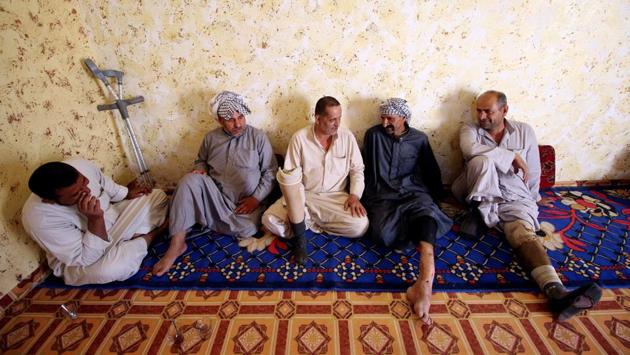
Collecting scrap metal and electric wires from military hardware left on the battlefields became a means of livelihood for many in the village, and the result was in increase in the number of people maimed. (Essam Al-Sudani / REUTERS)
7/10
 View Photos in a new improved layout
Updated on Apr 27, 2018 9:23 AM
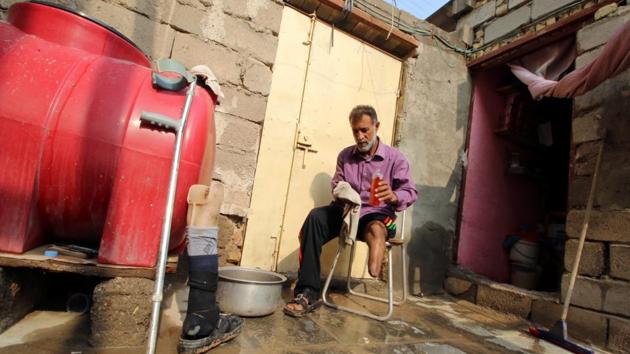
A man disabled by a landmine explosion cleans and disinfects his truncated leg. “I was out (in the field) to seek my living from God, collecting iron and copper; the kilogram of flour had become so expensive,” said Falih, who lost a leg and five finger tips in an explosion. (Essam Al-Sudani / REUTERS)
8/10
 View Photos in a new improved layout
Updated on Apr 27, 2018 9:23 AM
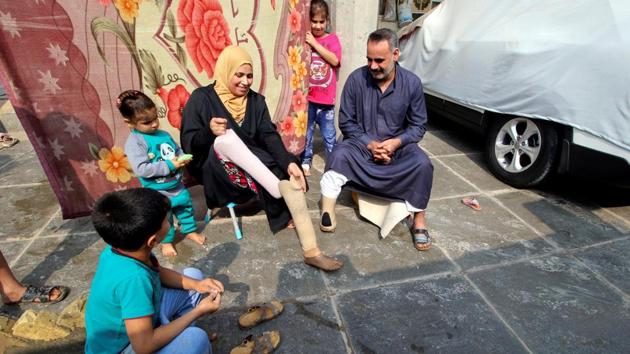
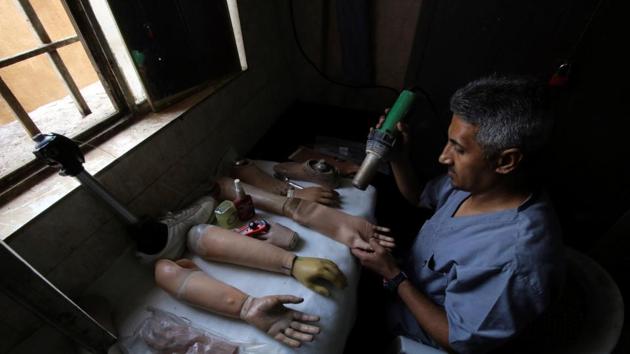
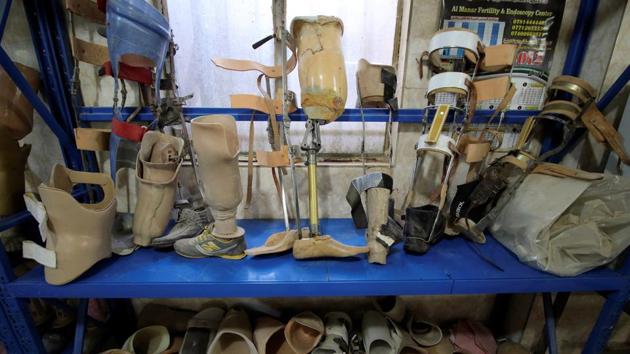
As the number of amputees grew in southern Iraq, a prosthetics and orthotics workshop opened in 1995 in Basra with the help of the International Committee of the Red Cross, providing artificial limbs to around 8,000 patients. (Essam Al-Sudani / REUTERS)
9/10
 View Photos in a new improved layout
Updated on Apr 27, 2018 9:23 AM
The workshop makes up to 50 prosthetic parts a month. About a third of the patients who come to the centre lost limbs because of diabetes, 10 percent suffered various kinds of accidents, with the rest mainly war and war-related casualties, including al-Bitran villagers, said one of the centres’ directors, Mohsen al-Sayed. (Essam Al-Sudani / REUTERS)
10/10
 View Photos in a new improved layout
Updated on Apr 27, 2018 9:23 AM


