
 E-Paper



Photos: Bangladesh’s toxic tanneries are polluting again at relocated site
Bangladesh tanneries prepping leather for shoes, belts, wallets and purses are dumping toxic chemicals into a river at a new industrial complex more than a year after the government shut them down for poisoning a different river and using child labor. In April 2017, under international pressure, the government shut off power at the Hazaribagh tanneries, ordering them to move to a new tannery industrial complex in Savar. Now, effluents and waste are flowing into the Daleshwari river, the embankment polluted with heaps of industrial refuse, and contaminants leeching into the soil.
Updated on: Jul 07, 2018 9:27 AM IST

Share via


Copy link

1/12
 View Photos in a new improved layout
Updated on Jul 07, 2018 9:27 AM
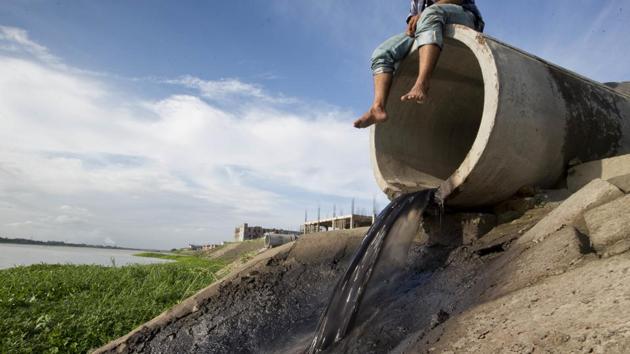
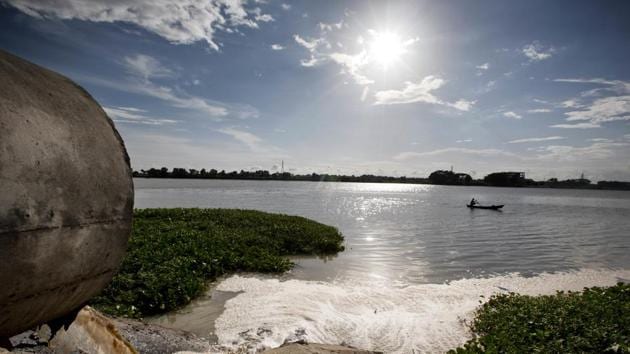
A Bangladeshi man sits on a concrete pipe, as tannery waste empties out into the Daleshwari River in Savar, Bangladesh. “It’s killing the river. The colour of the water has changed,” Abdus Shakur, a local resident who works as a day labourer, told The Associated Press last week. “I have been living here for decades and the condition of the river has changed dramatically over the last year.” (A.M Ahad / AP)
2/12
 View Photos in a new improved layout
Updated on Jul 07, 2018 9:27 AM
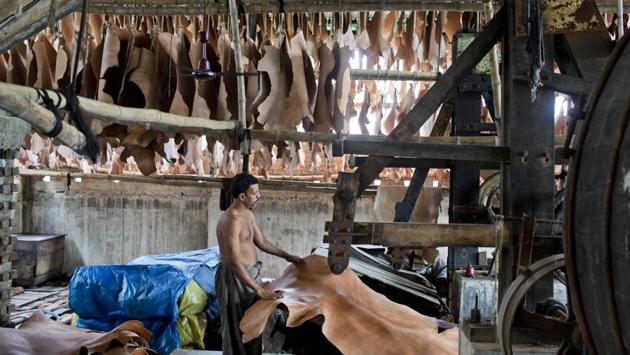
Turning cow hides into soft leather can be a dirty business, and in Hazaribagh, the former home to more than 150 tanneries, the air a year ago was so noxious with chemicals and rotting trimmings that it was repeatedly listed among the most polluted places on earth. The adjacent Buriganga River, a source of drinking water for 180,000 people, was considered poisoned. (A.M Ahad / AP)
3/12
 View Photos in a new improved layout
Updated on Jul 07, 2018 9:27 AM
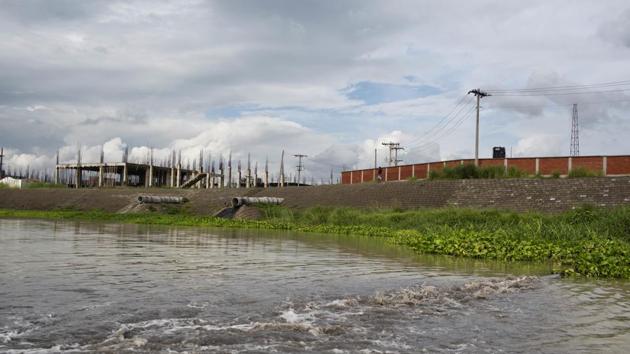
In April 2017, under international pressure, the government shut off power at Hazaribagh, ordering them to move to a new tannery industrial complex in Savar. Now the AP has learned that factories at the new location are draining chemicals into the Daleshwari River and dumping toxic waste in open fields. (A.M Ahad / AP)
4/12
 View Photos in a new improved layout
Updated on Jul 07, 2018 9:27 AM
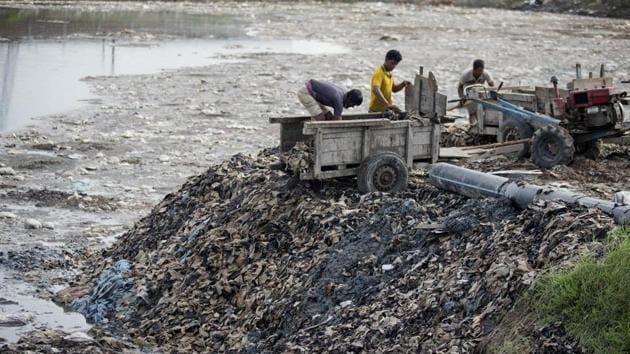
“This was a disaster foretold... Everyone convinced themselves that the main issue was technical — a lack of a central effluent treatment plant — and not political. But Bangladesh’s tanning industry will be plagued by its fundamental problems — child labour, occupational and environmental health dangers — until government authorities finally get serious about enforcing laws.” said Richard Pearshouse of Human Rights Watch. (A.M Ahad / AP)
5/12
 View Photos in a new improved layout
Updated on Jul 07, 2018 9:27 AM
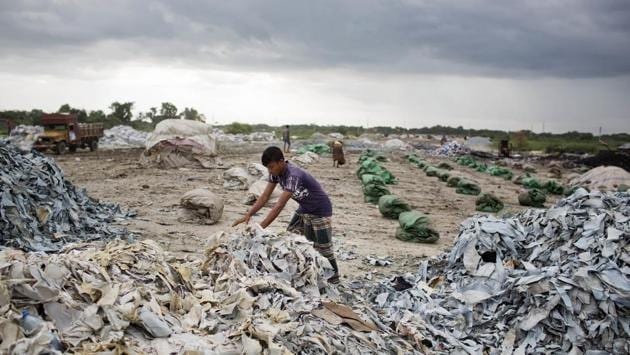
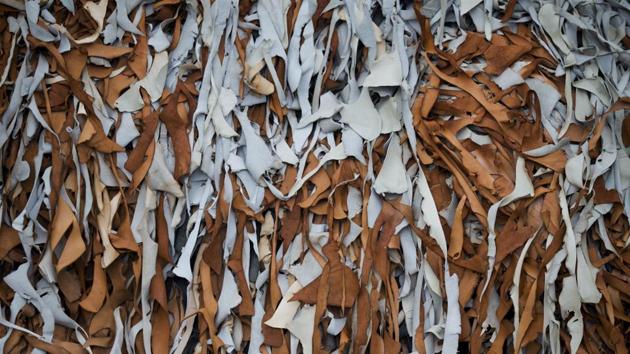
A worker gathers strips of leather salvaged from waste. New York-based Transparentem, a labour rights group, is calling on American and European companies that sourced leather in Hazaribagh — or had items made by companies that also owned tanneries there — to help clean up the mess. The companies include Clarks, Coach, Kate Spade, Macy’s, Michael Kors, Sears, Steven Madden and Timberland. (A.M Ahad / AP)
6/12
 View Photos in a new improved layout
Updated on Jul 07, 2018 9:27 AM
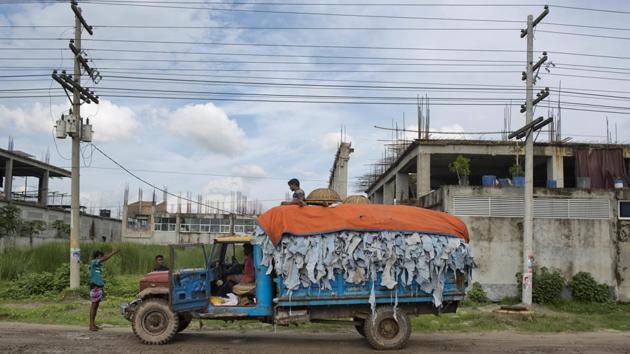
A worker sits on top of tannery waste loaded in a truck at Tannery Industrial Area. Supply chains take a few steps, sometimes dozens, to get from the source of a product to an item on a store shelf. Transparentem is also calling on buyers to use their collective leverage to advocate for better waste treatment facilities in Savar. (A.M Ahad / AP)
7/12
 View Photos in a new improved layout
Updated on Jul 07, 2018 9:27 AM
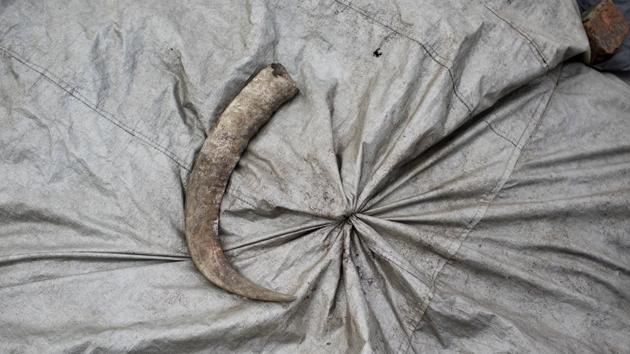
A buffalo horn is seen on a pile of covered tannery waste waiting to be to processed for poultry and fish feed. All of the companies that responded said they no longer get any leather from tanneries in Bangladesh. Some said they never did. Macy’s, Timberland and Clark continue to have products made there. (A.M Ahad / AP)
8/12
 View Photos in a new improved layout
Updated on Jul 07, 2018 9:27 AM
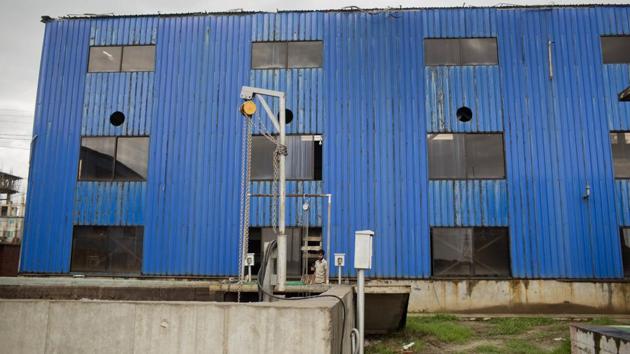
A worker stands next to an industrial water purifying machine room at Tannery Industrial Area. At the new Savar industrial center, an AP reporter found that a central effluent treatment plant had yet to be fully functional, contradicting claims from authorities that it’s been reinforced. Chinese engineers working on the plant refused to talk. (A.M Ahad / AP)
9/12
 View Photos in a new improved layout
Updated on Jul 07, 2018 9:27 AM
In addition to delayed operations at the effluent treatment plant, a new problem has started: repeated breaches in the embankment of a pond where solid waste is supposed to be held. This is allowing more pollution — mixed with rainwater — to flow into the river. (A.M Ahad / AP)
10/12
 View Photos in a new improved layout
Updated on Jul 07, 2018 9:27 AM
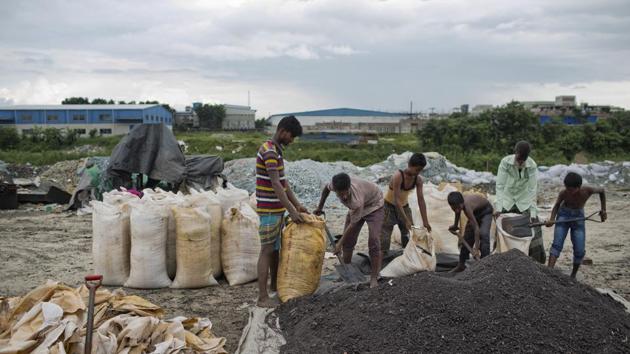
Labourers work on burnt scraps of leather that will be processed as feed. “This is worrying. The embankment has been repaired repeatedly, but because of the monsoon, the breaches developed again,” said Delowar Hossain, a plant consultant. (A.M Ahad / AP)
11/12
 View Photos in a new improved layout
Updated on Jul 07, 2018 9:27 AM
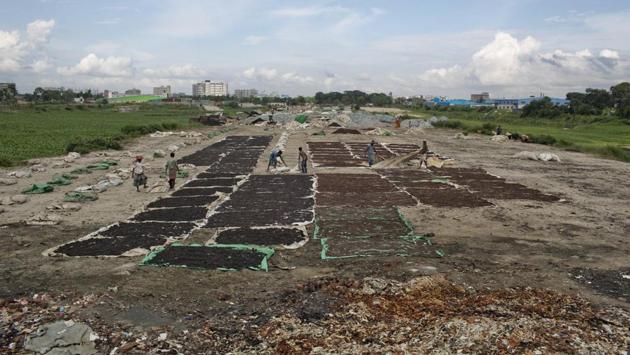
Workers sort tannery waste. Abu Naser Khan, chairman of Save the Environment Movement, said that the new site has multiple infrastructure deficiencies. “It’s killing the river, it’s poisoning soil and it’s destroying the whole environment.” It’s clear, he said, that relocating the tanneries from Hazaribagh has just moved the environmental disaster to another place. (A.M Ahad / AP)
12/12
 View Photos in a new improved layout
Updated on Jul 07, 2018 9:27 AM


