
 E-Paper



Photos: Beekeepers in Italy struggle during climate change
Unusual weather driven by climate change is wreaking havoc on bee populations, including in northern Italy where the pollinating insects crucial to food production are struggling to survive. Italian winters have in general become milder and shorter, and this year -- just as in 2017 -- a warm spring arrived early, only to be followed by hailstorms and an abrupt return to lower temperatures. A bitter blend of increased pesticide use, falling prices due to foreign competition and climate change -- which affects whole ecosystems, including bees and plants -- has hit beekeepers hard in recent years.
Updated on: Oct 08, 2019 11:15 AM IST

Share via


Copy link

1/7
 View Photos in a new improved layout
Updated on Oct 08, 2019 11:15 AM
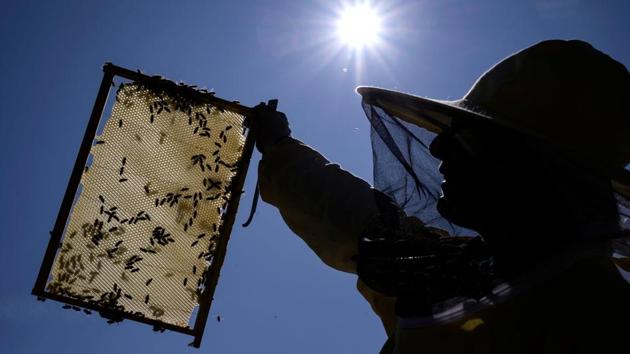
Lidia Agnello, president of “Aspromiele Piemonte” (Honey Piedmont Producers Association) holds a honeycomb with bees on it at an apiary in the countryside near Cuneo, Northwestern Italy. Unusual weather driven by climate change has wreaked havoc with mankind’s friend the bees, the crucial pollinators of our food crops now struggling to survive in northern Italy. (Marco Bertorello / AFP)
2/7
 View Photos in a new improved layout
Updated on Oct 08, 2019 11:15 AM
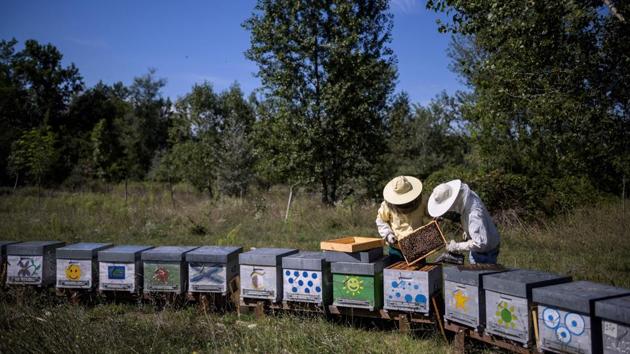
Lidia and bee technician Samuele Colotta process honeycombs at an apiary. Italian winters have in general become milder and shorter, and this year -- just as in 2017 -- a warm spring arrived early, only to be followed by hailstorms and an abrupt return to lower temperatures. (Marco Bertorello / AFP)
3/7
 View Photos in a new improved layout
Updated on Oct 08, 2019 11:15 AM
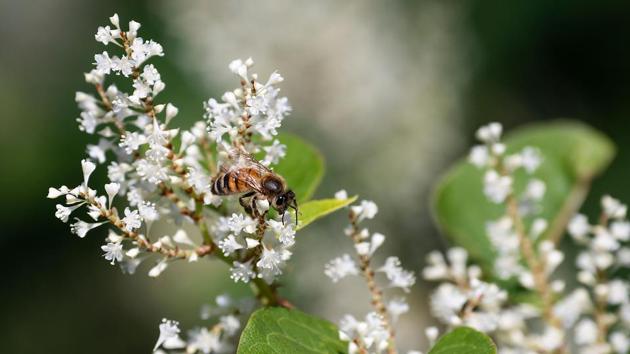
A bee gathers pollen from a flower. “This was the most difficult harvest of my life,” beekeeper Riccardo Polide says, fighting back tears at the fate of his hives in Mondovi, around 80 kilometres (50 miles) south of Turin. The bees could make only “pitiful quantities of honey, not even enough to keep alive”, he said. (Marco Bertorello / AFP)
4/7
 View Photos in a new improved layout
Updated on Oct 08, 2019 11:15 AM
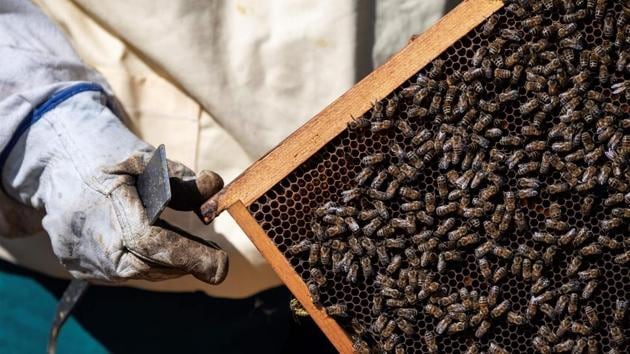
A bitter blend of increased pesticide use, falling prices due to foreign competition and climate change -- which affects whole ecosystems, including bees and plants -- has hit keepers like Polide hard in recent years. Like many others whose livelihood depends on the buzzing insects, Polide had to feed his colony fructose-based syrups this year to make sure they did not die of hunger. (Marco Bertorello / AFP)
5/7
 View Photos in a new improved layout
Updated on Oct 08, 2019 11:15 AM
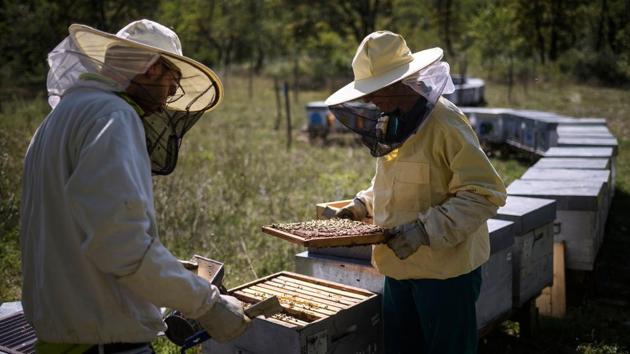
Lidia and bee technician Samuele Colotta process honeycombs. Beekeepers in Italy have seen “repeated poor harvests over the past seven years”, says Samuele Colotta, a technician at Aspromiele, the local association of honey producers that Agnello chairs. “Plants have had a regular annual life cycle for millennia. Changes to the climate and exceptional rainfall create problems. They no longer offer optimal pollen and nectar,” he warned. (Marco Bertorello / AFP)
6/7
 View Photos in a new improved layout
Updated on Oct 08, 2019 11:15 AM
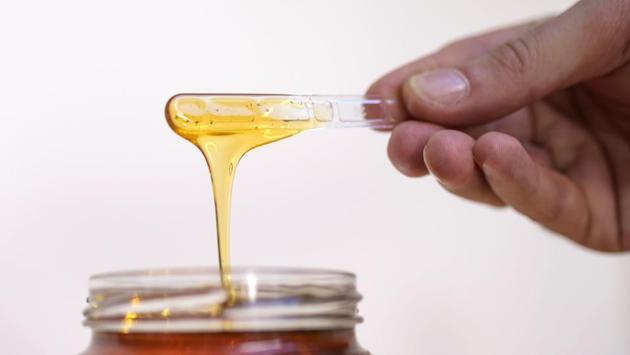
The mass import of foreign honey -- particularly from China -- has also driven down prices, meaning Italian producers struggle to make enough profit to cover their costs. There is currently no European legislation requiring sellers to specify the origin of honey, and many beekeepers say Chinese blends are “adulterated”, for example by being cut with syrup. (Marco Bertorello / AFP)
7/7
 View Photos in a new improved layout
Updated on Oct 08, 2019 11:15 AM


