
 E-Paper



Photos: Brazilian doctors use Tilapia fish skin to treat burn victims
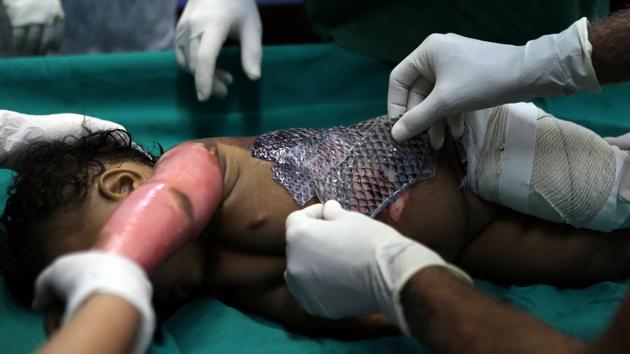
Doctors wrap a child's burnt skin with sterilised tilapia fish skin at Dr. Jose Frota Institute in the northeastern costal city of Fortaleza. Researchers in Brazil are experimenting with a new treatment for severe burns using the skin of tilapia fish, an unorthodox procedure they say can ease the pain of victims and cut medical costs. (Paulo Whitaker / Reuters)
Updated on: May 29, 2017 9:31 AM IST

Share via


Copy link

1/13
 View Photos in a new improved layout
Updated on May 29, 2017 9:31 AM
Doctors wrap a child's burnt skin with sterilised tilapia fish skin at Dr. Jose Frota Institute in the northeastern costal city of Fortaleza. Researchers in Brazil are experimenting with a new treatment for severe burns using the skin of tilapia fish, an unorthodox procedure they say can ease the pain of victims and cut medical costs. (Paulo Whitaker / Reuters)
2/13
 View Photos in a new improved layout
Updated on May 29, 2017 9:31 AM
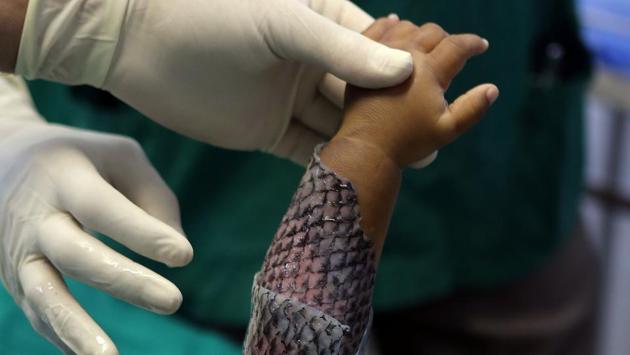
Doctors wrap a child's burnt skin with sterilised tilapia fish skin. Frozen pig skin and even human tissue have long been placed on burns to keep them moist and allow the transfer of collagen, a protein that promotes healing. (Paulo Whitaker / Reuters)
3/13
 View Photos in a new improved layout
Updated on May 29, 2017 9:31 AM
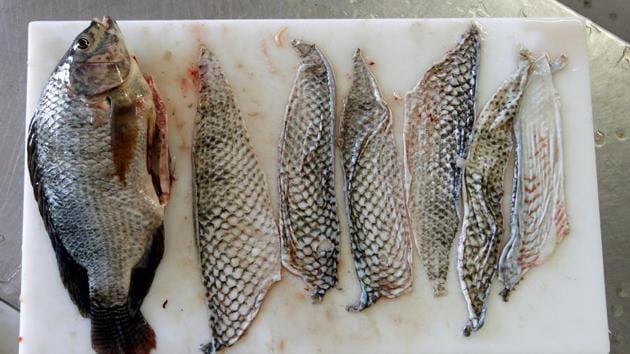
A tilapia fish and tilapia fish skins are displayed in Jaguaribara. However, lack of human and pig skin supplies in the region has boosted the demand of Tilapia which is abundant in Brazil’s rivers and fish farms. (Paulo Whitaker / Reuters)
4/13
 View Photos in a new improved layout
Updated on May 29, 2017 9:31 AM
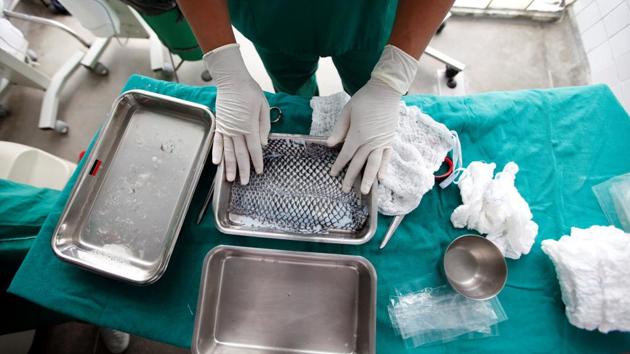
In China, researchers have tested tilapia skin on rodents to study its healing properties, but scientists in Brazil say their trials are the first on humans. (Paulo Whitaker / Reuters)
5/13
 View Photos in a new improved layout
Updated on May 29, 2017 9:31 AM
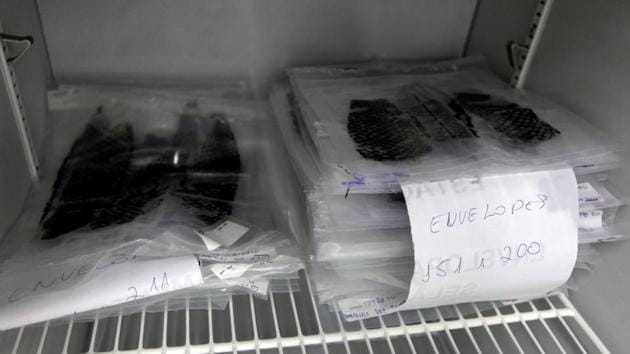
University lab technicians treated the fish skin with various sterilizing agents, and sent it to São Paulo for irradiation to kill viruses before packaging and refrigeration. (Paulo Whitaker / Reuters)
6/13
 View Photos in a new improved layout
Updated on May 29, 2017 9:31 AM
Doctors wrap a child's burnt skin with sterilised tilapia fish skin. Once cleaned and treated, it can last for up to two years, researchers say. The treatment removes any fish smell. (Paulo Whitaker / Reuters)
7/13
 View Photos in a new improved layout
Updated on May 29, 2017 9:31 AM
The fish skin has high levels of collagen type 1, stays moist longer than gauze, and does not need to be changed frequently. (Paulo Whitaker / Reuters)
8/13
 View Photos in a new improved layout
Updated on May 29, 2017 9:31 AM
Lucinete carries her daughter Ana who had 15 percent of the body burned and is receiving treatment with tilapia fish skin. (Paulo Whitaker / Reuters)
9/13
 View Photos in a new improved layout
Updated on May 29, 2017 9:31 AM
A patient with burnt skin exercises at the Support Institute for Burn Victims. (Paulo Whitaker / Reuters)
10/13
 View Photos in a new improved layout
Updated on May 29, 2017 9:31 AM
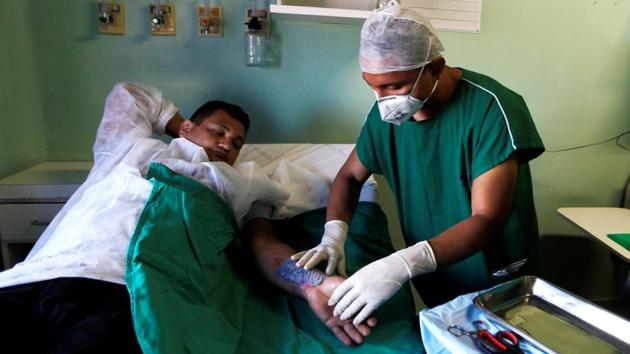
The tilapia skin is applied directly onto the burned area and covered with a bandage, without the need for any cream. (REUTERS)
11/13
 View Photos in a new improved layout
Updated on May 29, 2017 9:31 AM
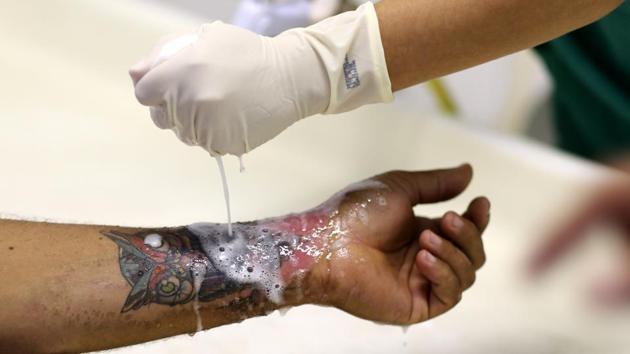
After about 10 days, doctors remove the bandage. The tilapia skin, which has dried out and loosened from the burn, can be peeled away. (REUTERS)
12/13
 View Photos in a new improved layout
Updated on May 29, 2017 9:31 AM
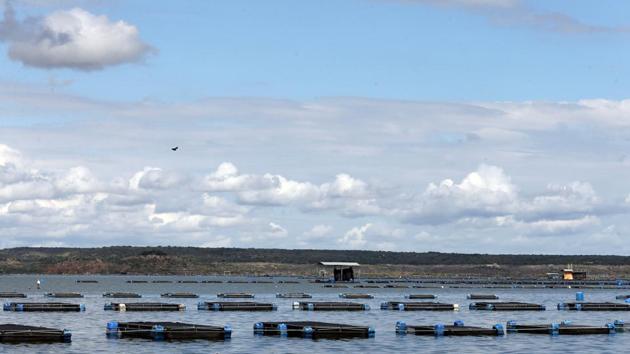
Tanks of tilapia fish are seen in Castanhao dam where the fish are cultivated. (REUTERS)
13/13
 View Photos in a new improved layout
Updated on May 29, 2017 9:31 AM


