
 E-Paper



Photos: Bulgaria’s communist-era Buzludzha monument draws calls for rescue
A 40-year-old Bulgaria’s Buzludzha monument that was built to glorify communism now lies empty and crumbling since the collapse of Iron Curtain in 1989. In a bid to boost tourism, European cultural heritage organisation Europa Nostra have stressed to have the round monument and its 70-metre-tall red star-topped tower renovated and opened to the public in coming days.
Updated on: Oct 18, 2018 1:39 PM IST

Share via


Copy link

1/8
 View Photos in a new improved layout
Updated on Oct 18, 2018 1:39 PM
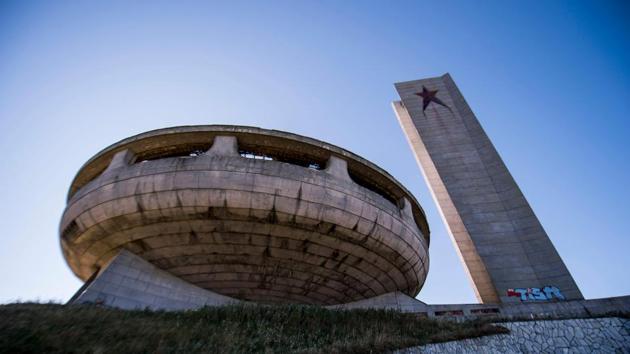
The crumbling oval skeleton of the House of the Bulgarian Communist Party on mount Buzludzha, in central Bulgaria. Perched like a vast flying saucer on a central Bulgarian mountainside, Buzludzha is a brutalist concrete monument that was built to glorify communism nearly 40 years ago. (Nikolay Doychinov / AFP)
2/8
 View Photos in a new improved layout
Updated on Oct 18, 2018 1:39 PM
The striking circular building has been left to fall victim to vandalism and decay, with Bulgaria eager to forget its communist past, but now western experts want to preserve it as a heritage site. The 70-metre high structure -- made of 70,000 tonnes of concrete, 3,000 tonnes of reinforced steel and 40 tonnes of glass -- looks like it is hovering at around 1,400 metres above sea level. (Nikolay Doychinov / AFP)
3/8
 View Photos in a new improved layout
Updated on Oct 18, 2018 1:39 PM
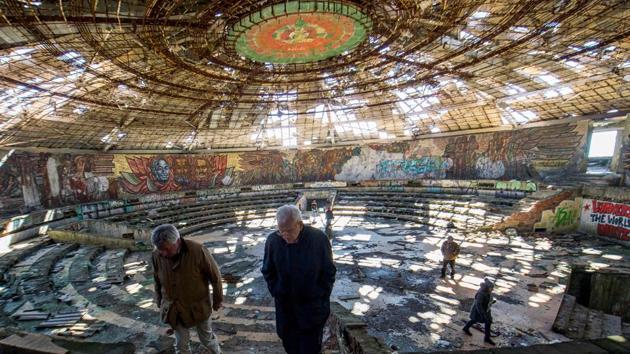
Inaugurated in 1981, it fell into disrepair after the collapse of the Iron Curtain in 1989. In recent years, only the most adventurous tourists have visited the spot, prompting authorities to lock it up to prevent accidents. Experts from cultural heritage organisation Europa Nostra visited the site last month and have urged Bulgarian authorities to rescue what they believe is “a masterpiece of architecture, engineering and art”. (Nikolay Doychinov / AFP)
4/8
 View Photos in a new improved layout
Updated on Oct 18, 2018 1:39 PM
Europa Nostra listed it as one of the most endangered heritage sites in Europe this year. During the Cold War era, the red glass stars on top of a tower that is part of the complex were said to be visible as far as Romania and Greece. “With its brutalist style, it is a genuine architectural achievement of the 20th century,” said Laurent Levi-Strauss, of Europa Nostra and a former deputy chief of UNESCO’s Cultural Heritage division. (Nikolay Doychinov / AFP)
5/8
 View Photos in a new improved layout
Updated on Oct 18, 2018 1:39 PM
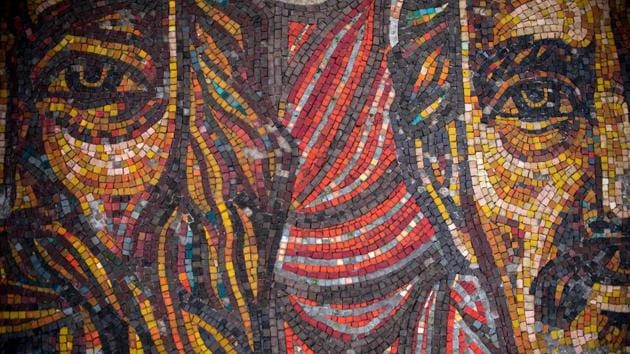
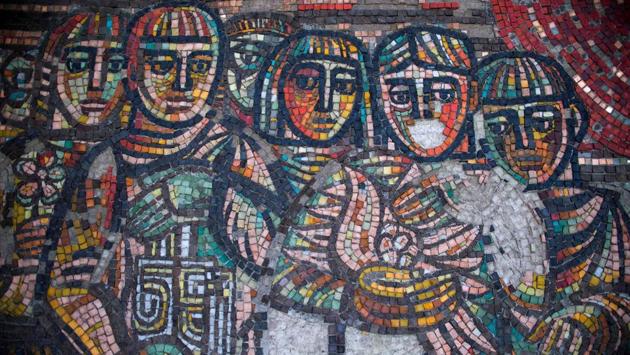
A detail of a mosaic. For British architect Graham Bell, Buzludzha is “an unbelievable building, unbelievably impressive and unbelievably sad in the way it is deteriorating. “This monument is part of European cultural heritage, but most of Europe doesn’t know it exists,” Bell said. The experts are convinced that what remains of the building could -- and should -- be saved. (Nikolay Doychinov / AFP)
6/8
 View Photos in a new improved layout
Updated on Oct 18, 2018 1:39 PM
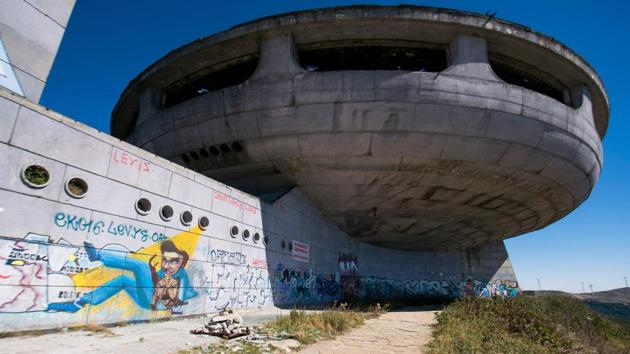
They proposed giving the site national protected status, which would allow EU funds to be used for its rescue. “It is good that Europe cares about it as Bulgaria doesn’t,” Buzludzha’s 89-year-old architect, Georgy Stoilov, told AFP. Cash-strapped local authorities never regarded Buzludzha as much of a priority and saw little point in the upkeep of a site that had bad connotations. (Nikolay Doychinov / AFP)
7/8
 View Photos in a new improved layout
Updated on Oct 18, 2018 1:39 PM
It was Bulgarian architect, Dora Ivanova, born a year after the fall of the regime, who revived interest in Buzludzha. She came across the monument while at university in Germany and started a campaign for its conservation four years ago. “It’s not possible that such an amazing piece of architecture is in such bad condition. It is a part of Bulgarian history whether we like it or not,” Ivanova said. (Nikolay Doychinov / AFP)
8/8
 View Photos in a new improved layout
Updated on Oct 18, 2018 1:39 PM


