
 E-Paper



Photos: Colombia’s ex-rebels remove mines they left during war
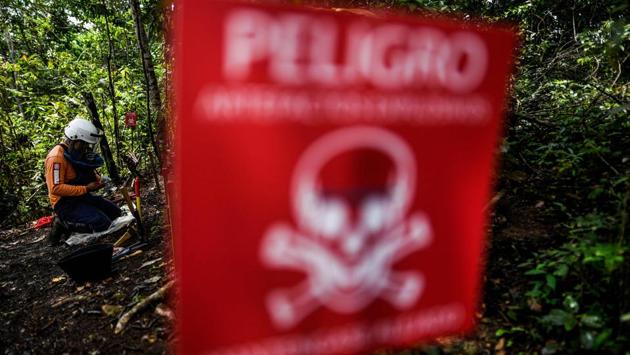
Since 2016, some 7,000 fighters of Revolutionary Armed Forces of Colombia (FARC) have surrendered their weapons after the signing of a peace deal between the FARC and the government of then president Juan Manuel Santos. Today they don a bulletproof vest and a protective visor and the group wields metal detectors as they advance on a path marked with white sticks to a wooded area believed to be booby-trapped in the countryside outside the southern town of La Montanita. They scan underneath shrubs for mines buried at the site for the purposes of their training course. They learn how to isolate the explosives by tagging them with cords and sticks painted red. Since 1985, mines and other unexploded ordnance have struck more than 11,780 people. In 20 percent of those cases, the incident was fatal, according to Colombia's high commission for peace.
Updated on: Nov 21, 2019 4:50 PM IST


Share via


Copy link

1/7
 View Photos in a new improved layout
Updated on Nov 21, 2019 4:50 PM
An ex-combatant of the FARC-EP takes part in a humanitarian de-mining training in the municipality of La Montanita, Caqueta. A grenade blew off the hands of onetime guerrilla Edwin Correa, but he only surrendered his rifle once a peace deal was struck nearly three years ago. Since then, the former bomb expert has joined a different sort of fighting unit, one dedicated to removing the land mines in Colombia’s countryside that he once helped to plant. (Juan Barreto / AFP)
2/7
 View Photos in a new improved layout
Updated on Nov 21, 2019 4:50 PM
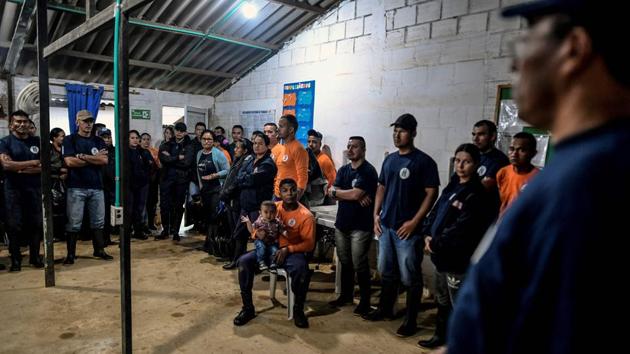
A FARC-EP ex-combatant holds his toddler during a workshop by Humanicemos DH, a civil humanitarian demining organization. The group wields metal detectors as they advance on a path marked with white sticks to a wooded area believed to be booby-trapped in the countryside. (Juan Barreto / AFP)
3/7
 View Photos in a new improved layout
Updated on Nov 21, 2019 4:50 PM
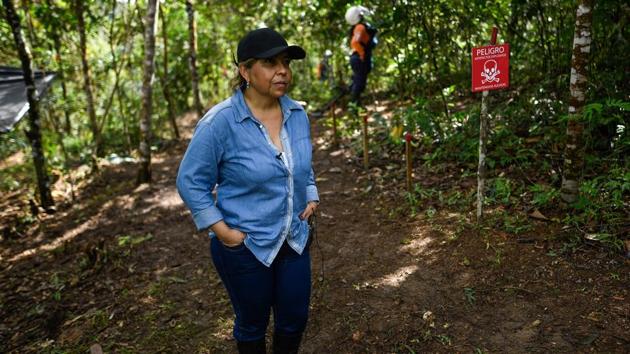
Angela Orrego, a former FARC-EP commander and now director of Humanicemos DH. They scan underneath shrubs for mines buried at the site for the purposes of their training course. They learn how to isolate the explosives by tagging them with cords and sticks painted red. Then, they gently remove them from the ground, which is currently sodden from the last tropical rainstorm. (Juan Barreto / AFP)
4/7
 View Photos in a new improved layout
Updated on Nov 21, 2019 4:50 PM
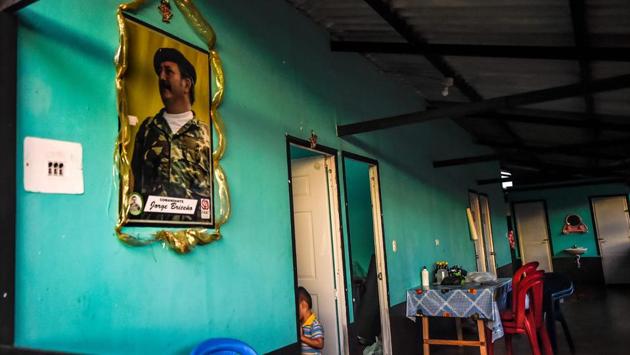
The son of a FARC-EP ex-combatant, walks in his house in La Montanita. The area is a former stronghold for the rebel group founded in the 1960s. It is also among the towns in Colombia with the most land mine victims. But now the home base of Humanicemos DH, an organization that helps former rebels who want to become professional deminers, director Angela Orrego said. (Juan Barreto / AFP)
5/7
 View Photos in a new improved layout
Updated on Nov 21, 2019 4:50 PM
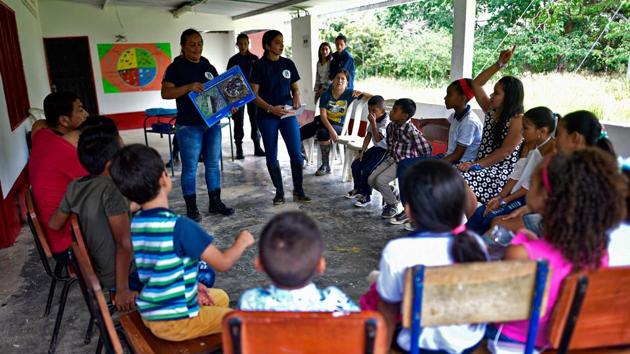
Some 7,000 fighters have surrendered their weapons since the November 2016 signing of a peace deal between the FARC and the government of then president Juan Manuel Santos. Humanicemos DH is funded by the United Nations and the European Union with an annual budget of $1.2 million. As they await full certification as deminers, they get training from experts with the UN Mine Action Service. They also get computer training, English classes and even learn about meditation. (Juan Barreto / AFP)
6/7
 View Photos in a new improved layout
Updated on Nov 21, 2019 4:50 PM
Angela Orrego speaks with attendees during a presentation in the municipality of Montanita. Because of a legal dispute, the ex-rebels trained through Humanicemos cannot join the roughly 6,000 mine removal experts already accredited to work in Colombia. (Juan Barreto / AFP)
7/7
 View Photos in a new improved layout
Updated on Nov 21, 2019 4:50 PM


