
 E-Paper



Photos: Costumes, dances honour the Virgin of El Rocío in Spain’s north
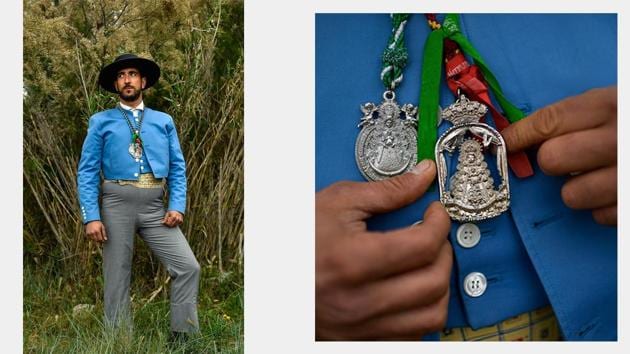
Alberto Simon, a devotee, poses while taking part in the "Romeria de El Rocio" and points to a medallion he was wearing with the image of the Virgin while walking in the procession. The pilgrimage, originally from Spain’s south, where it is still extremely popular was transplanted to the country’s north by migrants from southern Andalusía, who came here and to other parts of Spain in large numbers in the middle of the last century in search of work and better opportunities.
Updated on: Jun 02, 2019 12:51 PM IST

Share via


Copy link

1/8
 View Photos in a new improved layout
Updated on Jun 02, 2019 12:51 PM
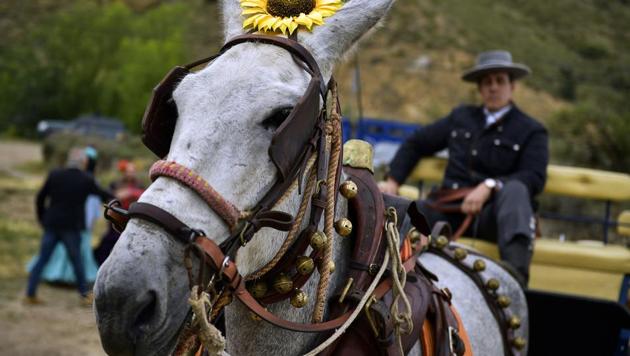
A devotee of the Rocio Virgin takes part in the “Romeria de El Rocio” in the countryside outside Fitero, northern Spain. Each May, the rich greens and browns of the northern Spanish countryside are brightened by a rainbow of colourfully dressed townsfolk who march in the pageantry of an age-old pilgrimage transplanted here from the country’s south. (Alvaro Barrientos / AP)
2/8
 View Photos in a new improved layout
Updated on Jun 02, 2019 12:51 PM
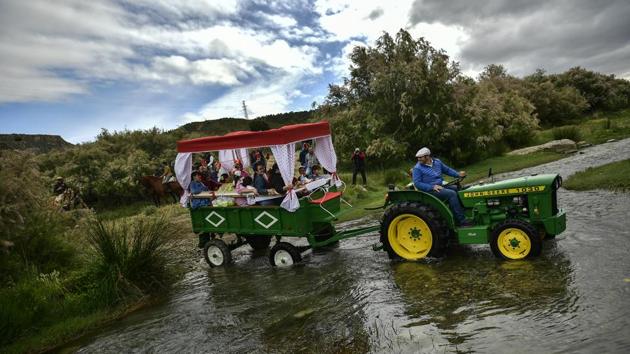
Devotees of the Rocio Virgin cross a river as they take part in the “Romeria de El Rocio”. Hundreds of Spaniards slowly make their way on foot, horseback or on carriages drawn by mules or tractors through the fields around the agricultural town of Fitero near Pamplona, the city famous for its running of the bulls fiesta. (Alvaro Barrientos / AP)
3/8
 View Photos in a new improved layout
Updated on Jun 02, 2019 12:51 PM
Alberto Simon, a devotee, poses while taking part in the “Romeria de El Rocio” and points to a medallion he was wearing with the image of the Virgin while walking in the procession. (Alvaro Barrientos / AP)
4/8
 View Photos in a new improved layout
Updated on Jun 02, 2019 12:51 PM
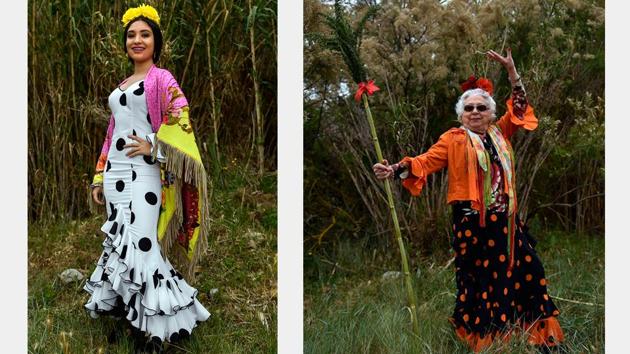
Melena Garro (L) and Joaquina Almellones (R), participants in the procession strike poses in their festive costumes. Wearing flowers in their hair and brightly coloured dresses, the women are joined by men in suits and hats. (Alvaro Barrientos / AP)
5/8
 View Photos in a new improved layout
Updated on Jun 02, 2019 12:51 PM
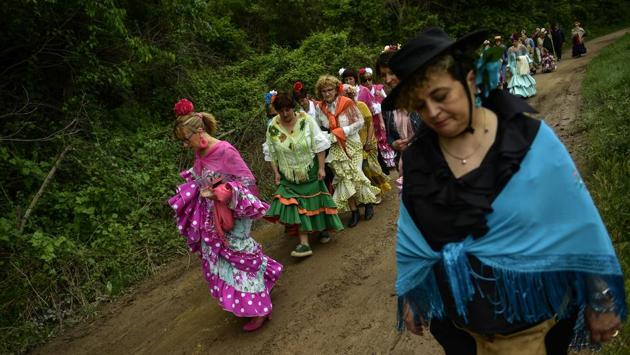
The devotees stroll in a long line along narrow dirt roads through lush fields accompanying a mule-drawn cart that bears a small wooden statue of the Virgin and Child. They occasionally stop to dance to add to the festive atmosphere. (Alvaro Barrientos / AP)
6/8
 View Photos in a new improved layout
Updated on Jun 02, 2019 12:51 PM
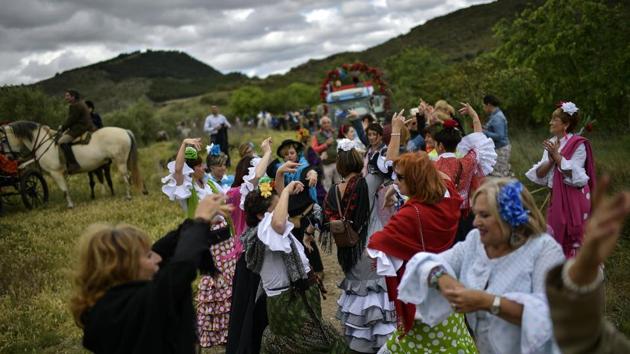
Devotees of the Rocio Virgin dance while taking part in the “Romeria de El Rocio”. The pilgrimage is from Spain’s south, where it is still extremely popular. It was brought to the country’s north by migrants from southern Andalusía, who came here and to other parts of Spain in large numbers in the middle of the last century in search of work and better opportunities. (Alvaro Barrientos / AP)
7/8
 View Photos in a new improved layout
Updated on Jun 02, 2019 12:51 PM
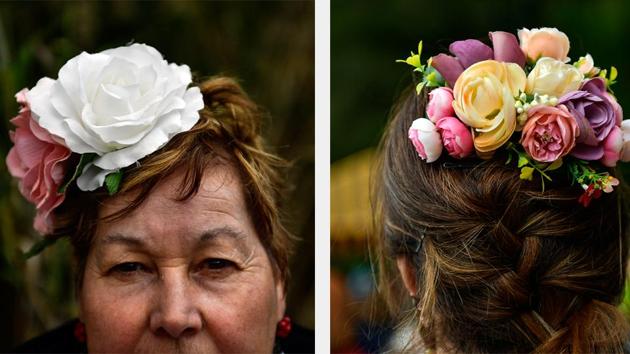
Josefa Daza (L) and an unnamed devotee (R) wearing flower fascinators in their hair. Now the devotees in the yearly procession are a mix of people whose families hail from the south and those who have adopted the pilgrimage as their own. (Alvaro Barrientos / AP)
8/8
 View Photos in a new improved layout
Updated on Jun 02, 2019 12:51 PM


