
 E-Paper



Photos: Excavating a 200 million year old crocodile ancestor in South Africa
In recent years, South Africa has become a top destination for dinosaur hunters. Three years ago a palaeontology student noticed some fossilised bones sticking out of a massive rock on the remote Heelbo farm on the outskirts of Rosendal, South Africa. Today, a team of scientists is painstakingly zeroing in on a 200-million-year-old ancestor of the modern-day crocodile. Jonah Choiniere and his team from Johannesburg's Witwatersrand University had tracked the reptile from another age for three years. The delicate excavation process at the site is grindingly slow and continues today.
Updated on: Oct 24, 2018 11:41 AM IST

Share via


Copy link

1/8
 View Photos in a new improved layout
Updated on Oct 24, 2018 11:41 AM
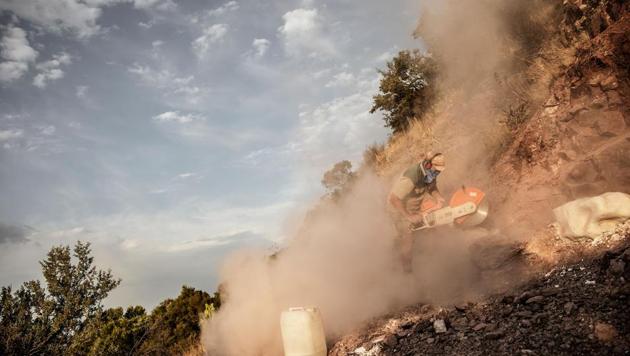
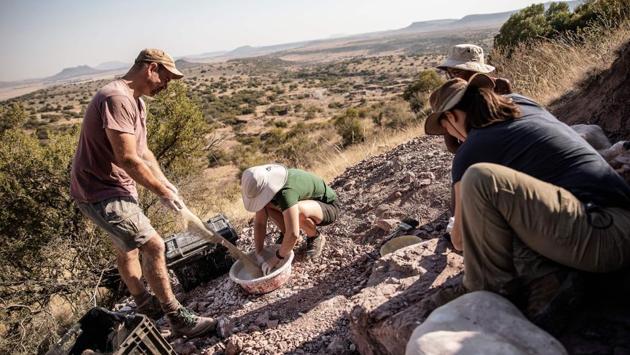
Johannesburg Witwatersrand University professor Jonah Choiniere grinds stones containing fossils on the outskirts of Rosendal, South Africa. As the sun rises over the South African bush, scientists laden with backpacks climbed up a hillside. They get down to work, carving into two immense blocks of stone that have concealed the secrets of an ancestor of modern-day crocodiles for some 200 million years. (Gianluigi Guercia / AFP)
2/8
 View Photos in a new improved layout
Updated on Oct 24, 2018 11:41 AM
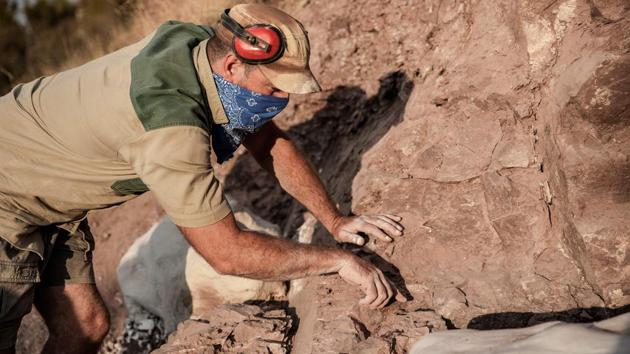
Professor Choiniere looks for fossils in the rock formations at the Heelbo farm. “In 2015, one of my students just saw a few (fossilised) bones coming out,” said Choiniere, his shirt sticking to sweat from the morning’s hike. The delicate excavation process at the site is grindingly slow and continues today. (Gianluigi Guercia / AFP)
3/8
 View Photos in a new improved layout
Updated on Oct 24, 2018 11:41 AM
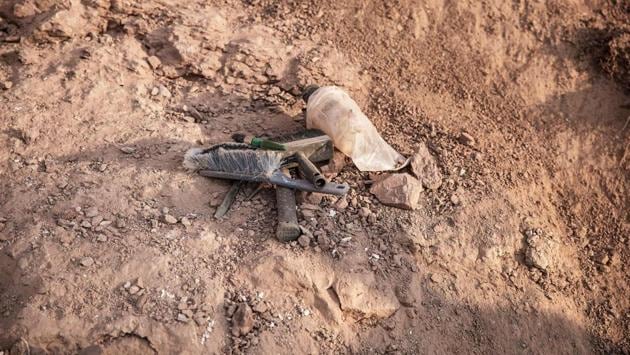
Jonah Choiniere and his team from Witwatersrand University had tracked the reptile from another age for three years. “We started to excavate it and we brought it back to the lab and it turned out to be a hip of a species we’ve never seen before,” said the palaeontologist, who is originally from the United States. (Gianluigi Guercia / AFP)
4/8
 View Photos in a new improved layout
Updated on Oct 24, 2018 11:41 AM
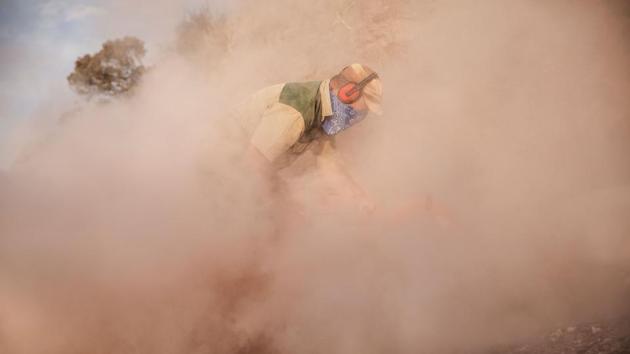
“Two hundred and fifty to 200 million years ago, these animals were the dominant land carnivores and they were found all over the world... (but) in South Africa we don’t have a record of them,” research student Rick Tolchard said. “Some of them were, I imagine, sort of like a crocodile crossed with a lion, a very large quadrupedal, legs under the body, with these massive big jaws -- a very intimidating animal. (Gianluigi Guercia / AFP)
5/8
 View Photos in a new improved layout
Updated on Oct 24, 2018 11:41 AM
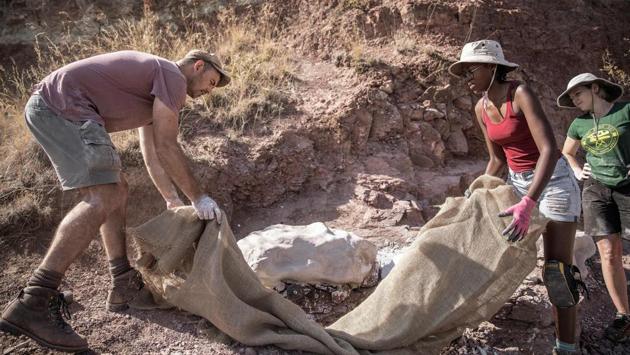
Choiniere (L) prepares a cast to jacket rock formations containing fossils. After five hours, the stone is chiselled free and transported to Johannesburg into the hands of Wilfred Bilankulu who will break it free using dental tools. The herculean task will take between eight and 12 months. A similar amount of time is needed to examine, compare and describe the find. (Gianluigi Guercia / AFP)
6/8
 View Photos in a new improved layout
Updated on Oct 24, 2018 11:41 AM
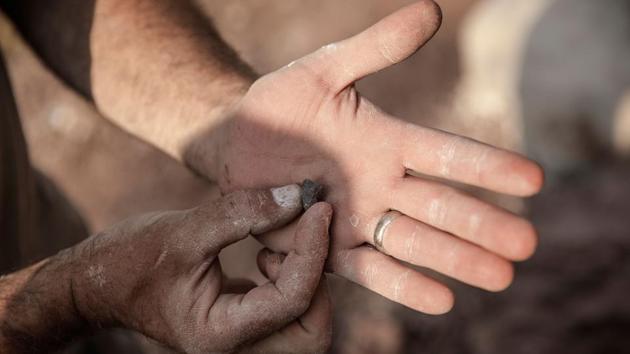
Professor Choiniere holds a bone shaped stone as he searches through rock formations. “This is a pretty good harvest for us. We didn’t know what to expect when we came into this quarry... I can say it’s much better than what we were expecting, very promising,” he said. In recent years, South Africa has become a top destination for dinosaur hunters. (Gianluigi Guercia / AFP)
7/8
 View Photos in a new improved layout
Updated on Oct 24, 2018 11:41 AM
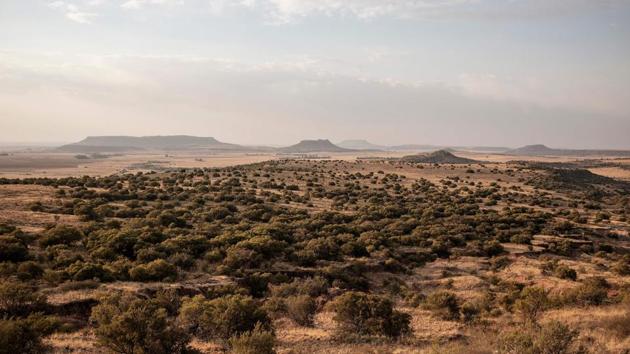
Experts say the southern tip of Africa is ideal to study the Triassic to Jurassic period transition. “One of the reasons is that about 66% of the surface of South Africa has fossils on it -- there are a lot of fossil-bearing areas,” Choiniere said. “We don’t get much rainfall, especially in the interior, so we have areas that erode rapidly -- and that erosion exposes fossils.” (Gianluigi Guercia / AFP)
8/8
 View Photos in a new improved layout
Updated on Oct 24, 2018 11:41 AM


