
 E-Paper



Photos: Frenchman achieves ‘dream’ of first hoverboard Channel crossing
Franky Zapata on his jet-powered "flyboard" took off from Sangatte, northern France, on August 4, 2019, to fly across the 35-kilometre (22-mile) Channel crossing in 20 minutes, while keeping an average speed of 140 kilometres an hour (87 mph) at a height of 15-20 metres (50-65 feet) above the sea. The Frenchman has spent years developing a jet-powered hoverboard but his first attempt last month was cut short when a botched refuelling attempt sent him into the water.
Updated on: Aug 05, 2019 12:10 PM IST

Share via


Copy link

1/9

 View Photos in a new improved layout
Updated on Aug 05, 2019 12:10 PM
A French daredevil who spent years developing a jet-powered hoverboard zoomed across the English Channel on Sunday, fulfilling his quest after pulling off a tricky refuelling manoeuvre that cut short his first attempt 10 days ago. (Denis Charlet / AFP)
2/9
 View Photos in a new improved layout
Updated on Aug 05, 2019 12:10 PM
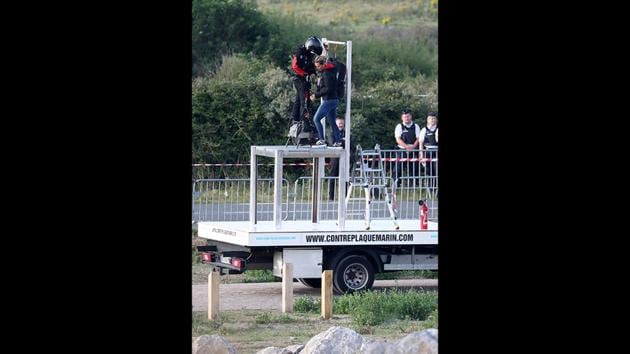
Franky Zapata blasted off on his “Flyboard” from Sangatte on the northern coast of France at 8:17 am (0617 GMT) for the 35-kilometre (22-mile) trip to St. Margaret’s Bay in Dover. The 40-year-old former jet-ski champion, made his first attempt on July 25, to coincide with the 110th anniversary of Louis Bleriot’s historic first crossing of the Channel by plane. But he had to be fished from the water after failing to land on a boat to refuel. (Yves Herman / REUTERS)
3/9
 View Photos in a new improved layout
Updated on Aug 05, 2019 12:10 PM
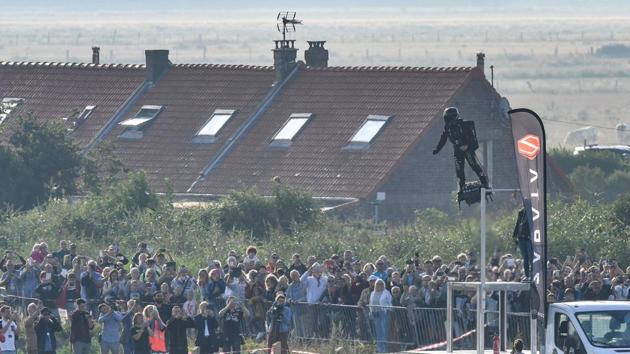
Zapata on his jet-powered “flyboard” takes off from Sangatte. Zapata has been working on the hoverboard for the past three years, despite losing parts of two fingers during its maiden flight in his garage near Marseille, when they got sucked into the turbines. (Denis Charlet / AFP)
4/9
 View Photos in a new improved layout
Updated on Aug 05, 2019 12:10 PM
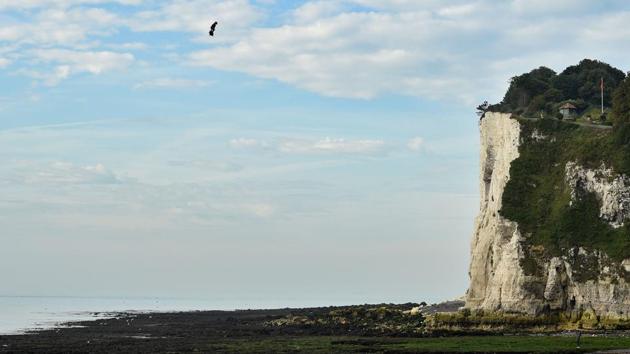
Zapata on his jet-powered “flyboard” flies over at St. Margaret’s Bay in Dover. He already holds the Guinness World Record for the farthest hoverboard flight, a 2.2-kilometre trip over the Mediterranean Sea in April 2016. Zapata burst into the spotlight at this year’s July 14 Bastille Day military parade in Paris, where he buzzed above a crowd of stunned onlookers that included French President Emmanuel Macron. (Glyn Kirk / AFP)
5/9
 View Photos in a new improved layout
Updated on Aug 05, 2019 12:10 PM
During his second attempt, the Frenchman flew across the 35-kilometre (22-mile) Channel crossing in 20 minutes, while keeping an average speed of 140 kilometres an hour (87 mph) at a height of 15-20 metres (50-65 feet) above the sea. (Yves Herman / REUTERS)
6/9
 View Photos in a new improved layout
Updated on Aug 05, 2019 12:10 PM
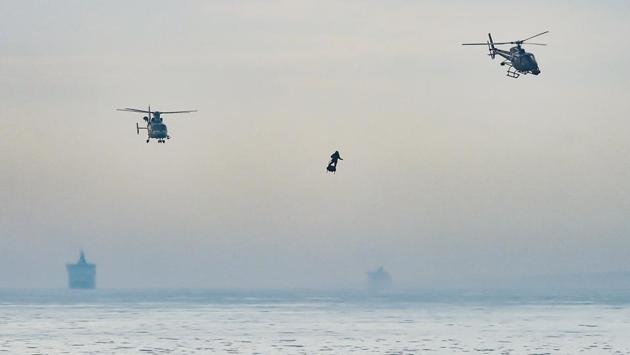
Zapata eventually hopes to soar into the clouds at altitudes well above the 15 to 20 metres (50-65 feet) currently, something that will require him to figure out how to carry a parachute, guidance equipment and possibly an oxygen tank. But he is aiming higher and hopes to unveil a 10-turbine flying car that would be easy enough for anyone to pilot, without requiring the physical strength and long hours of practice to master the Flyboard. (Glyn Kirk / AFP)
7/9
 View Photos in a new improved layout
Updated on Aug 05, 2019 12:10 PM
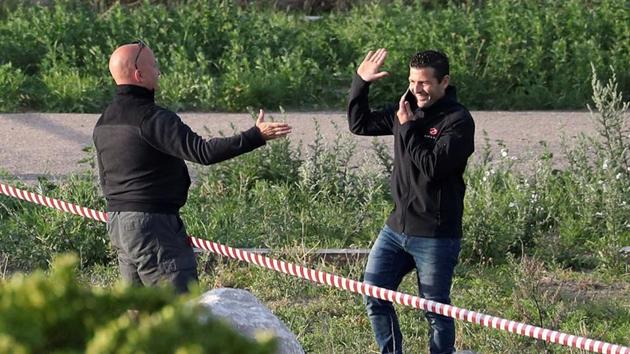
Franky Zapata’s wife Krystel (C), surrounded by media in Sangatte is on the phone with Franky Zapata after he landed at St. Margaret’s Bay in Dover. “I’m feeling good. I’m feeling happy, I’m feeling lucky. This is just an amazing moment for me,” Zapata said after landing. (Glyn Kirk / AFP)
8/9
 View Photos in a new improved layout
Updated on Aug 05, 2019 12:10 PM
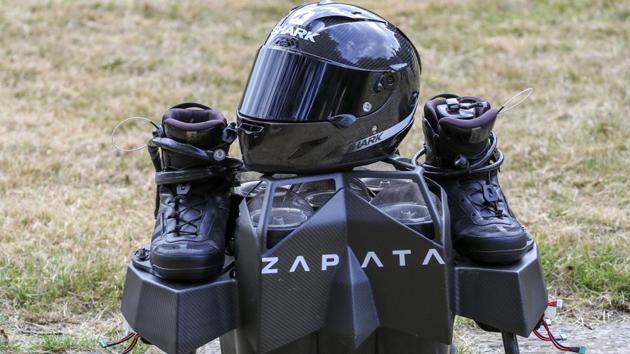
“People are passionate about this, everyone dreams about flying,” he said, recalling his fascination with the hoverboard in the 1985 hit movie “Back to the Future,” set in 2015. “And then 2015 came around, and there were still no hoverboards, so we said ‘OK, we’re going to do it.” “Let’s just say that I achieved my dream.” (Yves Herman / REUTERS)
9/9
 View Photos in a new improved layout
Updated on Aug 05, 2019 12:10 PM


