
 E-Paper



Photos: Fresh twist for UAE diners as oysters take to local waters
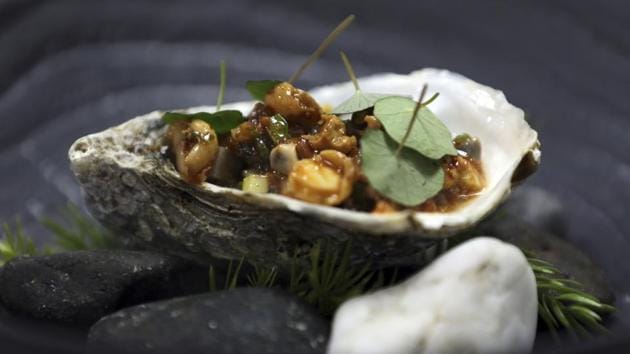
Long thought of as a cold water delicacy, edible oysters are being farmed in the warm waters of Fujairah, United Arab Emirates, making the delicacy an attractive menu item at some of neighbouring Dubai's most popular and prestigious seafood restaurants.
Updated on: Feb 16, 2018 10:08 AM IST

Share via


Copy link

1/9
 View Photos in a new improved layout
Updated on Feb 16, 2018 10:08 AM
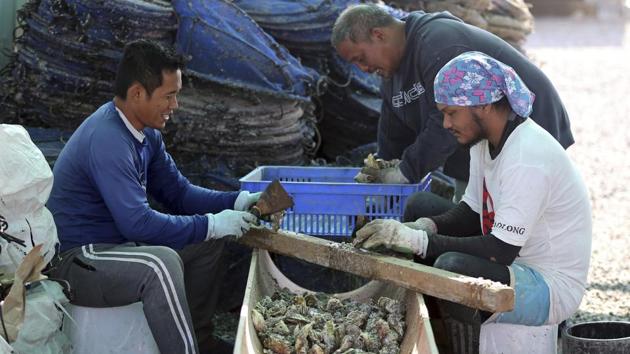
Employees clean oyster shells at the Dibba Bay Oyster Farm’s facilities in Dibba, United Arab Emirates. The waters of the Persian Gulf have long been home to pearl oysters. Now, off the shores of Fujairah, an emirate with a coastline that juts out into the Gulf of Oman, a new type of oyster is thriving -- the edible kind. (Kamran Jebreili / AP)
2/9
 View Photos in a new improved layout
Updated on Feb 16, 2018 10:08 AM
A Dibba Bay employee shucks a Pacific Cupped oyster. Long thought of as a cold water delicacy, locally farmed edible oysters have made their way to tables in 12 different restaurants in Dubai, the cosmopolitan emirate east of Fujairah that is home to some of the Middle East’s top-rated restaurants serving international tourists and residents. (Kamran Jebreili / AP)
3/9
 View Photos in a new improved layout
Updated on Feb 16, 2018 10:08 AM
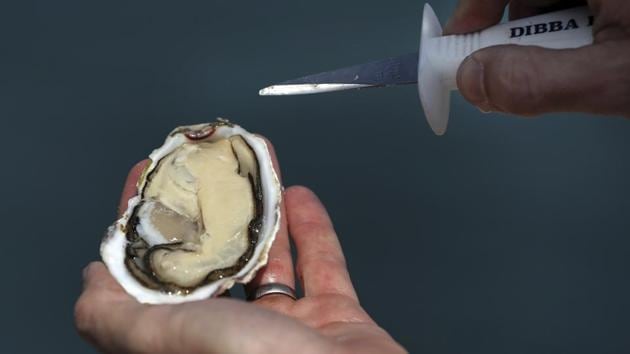
Ramie Murray, owner and founder of the Dibba Bay Oyster Farm, presents a fresh oyster. Established two years ago, the farm produces up to 20,000 oysters a month. Grown inside multi-tiered, netted baskets submerged in the open water, there are about one million oysters at various stages of growth at any given time. An oyster can take anywhere between 12 and 18 months to grow to full market size. (Kamran Jebreili / AP)
4/9
 View Photos in a new improved layout
Updated on Feb 16, 2018 10:08 AM
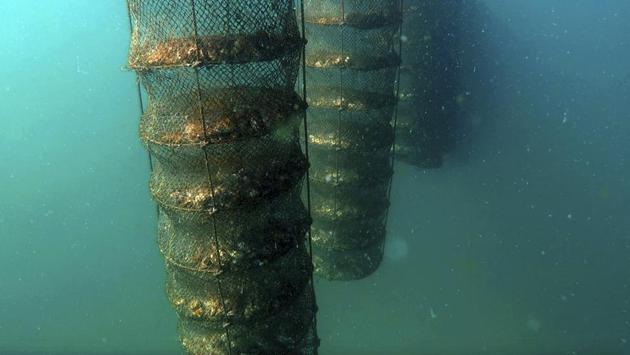
Lantern nets holding oysters hang underwater at the Dibba Bay Oyster Farm. “With these local oysters, we take them out of the water in the morning, and then in the afternoon they’re with the hotels, they’re with the chefs, they’re in the restaurant,” said Murray. The Dibba Bay farm claims to be the first of its kind in the Middle East. (Fay Abuelgasim / AP)
5/9
 View Photos in a new improved layout
Updated on Feb 16, 2018 10:08 AM
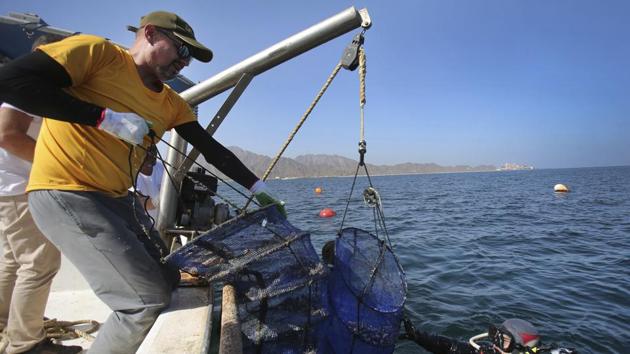
The UAE imports nearly all of its food due to its harsh desert climate, but being able to deliver fresh oysters within hours to restaurants has made the delicacy an attractive menu item at some of Dubai’s most popular seafood restaurants. Due to the warmer water temperatures, Murray says his Pacific Cupped oysters grow faster than they might in cooler climates. (Kamran Jebreili / AP)
6/9
 View Photos in a new improved layout
Updated on Feb 16, 2018 10:08 AM
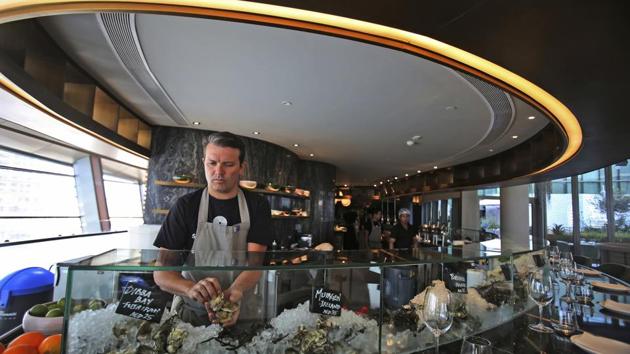
Carl Maunder, executive chef at the Maine Oyster Bar & Grill at Dubai Opera prepares an oyster dish. “Someone came to me and said: ‘Hey, have you heard of these local oysters?’ And I was like: ‘No,’” said Maunder. “It was sort of out of the blue because, this was in the summer time, it was very, very hot and just the last thing I expected anybody to be producing or farming here in Dubai.” (Kamran Jebreili / AP)
7/9
 View Photos in a new improved layout
Updated on Feb 16, 2018 10:08 AM
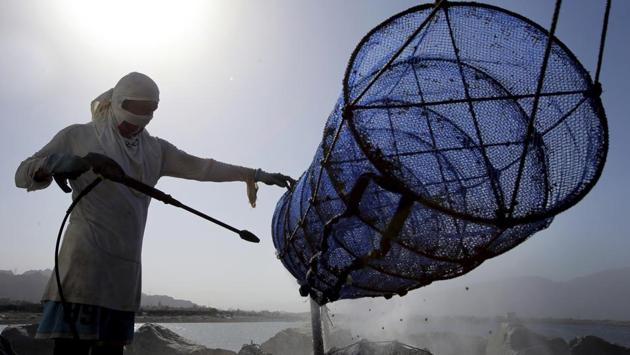
An employee hoses down a lantern net at the company’s harvesting and processing facilities. Murray plans to ramp up production to about 150,000 oysters a day in coming years and expand to other markets in the region. (Kamran Jebreili / AP)
8/9
 View Photos in a new improved layout
Updated on Feb 16, 2018 10:08 AM
Ramie Murray tests a fresh oyster the only way there is. The Pacific Cupped oysters, he said, “grow very well in the summer and their growth tails off in the winter, whereas here they just grow continuously because we have the warm weather the whole year round.” (Kamran Jebreili / AP)
9/9
 View Photos in a new improved layout
Updated on Feb 16, 2018 10:08 AM


