
 E-Paper



Photos: In Mali’s capital, donkeys lead the fight against waste
Every morning before dawn in the Malian capital of Bamako, waste collectors hitch up donkeys to their carts and head through localities on the day’s rounds collecting trash door-to-door before delivering it to local waste transfer stations. The capital’s population has more than quadrupled since the mid-1970s, and civic authorities have found keeping up with the waste generated by the growing number of residents difficult. Pressed for funds, their inability to address this civic need efficiently has given rise to informal waste dumps and this donkey-driven disposal system.
Updated on: Sep 14, 2018 9:38 AM IST

Share via


Copy link

1/8
 View Photos in a new improved layout
Published on Sep 14, 2018 9:38 AM
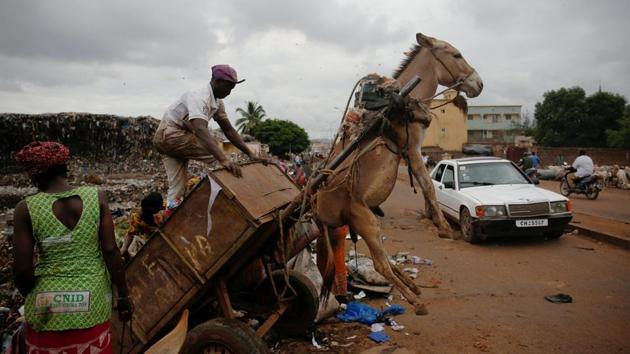
A waste picker unloads garbage at a waste transfer station in Bamako, Mali. In the Malian capital of Bamako, donkey carts driven by young men like 19-year-old Arouna Diabate play a vital role battling the fast-growing city’s waste problem. (Luc Gnago / REUTERS)
2/8
 View Photos in a new improved layout
Published on Sep 14, 2018 9:38 AM
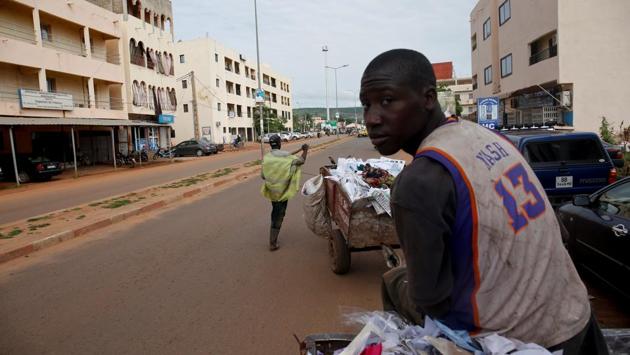
Arouna Diabate, 19, drives his cart as he works in Bamako. Every morning before dawn, Diabate hitches his donkey to a cart and sets off on his rounds, going door-to-door to collect household garbage. (Luc Gnago / REUTERS)
3/8
 View Photos in a new improved layout
Published on Sep 14, 2018 9:38 AM
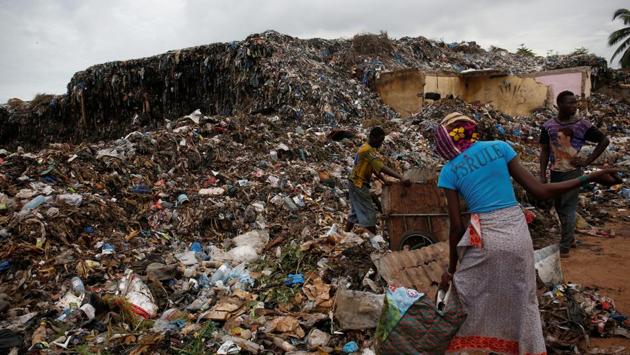
People search through trash at a dump in Bamako. Mali is one of the poorest countries in the world and the authorities struggle to provide adequate public services in the capital. (Luc Gnago / REUTERS)
4/8
 View Photos in a new improved layout
Published on Sep 14, 2018 9:38 AM
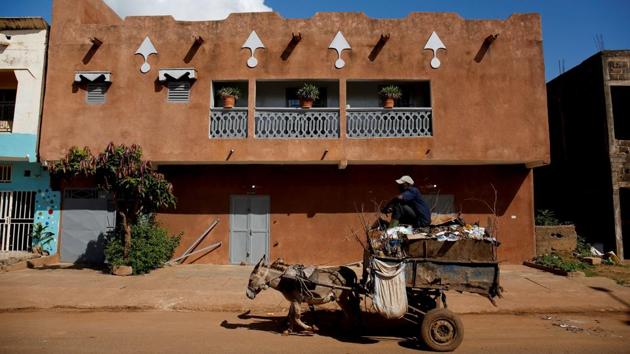
A man who collects garbage using a donkey, drives his cart as he works in Bamako. The capital’s population more than quadrupled from the mid-1970s to 1.8 million as of 2009, according to census data. (Luc Gnago / REUTERS)
5/8
 View Photos in a new improved layout
Published on Sep 14, 2018 9:38 AM
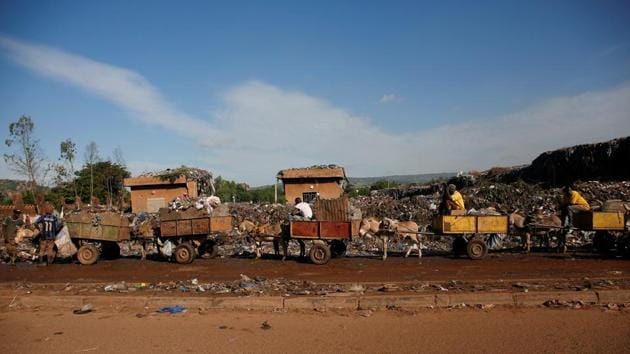
Donkey carts stand in line as they prepare to unload at a local waste transfer station. The population boom has made the issue of waste disposal in Bamako more acute, requiring Diabate’s boss, Moustapha Diarra, to deploy eight donkey carts in his district instead of the two he managed a decade ago. (Luc Gnago / REUTERS)
6/8
 View Photos in a new improved layout
Published on Sep 14, 2018 9:38 AM
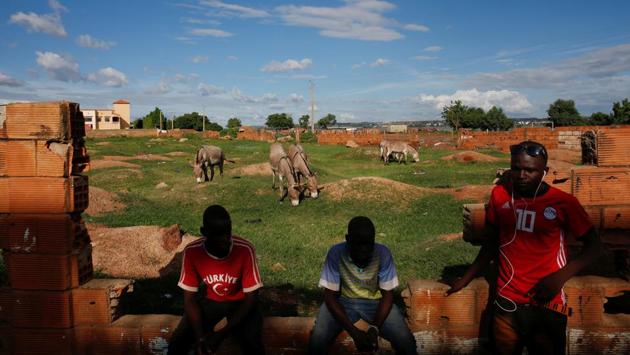
(L to R) Dramane Diallo, 19, Djibril Diabate and Amadou Keita, 21, sit at the pasture while their donkeys graze in Bamako. The system is overburdened due to a proliferation of informal dumps and the authorities’ failure to remove waste from the local transfer stations, Diarra said. (Luc Gnago / REUTERS)
7/8
 View Photos in a new improved layout
Published on Sep 14, 2018 9:38 AM
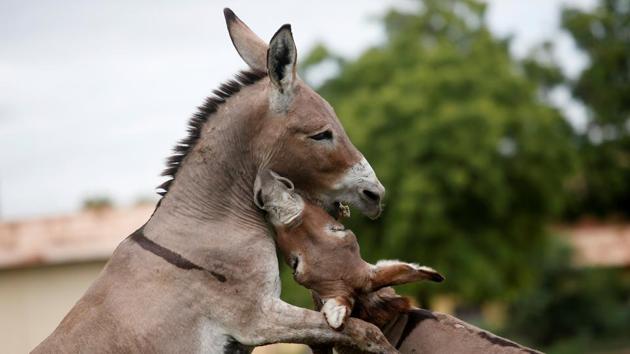
Donkeys, used to collect garbage, interact as they graze at a pasture. “The garbage piles up so much that you find it in the roads and when it rains, the water stagnates,” he said. “Without sanitation, you can’t have good health.” (Luc Gnago / REUTERS)
8/8
 View Photos in a new improved layout
Published on Sep 14, 2018 9:38 AM


