
 E-Paper



Photos: Japanese woman fills a lonely village with life-sized dolls
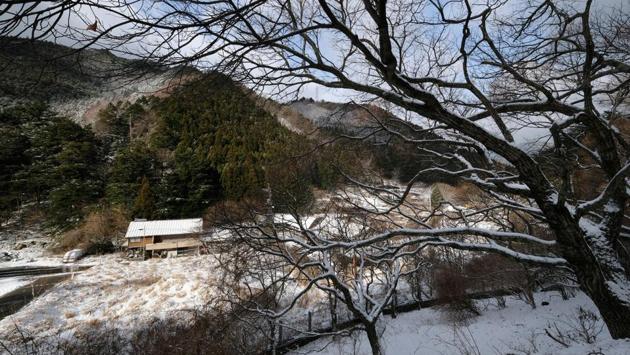
In the tiny village of Nagoro, deep in the mountains of western Japan, the wind howls down a deserted street with not a living soul to be seen. But yet the street appears busy, dotted with life-sized dolls that outnumber humans 10 to one, the product of a one-woman bid to counter the emptiness and loneliness felt in Nagoro, like many Japanese villages decimated by depopulation.
Updated on: Apr 18, 2019 9:33 AM IST

Share via


Copy link

1/12
 View Photos in a new improved layout
Updated on Apr 18, 2019 9:33 AM
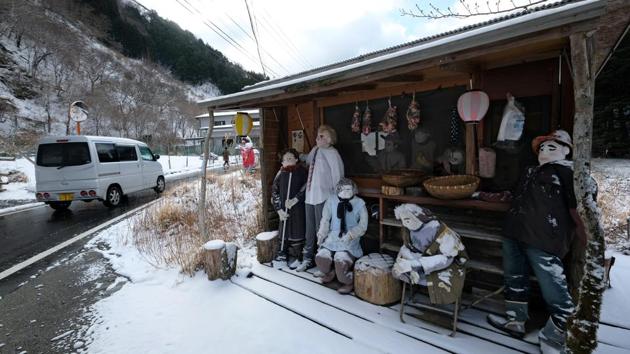
Nagoro, around 550 kilometres southwest of Tokyo, has become known as the valley of dolls after local resident Tsukimi Ayano began placing scarecrows on the street to inject some life into her depopulated village. “Only 27 people live in this village but the number of scarecrows is tenfold, like 270,” the 69-year-old doll maker told AFP. (Kazuhiro Nogi / AFP)
2/12
 View Photos in a new improved layout
Updated on Apr 18, 2019 9:33 AM
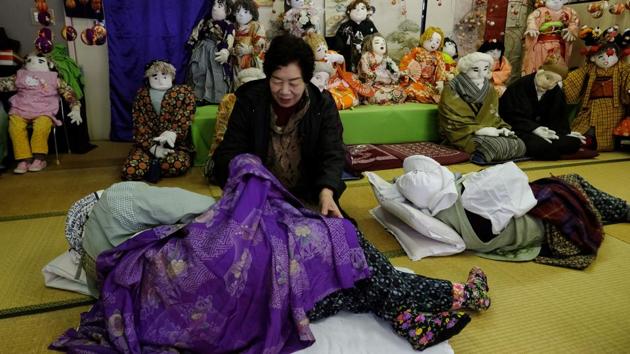
It all started 16 years ago when the dexterous Ayano created a scarecrow dressed in her father’s clothes to prevent birds eating the seeds she had planted in her garden. “A worker who saw it in the garden thought it really was my father... he said hello but it was a scarecrow. It was funny,” recalled Ayano. (Kazuhiro Nogi / AFP)
3/12
 View Photos in a new improved layout
Updated on Apr 18, 2019 9:33 AM
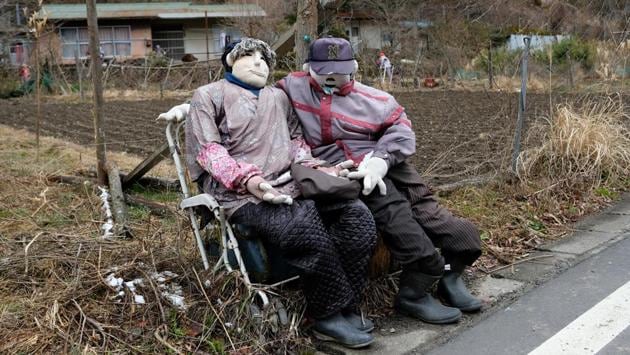
Since then, Ayano has not stopped creating the life-size dolls, made with wooden sticks, newspapers to fill the body, elastic fabrics for skin and knitting wool for hair. The skillful craftswoman needs only three days to make an adult-sized doll that are now scattered all around the village. (Kazuhiro Nogi / AFP)
4/12
 View Photos in a new improved layout
Updated on Apr 18, 2019 9:33 AM
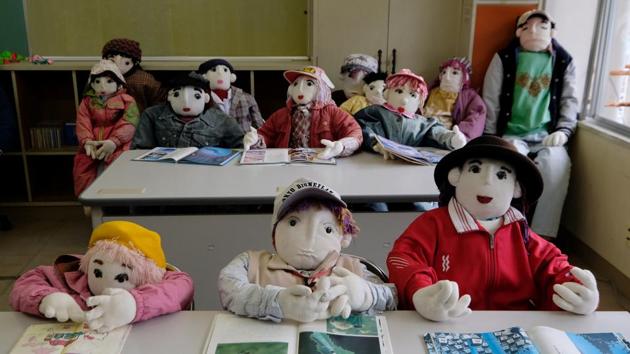
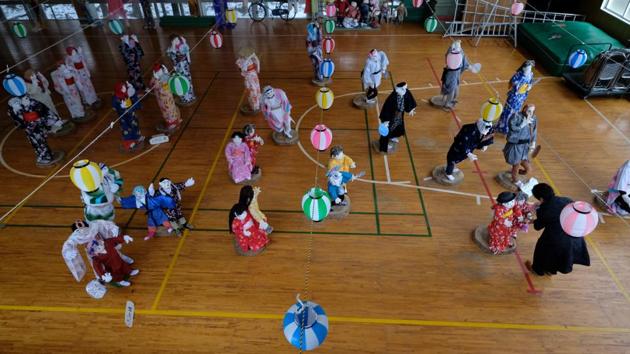
The secret to breathing life into the dolls? Applying pink colour to the lips and cheeks with a make-up brush, revealed Ayano. At the local school, she has placed 12 colourful child-sized dolls at desks, positioned as if part of a lively class poring over their books. The school closed seven years ago as there was no one left to teach, she recalled sadly. (Kazuhiro Nogi / AFP)
5/12
 View Photos in a new improved layout
Updated on Apr 18, 2019 9:33 AM
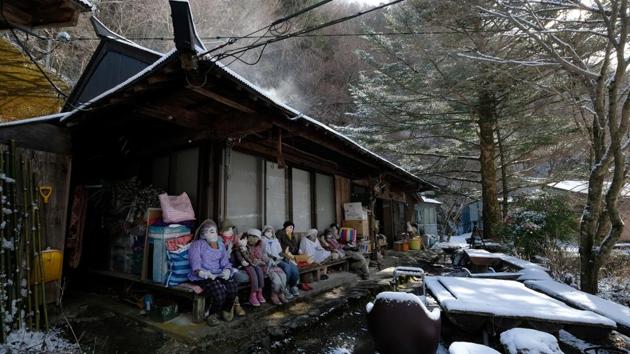
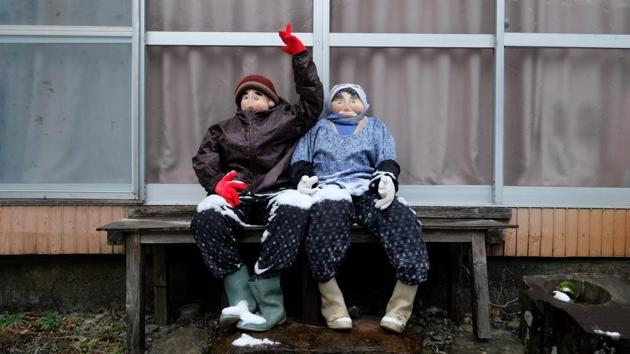
“Now there are no children. The youngest person here is 55 years old.” Down the street, a “family” of scarecrows lounges in front of an abandoned grocery shop while a doll dressed as an old farmer window-shops next door. While never humming with people, Ayano remembers Nagoro as a once well-to-do place with some 300 residents and labourers supported by industry and construction work. (Kazuhiro Nogi / AFP)
6/12
 View Photos in a new improved layout
Updated on Apr 18, 2019 9:33 AM
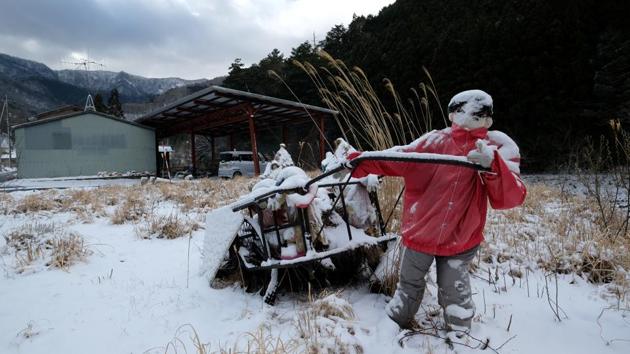
Near the bus stop, a group of scarecrows gathers as another “father” doll pulls a cart full of “children.” “People gradually left... It’s lonely now,” she said. “I made more dolls as I remembered the time when the village was lively.” Nagoro’s plight is replicated all around Japan, as the world’s third-largest economy battles a declining population, low birth rate and high life expectancy. (Kazuhiro Nogi / AFP)
7/12
 View Photos in a new improved layout
Updated on Apr 18, 2019 9:33 AM
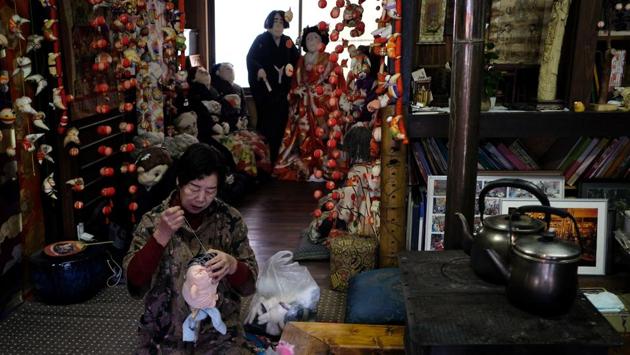
Tsukimi Ayano making the head of a life-size doll at her house. The country is on the verge of becoming the first “ultra-aged” country in the world, meaning that 28% of people are aged 65 or above. The latest government report shows that 27.7% of a population of 127 million -- one in four people -- are aged 65 or older and the figure is expected to jump to 37.7% in 2050. (Kazuhiro Nogi / AFP)
8/12
 View Photos in a new improved layout
Updated on Apr 18, 2019 9:33 AM
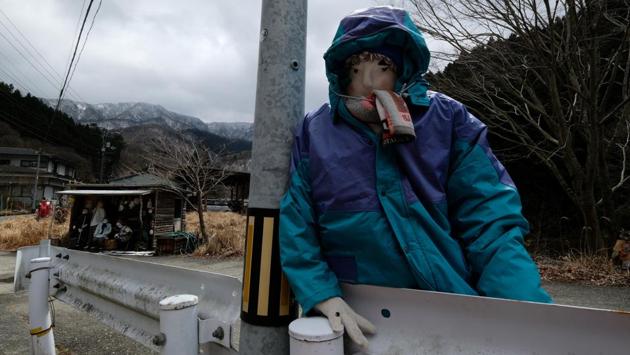
According to experts, around 40% of Japan’s 1,700 municipalities are defined as “depopulated.” After World War II, when forestry and agriculture were the main economic drivers, many Japanese lived in rural villages like Nagoro. But young people started to leave for Tokyo in the 1960s, said Takumi Fujinami, economist at the Japan Research Institute. (Kazuhiro Nogi / AFP)
9/12
 View Photos in a new improved layout
Updated on Apr 18, 2019 9:33 AM
Ayano (bottom R) inspects her dolls at an elementary school. Prime Minister Shinzo Abe has pledged to revive regions outside Tokyo by pumping in tens of billions of yen, but this isn’t enough to stop young people from leaving hometowns, Fujinami said. “In order to combat depopulation, we need people moving in to depopulated areas. But recovering the population is extremely difficult.” (Kazuhiro Nogi / AFP)
10/12
 View Photos in a new improved layout
Updated on Apr 18, 2019 9:33 AM
“Instead, it’s important to increase income or improve working conditions for young people in rural areas,” Fujinami said. For example, companies in rural areas tend to have fewer holidays than those in Tokyo. “We need to create communities where young people can make a long-term living.” (Kazuhiro Nogi / AFP)
11/12
 View Photos in a new improved layout
Updated on Apr 18, 2019 9:33 AM
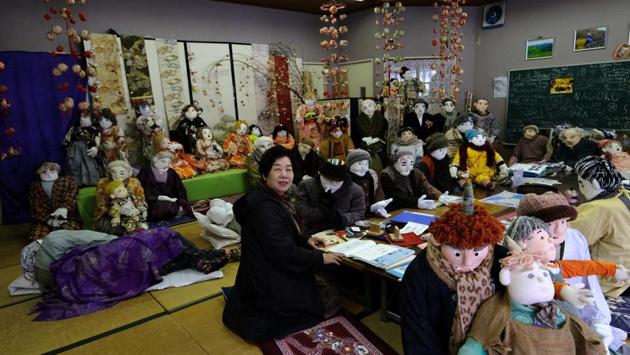
Tsukimi Ayano with life-size dolls in her workshop. While there is little evidence of citizens returning to Nagoro, Ayano’s dolls have attracted flesh-and-blood people from as far afield as the US and France. “Before I started making scarecrows, nobody stopped by. Now many people visit here,” she said. (Kazuhiro Nogi / AFP)
12/12
 View Photos in a new improved layout
Updated on Apr 18, 2019 9:33 AM


