
 E-Paper



Photos: Myanmar’s iconic trishaws unfazed by cars, clogged roads
Economic reforms pushed by the Myanmar government in 2011 led to eased vehicle imports but have also brought increased congestion to its roads. Meanwhile, makers and drivers of the older three wheel trishaws ubiquitous to the country’s transport system pedal on undeterred.
Updated on: Jan 11, 2018 12:54 PM IST

Share via


Copy link

1/8

 View Photos in a new improved layout
Updated on Jan 11, 2018 12:54 PM
A trishaw driver makes a turn on a street in Yangon. Some 25,000 licensed drivers of three-wheeled trishaws pedal away, undeterred by the rapid transformation of the city’s streets from sedate thoroughfares to car-choked arteries in just a few years after economic reforms were launched in 2011 opening the country after years of isolation. (Roberto Schmidt / AFP)
2/8
 View Photos in a new improved layout
Updated on Jan 11, 2018 12:54 PM
Surrounded by a trove of tools and spare parts, trishaw maker Aye Zaw works on his latest model, readying it for the clogged roads of Myanmar’s biggest city. Despite marked changes to Yangon’s streets, the 46-year-old revels in defying time with this traditional form of transport. (Roberto Schmidt / AFP)
3/8
 View Photos in a new improved layout
Updated on Jan 11, 2018 12:54 PM
A trishaw driver cycles past street vendors in a market in the early evening hours. Myanmar has seen an explosion in vehicle numbers after a military-backed government eased car imports. The country has since tried to improve congestion by overhauling the bus system, building flyovers, upgrading a circular railway line, and most recently, introducing water taxis. (Roberto Schmidt / AFP)
4/8
 View Photos in a new improved layout
Updated on Jan 11, 2018 12:54 PM
“I am always finding ways to make trishaws better and better,” the craftsman said while working at his brother’s workshop repairing a used trishaw. He joined the family business aged 16, learning the ropes from his father, and now works with his younger brother Htay Zaw, making around seven trishaws every month. (Roberto Schmidt / AFP)
5/8
 View Photos in a new improved layout
Updated on Jan 11, 2018 12:54 PM
A trishaw driver takes a passenger on a ride down an avenue in Yangon. The cheapest model for one of these trishaws costs 430,000 kyats (Rs. 20,000 approx) but customers who pay a little more can opt for a flashier version with steel trimmings. (Roberto Schmidt / AFP)
6/8
 View Photos in a new improved layout
Updated on Jan 11, 2018 12:54 PM
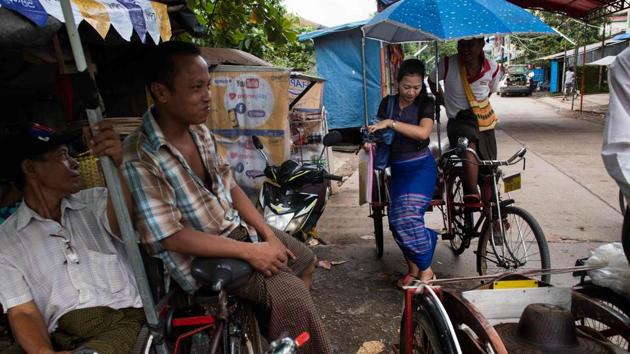
A female passenger disembarks a trishaw. The brothers’ reputation has spread outside of Myanmar, with one creation snapped up by an American tourist and another by an Israeli embassy official leaving the country. And despite measures to decongest the streets, drivers still swear by these three-wheelers. (Roberto Schmidt / AFP)
7/8
 View Photos in a new improved layout
Updated on Jan 11, 2018 12:54 PM
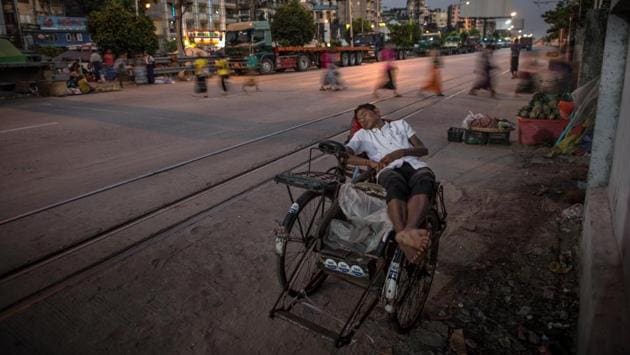
A cycle trishaw driver naps while waiting for customers in Yangon. Sixty-year-old Aung Ba is one of the city’s 25,000 such drivers, earning about 10,000 kyat (Rs. 480) each day. “It wouldn’t be good to drive a car. But riding a trishaw, I can find my way through as I want,” he said sitting beside his vehicle. (Roberto Schmidt / AFP)
8/8
 View Photos in a new improved layout
Updated on Jan 11, 2018 12:54 PM


