
 E-Paper



Photos: Nepalese Chitrakars work to save a dying art form
Chitrakar are the renowned traditional painters and sculptors of Nepal who depict gods and goddesses on temples, masks of Hindu deities and posters for various religious celebrations in the Nepalese capital of Kathmandu. The Chitrakars were given their title, which became their family name by 14th century King Jayasthiti Malla. For Chitrakar families the present day is a struggle to keep the dying art alive as their art competes with mass produced prints. There are today just 10 or fewer families now painting in the traditional style, which is denoted by its vivid palette of plant-based paints.
Updated on: Aug 29, 2019 10:36 AM IST

Share via


Copy link

1/12
 View Photos in a new improved layout
Updated on Aug 29, 2019 10:36 AM
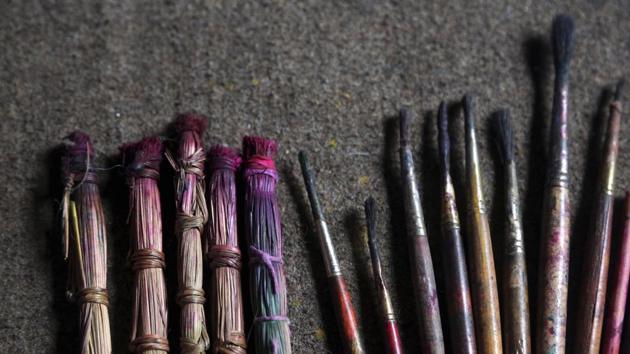
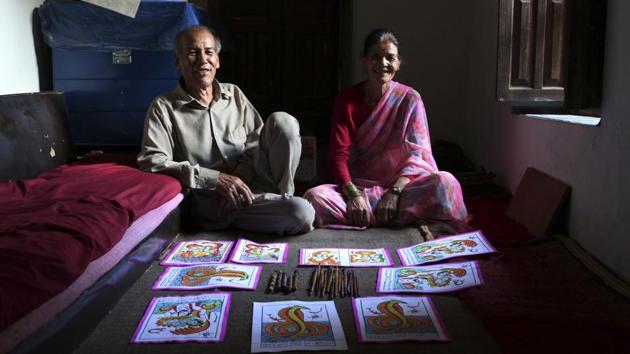
Handmade traditional brushes are lined up along with modern ones at the residence of Chitrakar couple Tej Kumari and Purna, in Bhaktapur, Nepal. Chitrakar families in Kathmandu were renowned traditional painters and sculptors who depicted gods and goddesses on temples, masks of Hindu deities and posters for various religious celebrations. For the Chitrakar couple it is a struggle to keep the art alive against modern mass produced prints. (Niranjan Shrestha / AP)
2/12
 View Photos in a new improved layout
Updated on Aug 29, 2019 10:36 AM
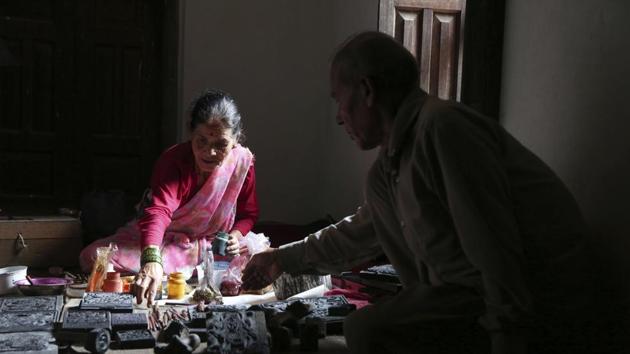
Tej Kumari and Purna (R) prepare to make paintings at their residence. The Chitrakars were given their title, now their family name, by 14th century King Jayasthiti Malla. Malla classified the Newar ethnic group of Kathmandu under a caste system according to occupations passed down generations, with different families taking on roles as priests, artisans, fishermen, cleaners, etc. With this, higher and lower castes also emerged. (Niranjan Shrestha / AP)
3/12
 View Photos in a new improved layout
Updated on Aug 29, 2019 10:36 AM
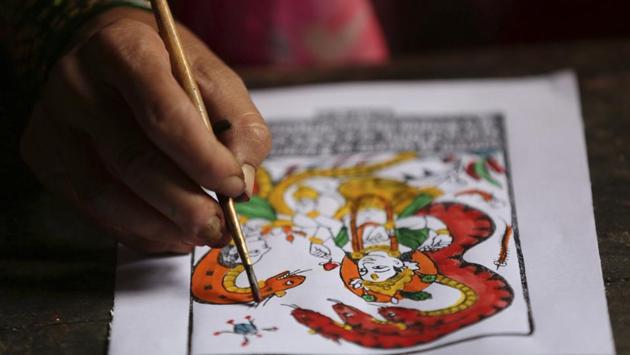
Tej Kumari Chitrakar makes a painting ahead of Naag Panchami festival. Nepalese history and culture expert Satya Mohan Joshi said there were positive and negative aspects of this system back then.“The bad thing was it created a basis for discrimination. The good thing was it created expertise in each sector,” he said, allowing the Chitrakar’s distinct painting style to continue and flourish. (Niranjan Shrestha / AP)
4/12
 View Photos in a new improved layout
Updated on Aug 29, 2019 10:36 AM
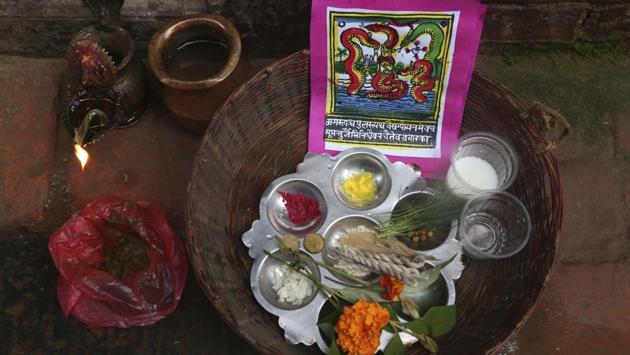
A traditional painting is seen in a basket containing materials used for rituals during Naag Panchami. “Even if the painter’s son, a Chitrakar, wanted to do the coppersmith job of a Tamrakar, they weren’t able to,” Joshi said, referring to another group. “It is still the same now. But passing these skills on to people from different castes and backgrounds who want to learn the craft could save these traditions.” (Niranjan Shrestha / AP)
5/12
 View Photos in a new improved layout
Updated on Aug 29, 2019 10:36 AM
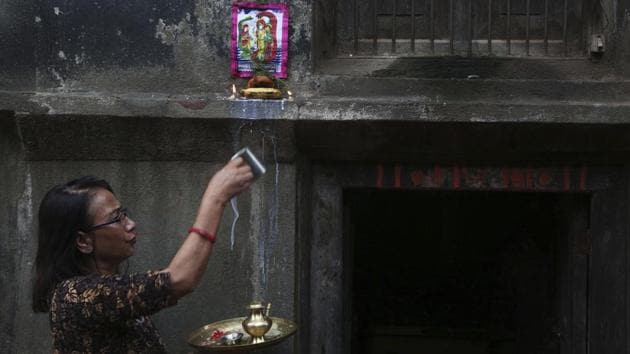
A Nepalese woman puts up a traditional chitrakar painting above the door of her house during Naag Panchami in Kathmandu. Many of the older generation who appreciated the art form have died. New generations of Chitrakars meanwhile are going into other professions, or leaving Nepal for work or education abroad. (Niranjan Shrestha / AP)
6/12
 View Photos in a new improved layout
Updated on Aug 29, 2019 10:36 AM
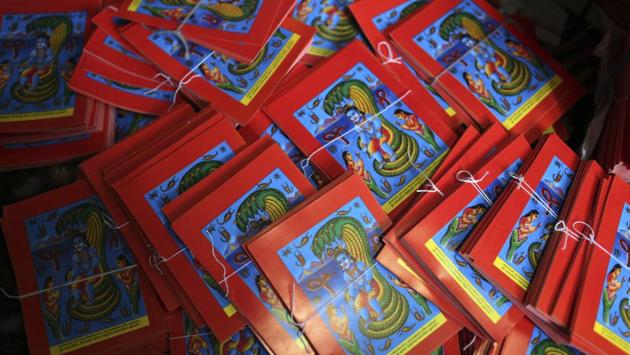
Machine printed posters are seen ahead of Naag Panchami at a store in Kathmandu. The art and tradition, however, is dying because of mass machine printed posters and card-size pictures of gods that are cheaper and have become more popular. (Niranjan Shrestha / AP)
7/12
 View Photos in a new improved layout
Updated on Aug 29, 2019 10:36 AM
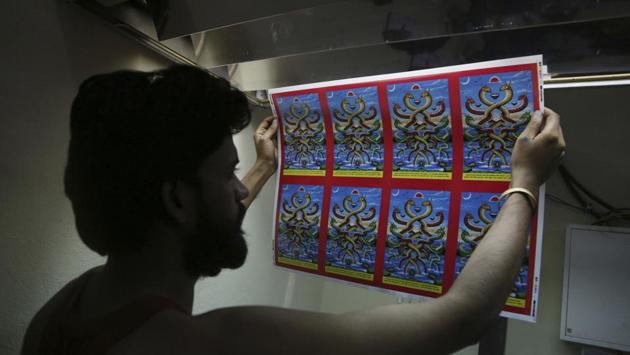
A Nepalese man checks newly printed posters at a printing press in Kathmandu. There are just 10 or fewer families now painting in the traditional style, which is denoted by its vivid palette of plant-based paints. (Niranjan Shrestha / AP)
8/12
 View Photos in a new improved layout
Updated on Aug 29, 2019 10:36 AM
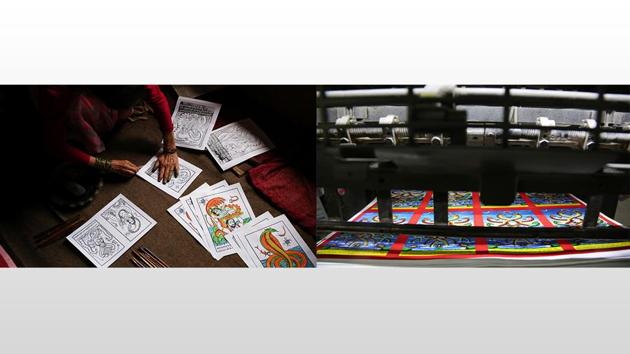
A combination image shows Tej Kumari Chitrakar (L) making traditional paintings at her residence ahead of Naag Panchami festival and Machine printed posters (R) being made at a printing press. (Niranjan Shrestha / AP)
9/12
 View Photos in a new improved layout
Updated on Aug 29, 2019 10:36 AM
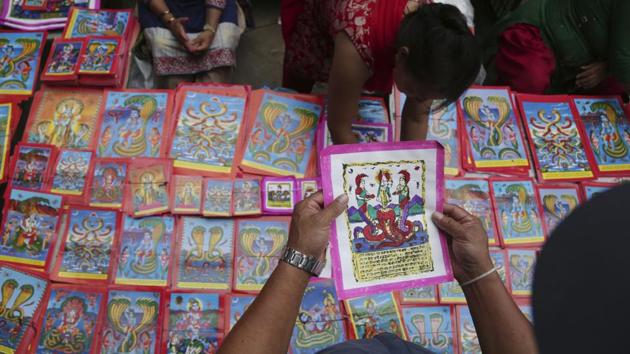
A Nepalese man checks a traditional painting among machine printed posters for sale at a market during Naag Panchami festival. Tej Kumari said machine printed ones have gained popularity, leading to a drastic reduction in the number of customers. (Niranjan Shrestha / AP)
10/12
 View Photos in a new improved layout
Updated on Aug 29, 2019 10:36 AM
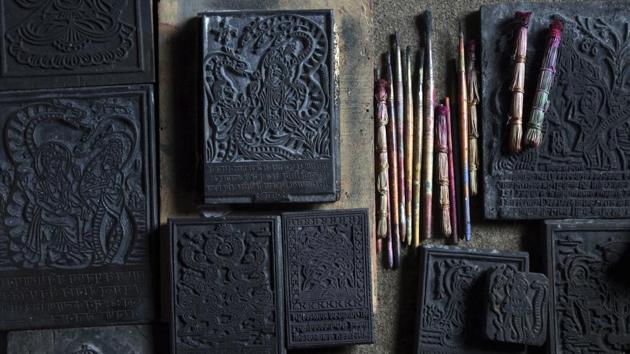
Wooden stamps used to make traditional paintings, displayed at the residence of Tej Kumari and Purna. Both learned to paint in the Chitrakar style from their fathers and grandfathers, knowledge passed down over generations. However, they are not sure if the next generation will continue the tradition. Their two sons work in businesses but their third son is showing some interest in the trade. (Niranjan Shrestha / AP)
11/12
 View Photos in a new improved layout
Updated on Aug 29, 2019 10:36 AM
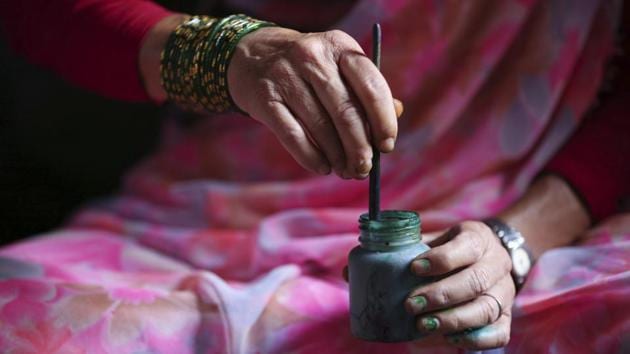
Tej Kumari mixes colour to make paintings at her residence. While painting snake gods for the Hindu festival of Naag Pancahami, Tej Kumari recalled days when she would make thousands of posters for people to paste on their doors in August. This year she made only about 50. (Niranjan Shrestha / AP)
12/12
 View Photos in a new improved layout
Updated on Aug 29, 2019 10:36 AM


