
 E-Paper



Photos: Nicaraguans vent anger on state symbols amid civic unrest
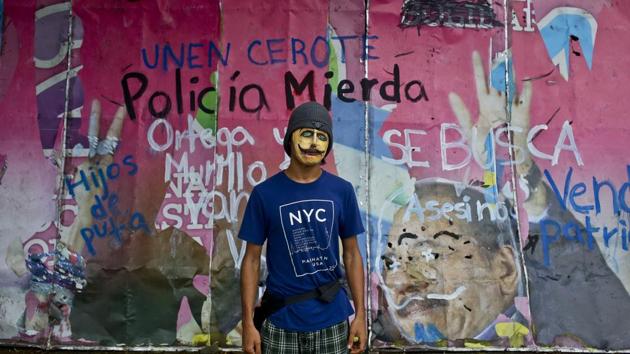
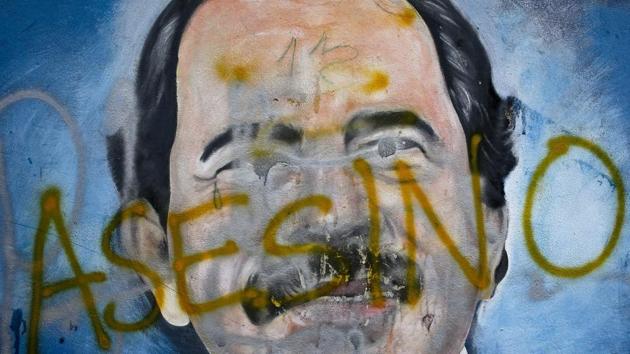
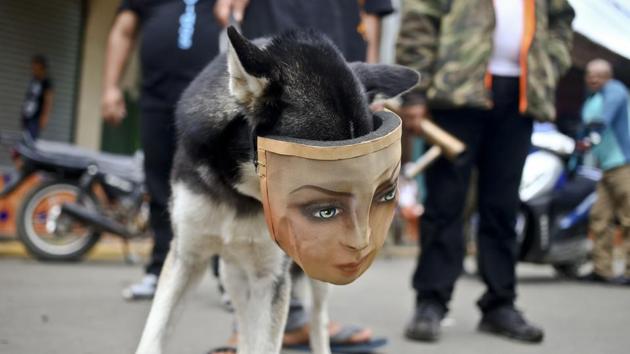
During almost two months of anti-government protests, symbols of President Daniel Ortega’s administration and even the earlier Sandinista revolution he helped lead have been defaced and destroyed or sometimes appropriated by demonstrators. These symbols have become targets for protesters during demonstrations that were initially set off in mid-April by a since-canceled austerity plan for the social security system but have expanded into demands for the Ortegas to give up power. Almost overnight, symbols of the Ortegas were painted with graffiti, burned, pulled down and stamped on by angry feet.
Updated on: Jun 19, 2018 2:14 PM IST

Share via


Copy link

1/9
 View Photos in a new improved layout
Updated on Jun 19, 2018 2:14 PM
A student stands wearing a mask, in front of a defaced billboard of Nicaragua’s President Daniel Ortega and his wife and Vice President Rosario Murillo, outside the Agrarian University in Managua. During two months of anti-government protests, symbols of Ortega’s administration and even the earlier Sandinista revolution he helped lead have been defaced, destroyed or sometimes appropriated by demonstrators. (Esteban Felix / AP)
2/9
 View Photos in a new improved layout
Updated on Jun 19, 2018 2:14 PM
The Spanish word for “Murderer” covers a mural of President Daniel Ortega. Ortega and his wife returned to power in 2007, and to many Nicaraguans it seemed their election campaign never stopped, even growing in size and intensity as they planted billboard portraits and other ostentatious works across the country. (Esteban Felix / AP)
3/9
 View Photos in a new improved layout
Updated on Jun 19, 2018 2:14 PM
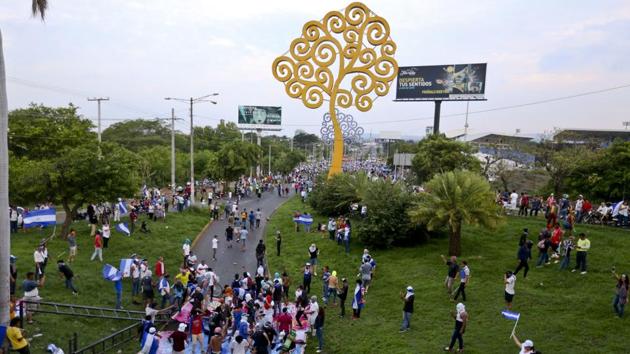
One of the main targets have been Murillo’s “Chayopalos,” or Trees of Life, that spouted up in 2013 — huge steel sculptures of trees covered with hundreds of light bulbs lining the capital’s major thoroughfares. The administration portrayed them as public art installations, but many saw them as a gaudy extravagance in a country rife with poverty. (Esteban Felix / AP)
4/9
 View Photos in a new improved layout
Updated on Jun 19, 2018 2:14 PM
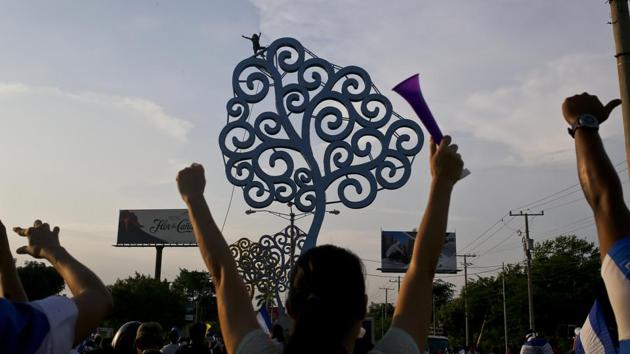
Once the protests erupted, crowds chanted “Fall, fall, fall,” pulled the trees down and bounced on their twisted limbs for live videos. Recyclers quickly stripped their wiring, while others unscrewed light bulbs to be proudly dangled on cords around their necks. (Esteban Felix / AP)
5/9
 View Photos in a new improved layout
Updated on Jun 19, 2018 2:14 PM
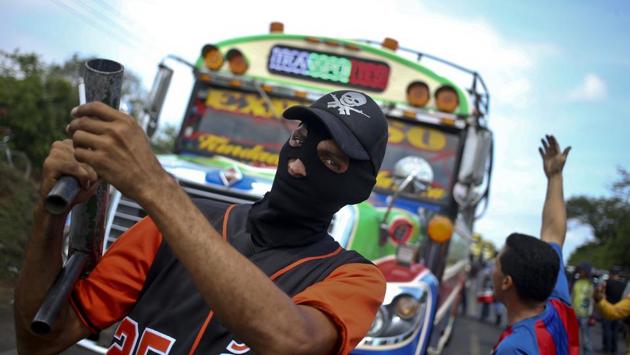
Protesters have also turned symbols of the revolution against the government. When Ortega and others rose up against the dictatorship in the late 1970s, the rebels were woefully outgunned and they used homemade mortars of welded pipe on security forces. Now those same artisanal weapons are being turned on Ortega’s police and pro-government gangs. (Esteban Felix / AP)
6/9
 View Photos in a new improved layout
Updated on Jun 19, 2018 2:14 PM
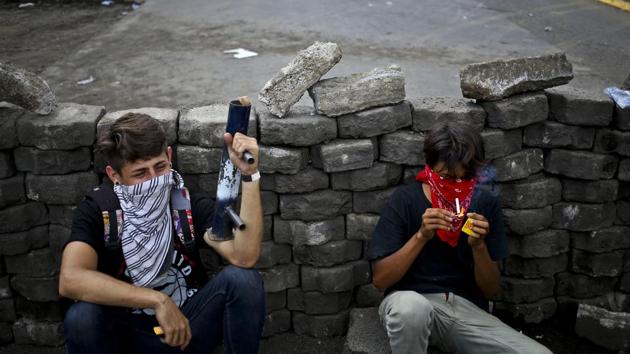
Echoing another tactic of the revolution, whole segments of cobblestone streets have been pried up, especially in Masaya, southeast of the capital. The stones are stacked into waist-high barricades, just as the Sandinistas did to fend of Anastasio Somoza’s security forces. (Esteban Felix / AP)
7/9
 View Photos in a new improved layout
Updated on Jun 19, 2018 2:14 PM
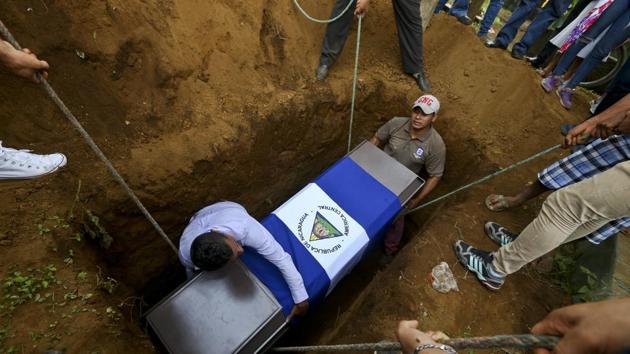
People lower the coffin of Manuel de Jesus Chavez, 38, at the cemetery in Leon, Nicaragua. Chavez, 38, died during clashes with police as anti-government protesters blocked the Panamerican Highway. More than 160 people have been killed in street clashes since the protests started. (Esteban Felix / AP)
8/9
 View Photos in a new improved layout
Updated on Jun 19, 2018 2:14 PM
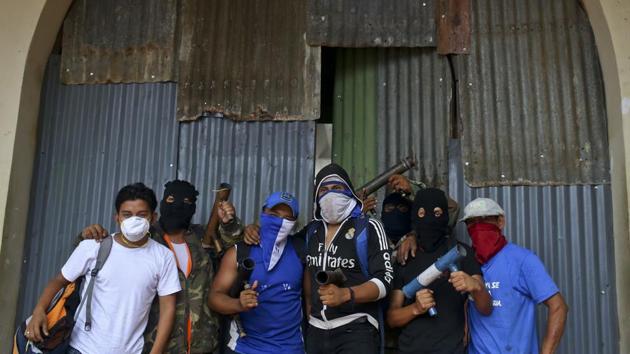
Anti-government protesters pose for a photo with their homemade mortars outside a shopping center with a store covered by metal sheeting to protect it from looting. Protesters use rocks, Molotov cocktails and homemade mortars fashioned from welded pipe segments to confront police who use with tear gas, rubber bullets and, in some cases, live rounds. (Esteban Felix / AP)
9/9
 View Photos in a new improved layout
Updated on Jun 19, 2018 2:14 PM


