
 E-Paper



Photos: Peru’s military tries to curb illegal gold mining in Amazon
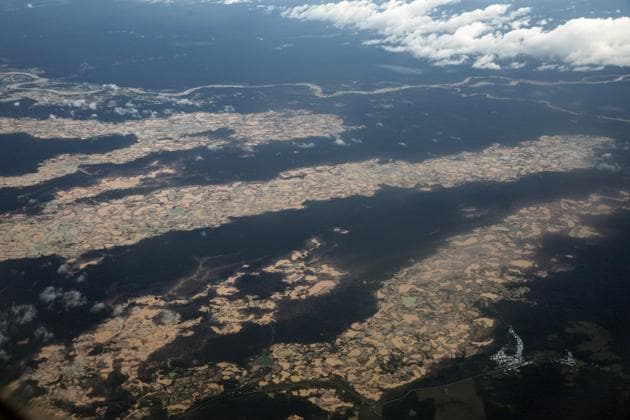
Peru is the No. 1 producer of gold in Latin America. Fueled by rising global prices for gold, illegal mining has destroyed 92,000 square miles (238,000 square kilometers) of forest between 2000 and 2015, according to the Amazonian Network of GeoReferenced Socio-Environmental Information. Few months back, Peru announced to install long-term military bases in hopes of curbing not just illegal mining but also human trafficking and other associated crimes in the region.
Updated on: May 17, 2019 12:26 PM IST

Share via


Copy link

1/9
 View Photos in a new improved layout
Updated on May 17, 2019 12:26 PM
An aerial view of thousands of destroyed hectares of Amazon jungle by illegal miners. For a decade, a gold rush accelerated in Peru’s Tambopata province, a center for an illicit activity that is among the most lucrative, and destructive, in the Amazonian wilderness. Security forces came and went; miners scattered and returned. Then Peru announced to install long-term military bases in hopes of curbing not just illegal mining but also human trafficking and other associated crimes. (Rodrigo Abd / AP)
2/9
 View Photos in a new improved layout
Updated on May 17, 2019 12:26 PM
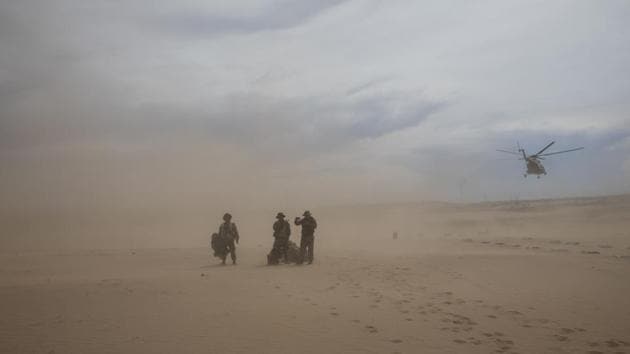
“Operation Mercury” soldiers arrive for their new assignment at the Balata police and military base. The operation began in February when authorities evicted thousands of illegal gold miners from the area and deployed hundreds of police and soldiers for the long term, lodging them in some cases in the same makeshift quarters once used by gold dealers. (Rodrigo Abd / AP)
3/9
 View Photos in a new improved layout
Updated on May 17, 2019 12:26 PM
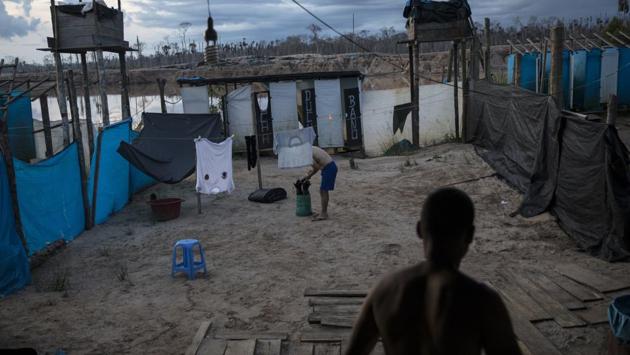
Police officers seen early in the morning at the base camp. One base occupied by security forces is surrounded by two lakes contaminated with mercury as well as debris left by miners. There are abandoned shops, and a small memorial site for a dead miner, marked with artificial flowers and bottles of alcohol. A few dogs and cats wander around the bleak landscape. (Rodrigo Abd / AP)
4/9
 View Photos in a new improved layout
Updated on May 17, 2019 12:26 PM
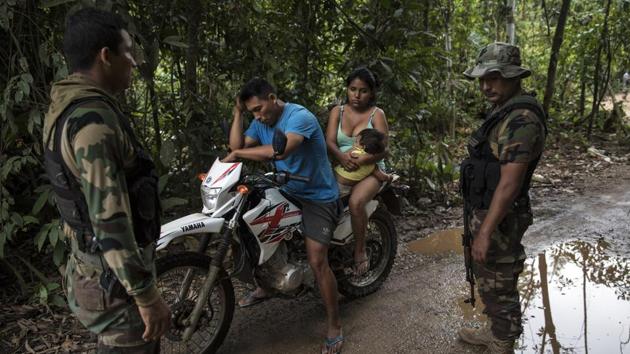
Policemen question a miner near the Mega 12 police base. They regularly patrol in vehicles and on motorcycles, though some miners emerge at night and there are concerns that others will wait for the military presence to subside, or simply relocate to more remote areas. (Rodrigo Abd / AP)
5/9
 View Photos in a new improved layout
Updated on May 17, 2019 12:26 PM
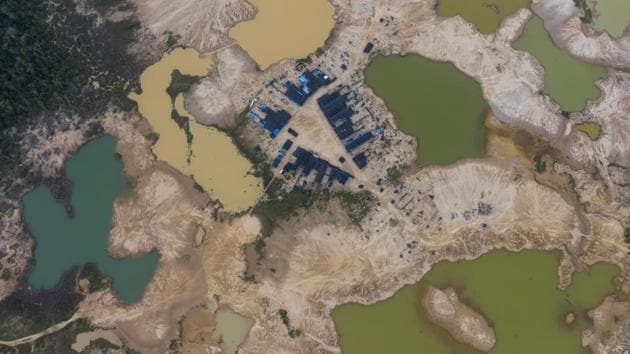
The area known as “La Pampa,” which surrounds a national park and doesn’t appear on state maps, has yielded roughly 25 tons of illegally mined gold a year, much more than the output of Yanacocha, Peru’s most productive legal gold mine, according to the Peruvian government. Peru is the No. 1 producer of gold in Latin America. It is a pattern being repeated to varying degrees elsewhere in the Amazon, including in Venezuela, Bolivia, Ecuador, Colombia and Brazil. (Rodrigo Abd / AP)
6/9
 View Photos in a new improved layout
Updated on May 17, 2019 12:26 PM
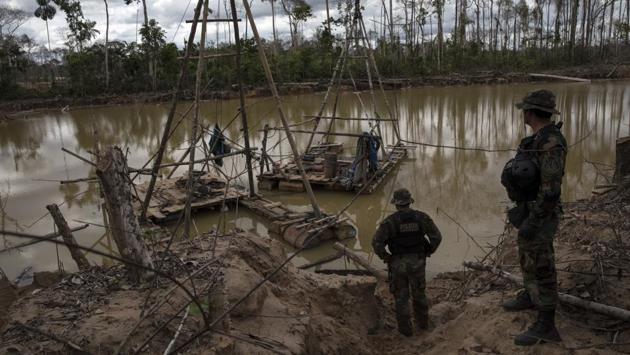
Fueled by rising global prices for gold, illegal mining destroyed 92,000 square miles (238,000 square kilometers) of forest between 2000 and 2015, according to the Amazonian Network of GeoReferenced Socio-Environmental Information. The use of hundreds of tons of toxic mercury in illegal mining across the continent has raised concerns about health problems on affected land, some of which is occupied by indigenous people. (Rodrigo Abd / AP)
7/9
 View Photos in a new improved layout
Updated on May 17, 2019 12:26 PM
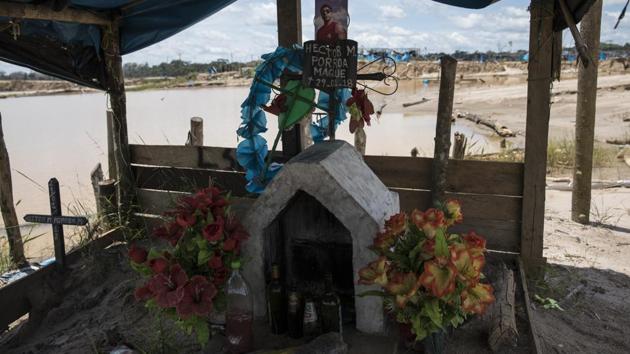
A memorial adorned with artificial flowers is seen inside a former illegal gold mining camp. “The damage to nature here is so terrible that all the water is poisoned,” said Maj. Gustavo Cerdeña, head of a police unit. Cerdeña said he had come to the area before the law enforcement operation began in February, posing as a gold buyer in order to gather intelligence on the criminal syndicate dominating the illegal trade. (Rodrigo Abd / AP)
8/9
 View Photos in a new improved layout
Updated on May 17, 2019 12:26 PM
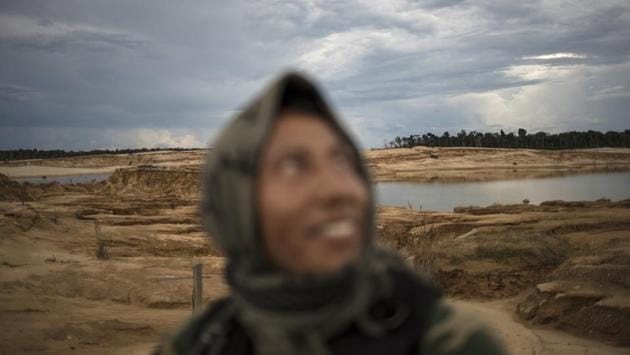
“As many miners tell me, these interventions just push miners into areas further and further into the rainforest, because they want to prevent being caught,” said Jimena Diaz Leiva, a PhD student at the University of California, Berkeley who has studied the illegal industry. She also said the small-scale miners feel ignored and vilified by a government that they say has shown little interest in their economic well-being and whose initiatives to bring them into the legal mining industry have not been effective. (Rodrigo Abd / AP)
9/9
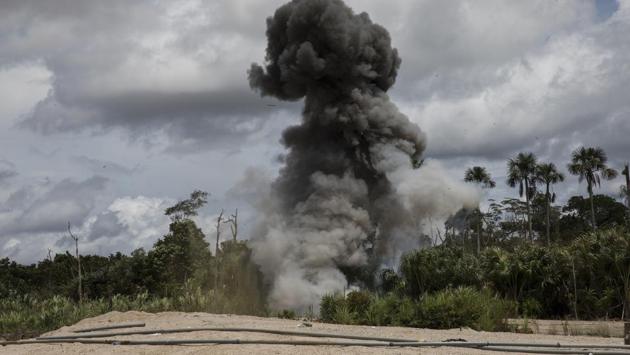 View Photos in a new improved layout
Updated on May 17, 2019 12:26 PM


