
 E-Paper



Photos: South Korean workaholics head to prison to escape the daily grind
A downturn in South Korea's high-tech, export-driven economy has intensified a hyper-competitive school and work environment that experts say adds to a high incidence of stress and suicide. Since 2013, the "Prison Inside Me" facility in northeast Hongcheon has hosted more than 2,000 inmates, many of them stressed office workers and students seeking relief from South Korea's demanding work and academic culture.
Updated on: Nov 24, 2018 2:56 PM IST


Share via


Copy link

1/10
 View Photos in a new improved layout
Updated on Nov 24, 2018 2:56 PM
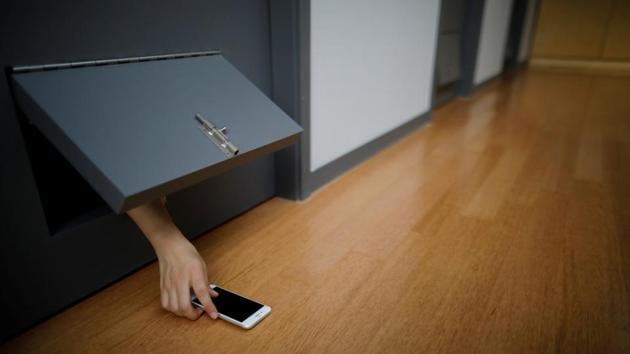
Park Hye-ri, 28, a startup business program manager, puts her mobile phone outside a cell of Prison Inside Me, a mock prison facility, in Hongcheon, South Korea. For most people, prison is a place to escape from. For South Koreans in need of a break from the demands of everyday life, a day in a faux jail is the escape. (Kim Hong-Ji / REUTERS)
2/10
 View Photos in a new improved layout
Updated on Nov 24, 2018 2:56 PM
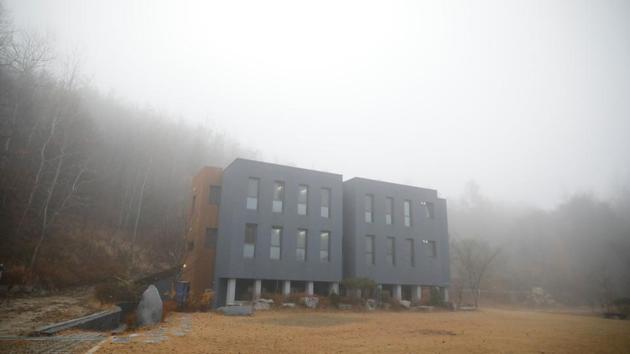
Since 2013, the “Prison Inside Me” facility in northeast Hongcheon has hosted more than 2,000 inmates, many of them stressed office workers and students seeking relief from South Korea’s demanding work and academic culture. (Kim Hong-Ji / REUTERS)
3/10
 View Photos in a new improved layout
Updated on Nov 24, 2018 2:56 PM
Park Hye-ri, 28 stretches while being locked inside a cell. “This prison gives me a sense of freedom,” said Park who paid $90 to spend 24 hours locked up in the mock prison. Prison rules are strict. No talking with other inmates. No mobile phones or clocks. (Kim Hong-Ji / REUTERS)
4/10
 View Photos in a new improved layout
Updated on Nov 24, 2018 2:56 PM
Confiscated mobile phones of participants stored at Prison Inside Me. Clients get a blue prison uniform, a yoga mat, tea set, a pen and notebook. They sleep on the floor. There is a small toilet inside the room, but no mirror. (Kim Hong-Ji / REUTERS)
5/10
 View Photos in a new improved layout
Updated on Nov 24, 2018 2:56 PM
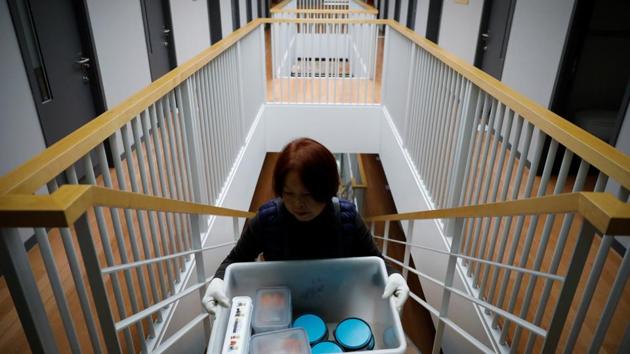
An administrator serves meals. The menu includes steamed sweet potato and a banana shake for dinner, and rice porridge for breakfast. Co-founder Noh Ji-Hyang said the mock prison was inspired by her husband, a prosecutor who often put in 100-hour work weeks. (Kim Hong-Ji / REUTERS)
6/10
 View Photos in a new improved layout
Updated on Nov 24, 2018 2:56 PM
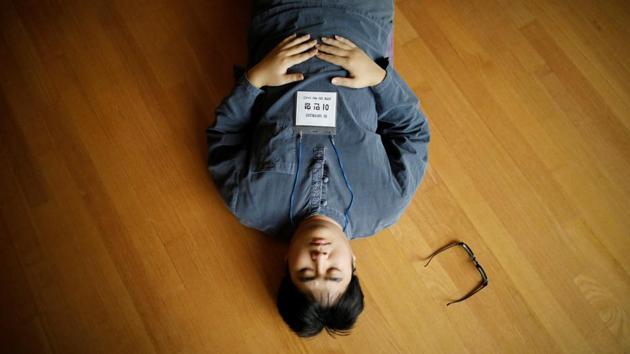
A participant meditates before being locked up in a cell. “He said he would rather go into solitary confinement for a week to take a rest and feel better,” Noh said. “That was the beginning.” (Kim Hong-Ji / REUTERS)
7/10
 View Photos in a new improved layout
Updated on Nov 24, 2018 2:56 PM
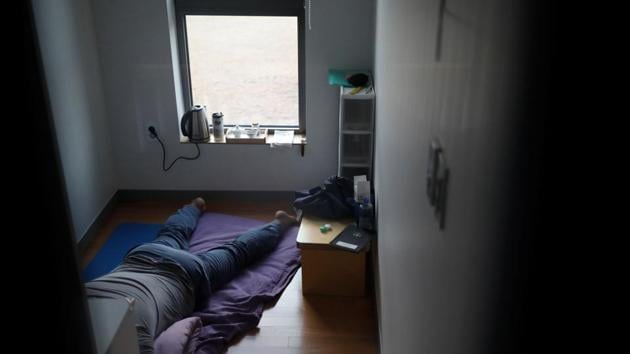
A participant takes a nap inside a cell. A downturn in South Korea’s high-tech, export-driven economy has intensified a hyper-competitive school and work environment that experts say adds to a high incidence of stress and suicide. (Kim Hong-Ji / REUTERS)
8/10
 View Photos in a new improved layout
Updated on Nov 24, 2018 2:56 PM
Participants take a walk before being locked up. South Koreans worked 2,024 hours on average in 2017, the third longest after Mexico and Costa Rica, in a survey of 36 Organisation for Economic Cooperation and Development (OECD) member nations. (Kim Hong-Ji / REUTERS)
9/10
 View Photos in a new improved layout
Updated on Nov 24, 2018 2:56 PM
A participant receives a certificate of parole after spending time at Prison Inside Me. To help people work less and earn more, the government has raised the minimum wage and cut the legal cap on working hours to 52 per week from 68. But the policies could backfire and put at risk more jobs than they create, economists say. (Kim Hong-Ji / REUTERS)
10/10
 View Photos in a new improved layout
Updated on Nov 24, 2018 2:56 PM


