
 E-Paper



Photos: Spain turns into destination of choice for migrant arrivals
While most EU nations are tightening their migrant policies with an eye on their electorates, Spain’s new centre-left Prime Minister Pedro Sánchez is welcoming migrants – for exactly the same reason. Spain has now become the main destination for migrants trying to reach Europe, replacing the Libya-Italy Mediterranean route that was once the main migrant gateway to the continent. But as migrants reach Spain both by land and sea, police and charities that work with migrants have said that the surge is exposing Spain’s response as unplanned, underfunded and understaffed.
Updated on: Aug 03, 2018 1:08 PM IST

Share via


Copy link

1/9

 View Photos in a new improved layout
Updated on Aug 03, 2018 1:08 PM
A migrant wrapped in a Red Cross blanket sits at the harbour of Tarifa. Spain has overtaken Italy as the destination of choice after a crackdown by Libyan authorities has made it more difficult for migrants to reach Italian shores. Nearly 23,000 have arrived by sea so far this year, with 307 dying in the attempt, according to the International Organization for Migration – more than all of last year. (Jorge Guerrero / AFP)
2/9
 View Photos in a new improved layout
Updated on Aug 03, 2018 1:08 PM
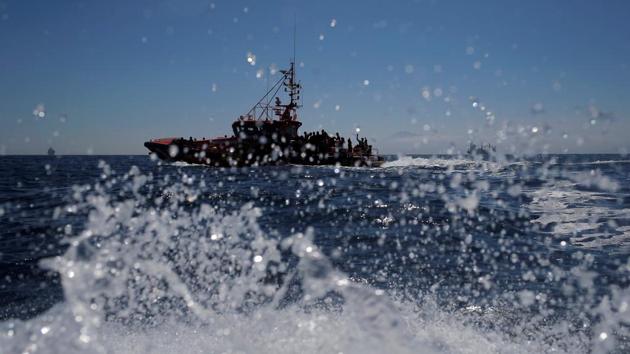
More migrants have arrived in Spain over the past seven months than in all of 2017. But Prime Minister Pedro Sánchez’s centre-left government has rejected the term “mass immigration” that has fuelled the discourse in several European nations. Foreign Minister Josep Borrell instead chose to highlight the need for “new blood” in a continent with an ageing population. (Jon Nazca / REUTERS)
3/9
 View Photos in a new improved layout
Updated on Aug 03, 2018 1:08 PM
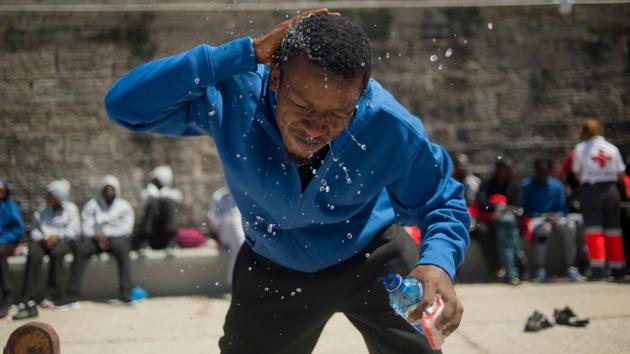
A man cools off upon arrival at the harbour of Tarifa. Just since Friday more than 1,500 migrants have landed in the southern province of Cadiz in Andalusia, with the majority of the arrivals funnelling through Algeciras. But as more migrants make their way to Spain, both through land and water-- authorities are struggling to cope with the sudden spike in arrivals. (Jorge Guerrero / AFP)
4/9
 View Photos in a new improved layout
Updated on Aug 03, 2018 1:08 PM
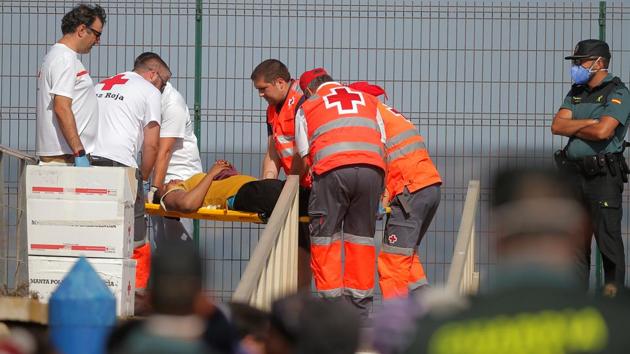
A migrant woman, intercepted aboard a dinghy off the coast in the Strait of Gibraltar, is carried on a stretcher by the Spanish Red Cross. Police and charities that work with migrants have said that the surge is exposing Spain’s response as unplanned, underfunded and understaffed. Interior Minister Fernando Grande-Marlaska has however said that situation is “absolutely under control and controllable.” (Jon Nazca / REUTERS)
5/9
 View Photos in a new improved layout
Updated on Aug 03, 2018 1:08 PM
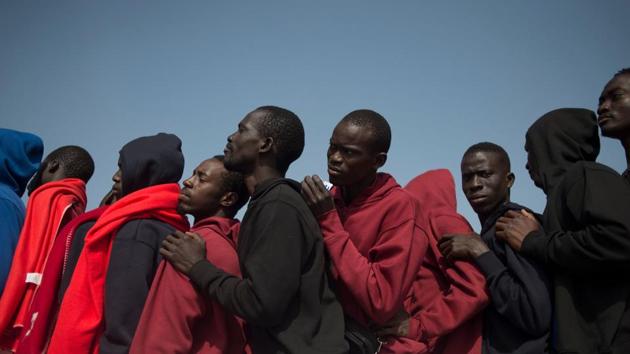
Migrants rescued at sea wait to be transferred at the harbour of Algeciras. There are not enough officers to process migrants within 72 hours of their arrival as required by law. In a sign that police are struggling to control the situation, 62 migrants escaped on Sunday from a warehouse which has been turned into a temporary shelter in the port of Barbate in Cadiz. (Jorge Guerrero / AFP)
6/9
 View Photos in a new improved layout
Updated on Aug 03, 2018 1:08 PM
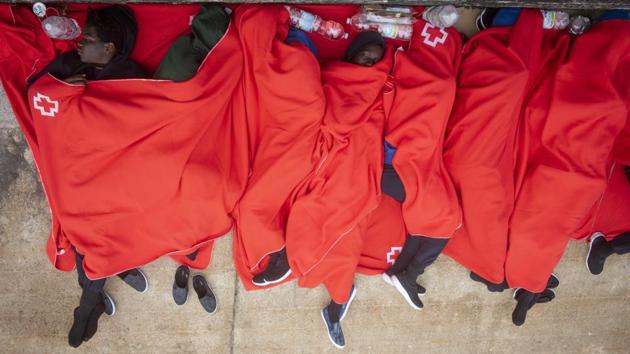
With police stations and makeshift emergency shelters set up in sports centres in Cadiz full, many rescued migrants were forced to sleep inside an orange rescue boat docked in the port of Algeciras, or on the pavement beside it. (Marcos Moreno / AP)
7/9
 View Photos in a new improved layout
Updated on Aug 03, 2018 1:08 PM
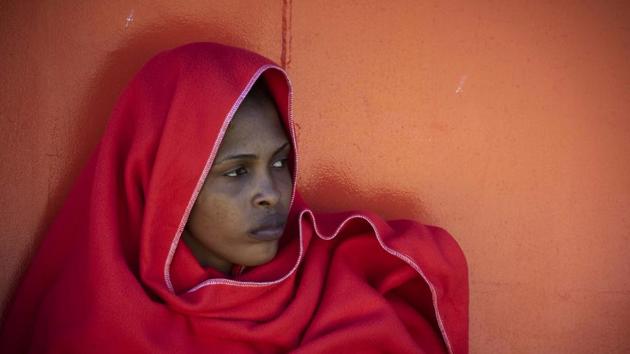
A migrant arrives after being rescued by Spain's Maritime Rescue Service in the Strait of Gibraltar, at the port of Algeciras. The authorities have not had not enough blankets, mattresses and even food for the migrants who arrived in recent days, said Ana Rosado, an activist with the Andalusian Pro-Human Rights Association (APDHA) which provides aid to the new arrivals. (Marcos Moreno / AP)
8/9
 View Photos in a new improved layout
Updated on Aug 03, 2018 1:08 PM
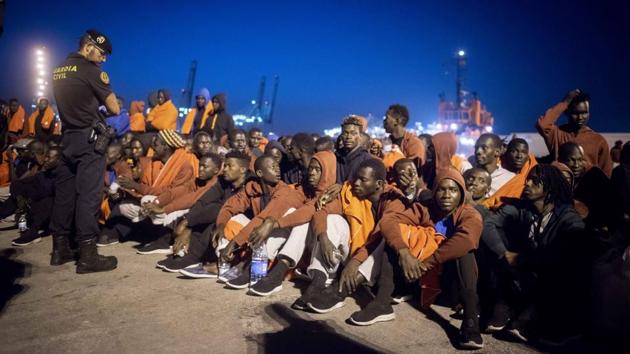
A group of migrants sits in front of Spanish Police officers at the port of Algeciras, after being rescued. The European Commission has said that it is willing to increase funding to Spain and Morocco to help manage a rise in migration across the western Mediterranean, though the budget is limited. (Marcos Moreno / AP)
9/9
 View Photos in a new improved layout
Updated on Aug 03, 2018 1:08 PM


