
 E-Paper



Photos: Thai rice farmers shun ‘big agribusiness’ and fight climate change
In the northern Thailand, the rice farmers battling drought, debt and ailments blamed on pesticides have switched to eco-friendly growing methods despite powerful agribusiness interests in a country that is one of the top exporters of the grain in the world. Farmers are joining a pilot agricultural project for the SRI method, which aims to boost yields while shunning pesticides and using less water. According to a data, net profits for farmers were as much as 226 percent higher after adopting the SRI method than when using traditional ones.
Updated on: Dec 13, 2019 10:09 AM IST


Share via


Copy link

1/8
 View Photos in a new improved layout
Updated on Dec 13, 2019 10:09 AM
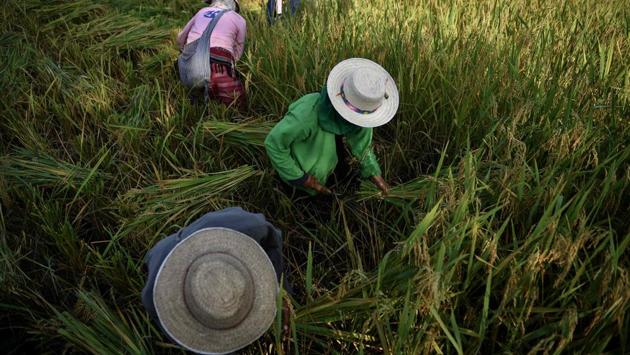
Farmers harvesting rice in the village of Mae Rim in the northern Thai province of Chiang Mai. Battling drought, debt and ailments blamed on pesticides, rice farmers in northern Thailand have turned to eco-friendly growing methods despite powerful agribusiness interests in a country that is one of the top exporters of the grain in the world. (Lillian SUWANRUMPHA / AFP)
2/8
 View Photos in a new improved layout
Updated on Dec 13, 2019 10:09 AM
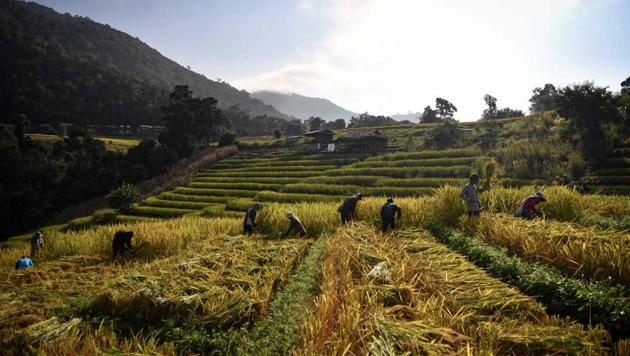
Farmers seen harvesting rice in the village.Walking through a sea of green waist-high stalks, farmer Sunnan Somjak said his fields were “exhausted” by chemicals, his family regularly felt ill, and his profits were too low to make ends meet. But that changed when he joined a pilot agricultural project for the SRI method, which aims to boost yields while shunning pesticides and using less water. (Lillian SUWANRUMPHA / AFP)
3/8
 View Photos in a new improved layout
Updated on Dec 13, 2019 10:09 AM
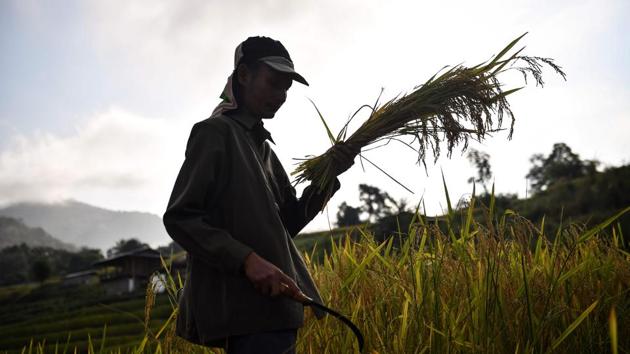
SRI was invented in the 1980s in Madagascar by a French Jesuit priest, and the technique has spread globally. “Chemicals can destroy everything,” the 58-year-old said, adding that the harvest in his village in Chiang Mai province has jumped 40 percent since employing the new method. There have been health benefits too. “It’s definitely better, we don’t get sick any more,” he added. (Lillian SUWANRUMPHA / AFP)
4/8
 View Photos in a new improved layout
Updated on Dec 13, 2019 10:09 AM
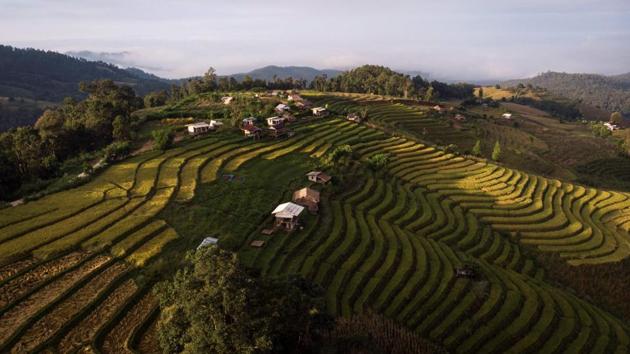
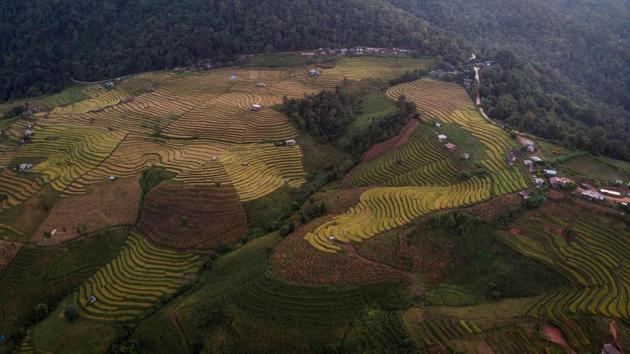
An aerial view of rice terraces seen in the village of Mae Rim. The project works by planting crops wider apart -- thus drawing in more nutrients and light -- and limiting the amount of water that gets into fields, which helps micro-organisms flourish to act as natural fertilisers. In a plus for debt-laden farmers, it also uses fewer seeds, and they are encouraged to use plants and ginger roots that naturally deter insects rather than chemical alternatives -- meaning fewer expenses. (Lillian SUWANRUMPHA / AFP)
5/8
 View Photos in a new improved layout
Updated on Dec 13, 2019 10:09 AM
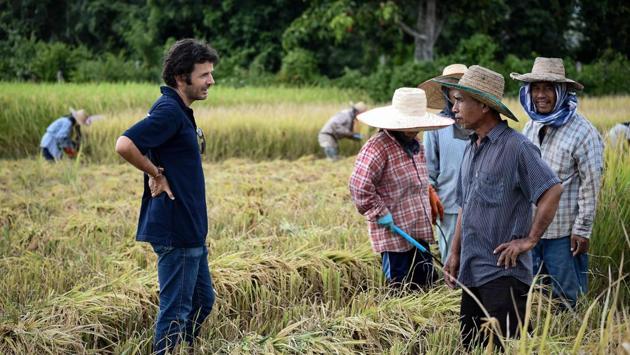
Tristan Lecomte (L), founder of French company "Pur Projet", meeting farmers harvesting rice in the village of Mae Rim. With SRI, paddy fields are not permanently flooded, which reduces methane emissions by 60 percent, according to Tristan Lecomte, founder of Pur Project, a French company supporting the technique. The project also helped Sunnan plant trees around his crops to reinforce the water table. According to Lecomte, rice yields can jump from 20 percent to more than 100 compared to the traditional method. (Lillian SUWANRUMPHA / AFP)
6/8
 View Photos in a new improved layout
Updated on Dec 13, 2019 10:09 AM
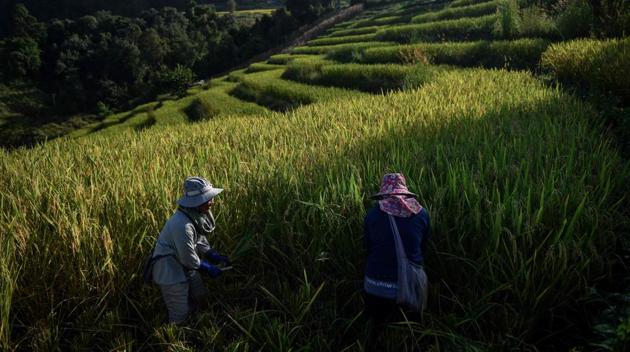
The US-based Cornell University created a centre specialising in the technique in 2010 and more than two million farmers in the region -- especially from Thailand, Vietnam, Cambodia and Laos -- have been trained. In Bac Giang province in northern Vietnam, net profits for farmers were as much as 226 percent higher after adopting the SRI method than when using traditional ones, according to Abha Mishra, who led a large project on behalf of the Asian Institute of Technology. (Lillian SUWANRUMPHA / AFP)
7/8
 View Photos in a new improved layout
Updated on Dec 13, 2019 10:09 AM
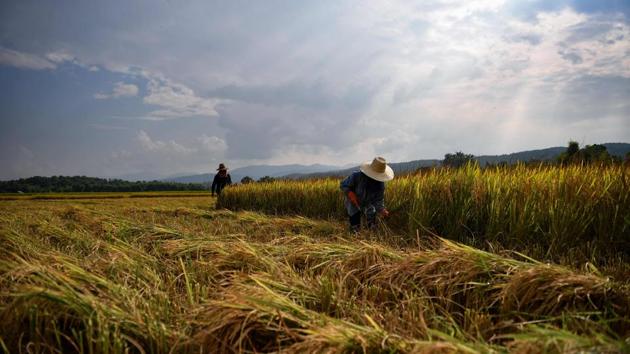
The method is also used in parts of India, China, and Africa. But, while there is support from NGOs, as well as some scientists and authorities, it still has a long way to go before widespread adoption. It faces resistance domestically from agribusiness as there is no new hybrid seed or fertilizer to sell. Industry lobbies are very active in Southeast Asia, particularly in Thailand, one of the largest users of pesticides in the world. (Lillian SUWANRUMPHA / AFP)
8/8
 View Photos in a new improved layout
Updated on Dec 13, 2019 10:09 AM


