
 E-Paper



Photos: UAE falcon hospital a window into Emirati tradition
In 2010, UNESCO added falconry to its list of Intangible Cultural Heritage of Humanity. But for residents of the United Arab Emirates, falcons have forever held a very special place in Emirati culture. Historically used to hunt meat, falcons allowed Bedouin families to survive in the harsh conditions of desert life. Opportunities for falcon hunting are limited in the UAE --it is only permitted in designated reserves with birds required to have their own passports. That makes Abu Dhabi's falcon hospital –the world’s largest –a necessary pit stop for falconers from across the Gulf region before heading to popular overseas hunting destinations.
Updated on: Feb 22, 2020 1:21 PM IST


Share via


Copy link

1/12
 View Photos in a new improved layout
Published on Feb 22, 2020 1:21 PM
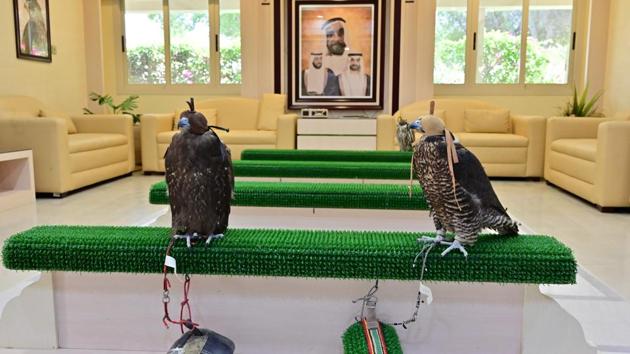
Eid al-Qobeissy’s two birds perched majestically in the waiting room of Abu Dhabi’s falcon hospital, awaiting a routine check-up ahead of a hunting trip to Azerbaijan. Like other well-travelled residents of the United Arab Emirates, the falcons will make the journey with their devoted owner on a well-worn route from a country where the creature is both a national symbol and treasured tradition. (Guiseppe Cacace / AFP)
2/12
 View Photos in a new improved layout
Published on Feb 22, 2020 1:21 PM
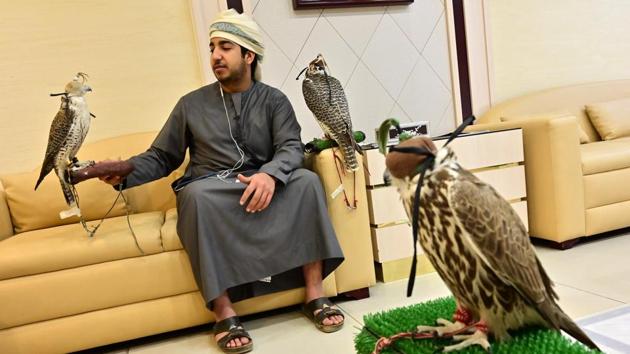
“This has been a hobby of mine since 2007,” the 26-year-old told AFP, gently stroking one of the prized birds of prey, which wear leather hoods to keep them calm and quiet. After waiting in the pristine white-marbled reception area of the animal hospital, the falcons underwent blood tests in order to complete paperwork for the trip. (Guiseppe Cacace / AFP)
3/12
 View Photos in a new improved layout
Published on Feb 22, 2020 1:21 PM
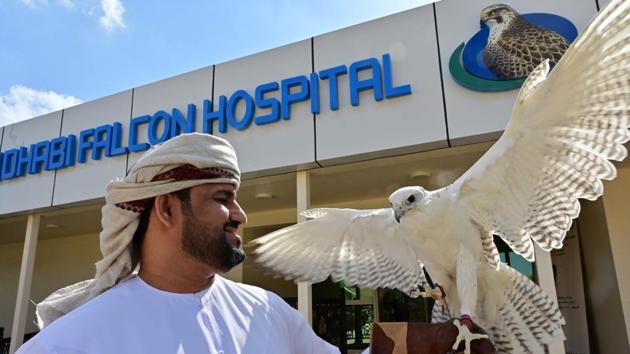
The owner of a falcon holds the bird of prey in front of the Abu Dhabi Falcon Hospital in the Emirati capital. The hospital treats about 11,000 falcons annually, a number that has more than doubled in the past 10 years. “Falcons have a very special place in the heart of the Emiratis,” hospital director Margit Muller told AFP. (Guiseppe Cacace / AFP)
4/12
 View Photos in a new improved layout
Published on Feb 22, 2020 1:21 PM
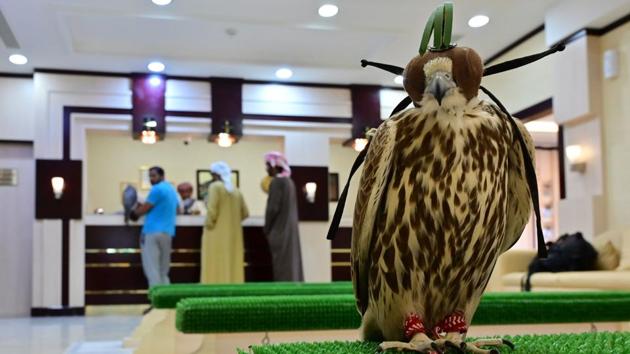
A falcon waits at the reception room of the Abu Dhabi Falcon Hospital. In 2010, UNESCO added falconry to its list of Intangible Cultural Heritage of Humanity. “Here, falcons are not considered birds, they are considered children of the Bedouins because, historically, falcons were used to hunt meat, allowing the Bedouin’s family to survive in this very harsh desert life,” Muller said. (Guiseppe Cacace / AFP)
5/12
 View Photos in a new improved layout
Published on Feb 22, 2020 1:21 PM
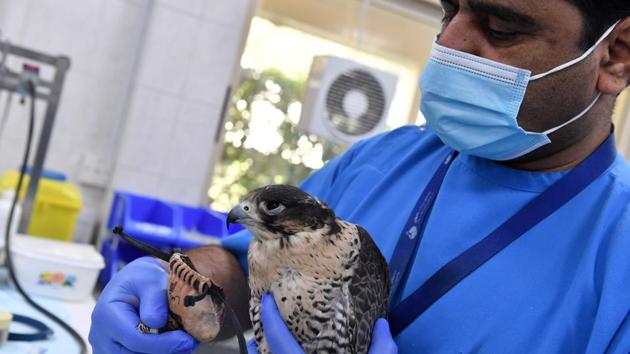
A falcon is examined. The Abu Dhabi facility is the world’s largest falcon hospital, frequented by falconers from across the Gulf region. As well as check-ups and routine trimming of talons, it also conducts complicated surgery and offers a training programme for veterinary students from more than 40 countries to learn about avian medicine. (Guiseppe Cacace / AFP)
6/12
 View Photos in a new improved layout
Published on Feb 22, 2020 1:21 PM
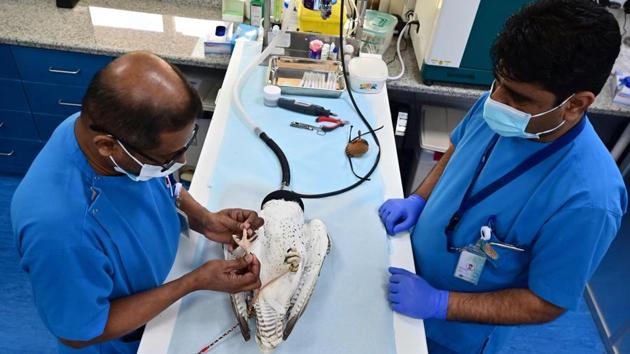
“The very complicated procedures are either broken legs or broken wings, or when a falcon has a really messy accident that results in big injuries,” Muller said. “Very long surgeries... can take up to three or four hours. That is the longest we can keep a falcon under anaesthesia.” (Guiseppe Cacace / AFP)
7/12
 View Photos in a new improved layout
Published on Feb 22, 2020 1:21 PM
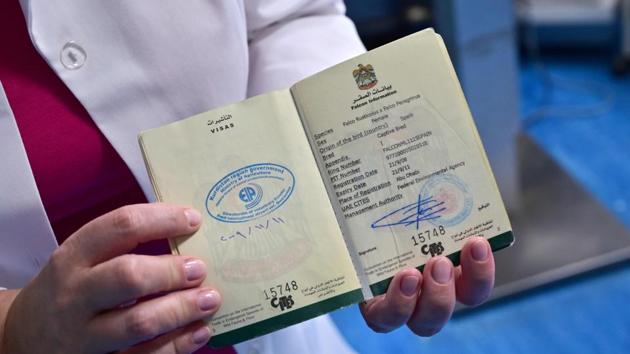
Falcon hunting is only permitted in designated reserves in the UAE. For many birds, the hospital is an essential stop-off before heading to overseas destinations including Morocco, Kazakhstan and Pakistan. Emirati falconers are only legally allowed to own captive-bred birds, which must have their own passports that comply with the Convention on International Trade in Endangered Species of Wild Fauna and Flora (CITES). (Guiseppe Cacace / AFP)
8/12
 View Photos in a new improved layout
Published on Feb 22, 2020 1:21 PM
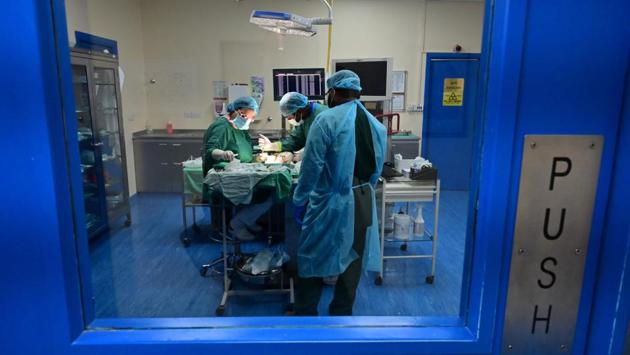
Margit Gabriele Muller (L) preforms minor surgery on a falcon. Animals other than guide dogs are not usually allowed in the cabins of the UAE’s main carriers, but for falcons exceptions are made. Abu Dhabi’s Etihad permits falcons in the cabin or as checked baggage, and Dubai’s Emirates allows birds to travel alongside their owner to certain destinations in Pakistan. (Guiseppe Cacace / AFP)
9/12
 View Photos in a new improved layout
Published on Feb 22, 2020 1:21 PM
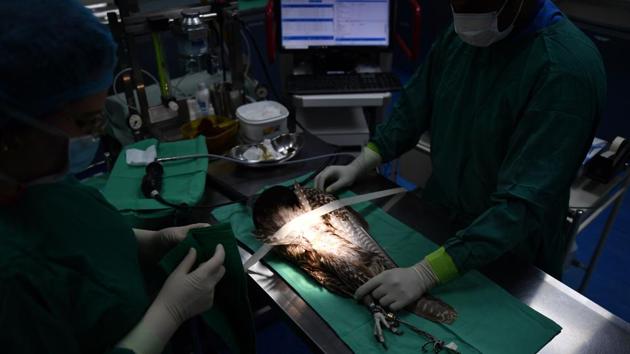
While the hospital has its own programme and facilities to breed falcons that can be purchased, most of the birds are imported to the UAE from breeders in the Americas and Europe. “They stay with the falconer for as long as they live,” Muller said. “They will not be released because they are captive-bred falcons.” (Guiseppe Cacace / AFP)
10/12
 View Photos in a new improved layout
Published on Feb 22, 2020 1:21 PM
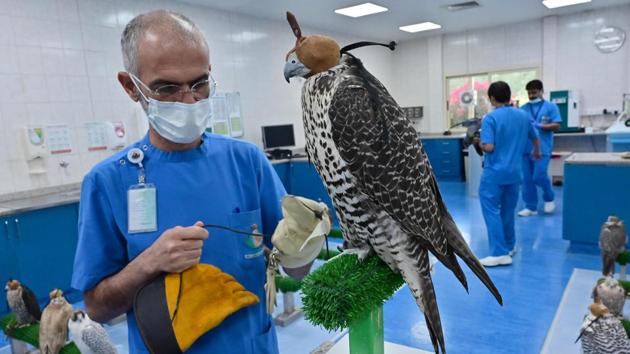
A falcon is examined at the hospital. Muller added that the most sought-after and expensive falcons are females, which can carry up to five times their own body weight. They are also considered the most beautiful. (Guiseppe Cacace / AFP)
11/12
 View Photos in a new improved layout
Published on Feb 22, 2020 1:21 PM
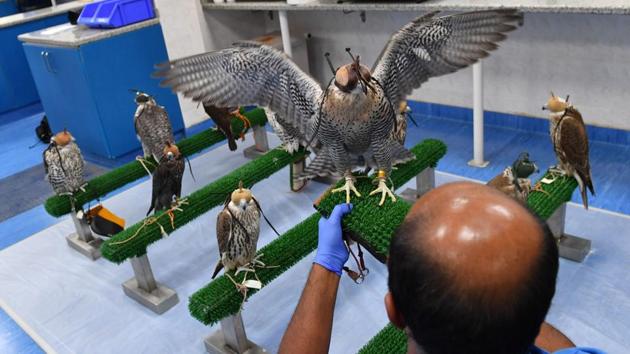
A falcon is examined. “The female is usually one third bigger than the male, and more powerful,” Muller said, adding that captive-bred female falcons can cost upwards of 100,000 euros ($108,000). For falconer Salem al-Mansouri from Abu Dhabi, the tradition is much more than an expensive pastime -- it is a symbol of Emirati culture. (Guiseppe Cacace / AFP)
12/12
 View Photos in a new improved layout
Published on Feb 22, 2020 1:21 PM


