
 E-Paper



Photos: UN begins mass cholera vaccination in Bangladesh Rohingya camps
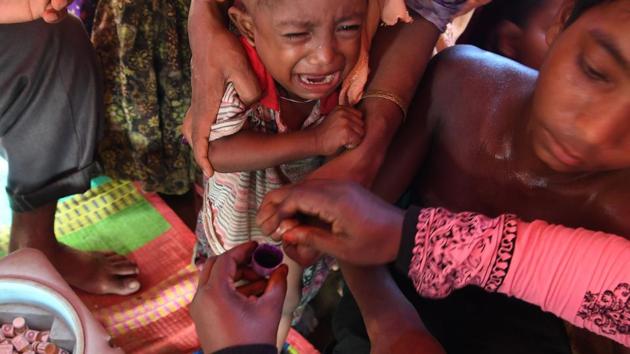
The world's second largest oral cholera vaccination campaign led by Bangladesh's Ministry of Health and supported by the WHO and UNICEF, is being held in Ukhiya and Teknaf, where more than half a million people have arrived from Myanmar since August in the refugee camps of Bangladesh's Cox's Bazar to protect the Rohingya and host communities from infection.
Updated on: Oct 12, 2017 1:26 PM IST

Share via


Copy link

1/10
 View Photos in a new improved layout
Updated on Oct 12, 2017 1:26 PM
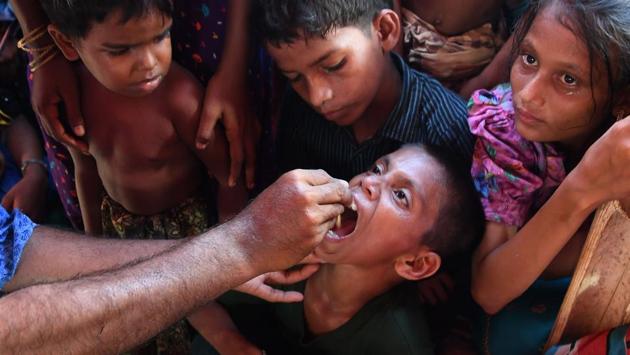
Rohingya refugee children look on as a Bangladeshi volunteer administers an oral cholera vaccine at a refugee camp. The World Health Organisation (WHO) on Tuesday launched a pre-emptive oral cholera vaccination campaign, the second largest ever in history after Haiti’s in 2016, at camps inhabited by the Rohingya anticipating a possible outbreak. (Indranil Mukherjee / AFP )
2/10
 View Photos in a new improved layout
Updated on Oct 12, 2017 1:26 PM
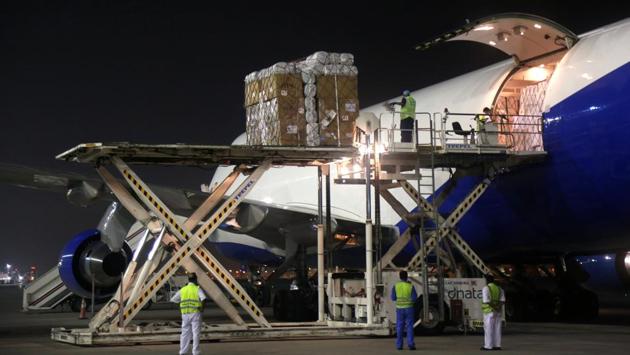
Workers load aid into an aeroplane to be delivered to Rohingya refugees residing in Bangladesh. Bangladesh’s Ministry of Health, supported by WHO, UNICEF and other NGOs aims to vaccinate 650,000 people in the next three and a half weeks. (Satish Kumar / REUTERS)
3/10
 View Photos in a new improved layout
Updated on Oct 12, 2017 1:26 PM
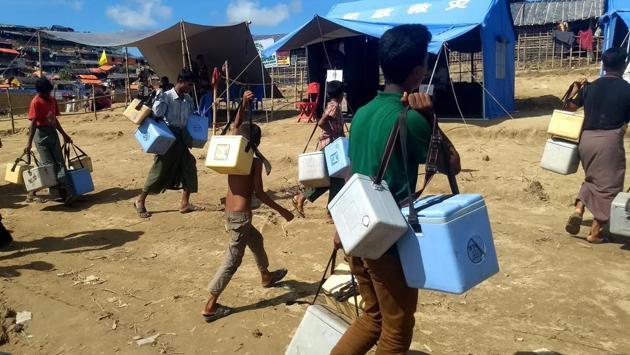
Rohingya volunteers carry ice boxes with cholera vaccines for inoculation at the Thangkhali refugee camp in Ukhia district. (Indranil Mukherjee / AFP )
4/10
 View Photos in a new improved layout
Updated on Oct 12, 2017 1:26 PM
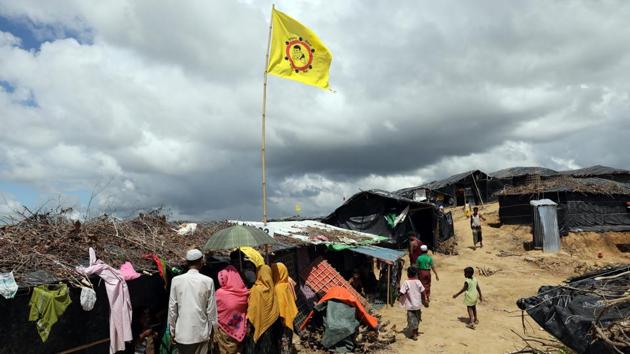
Rohingya refugees gather in a temporary health-care centre in the Jamtoli refugee camp in Cox’s Bazar. While Bangladesh has allocated land to accommodate 800,000 refugees in one massive camp, the UN has raised concerns over such a large concentration in one area as it could promote the spread of disease. (Mohammad Ponir Hossain / REUTERS)
5/10
 View Photos in a new improved layout
Updated on Oct 12, 2017 1:26 PM
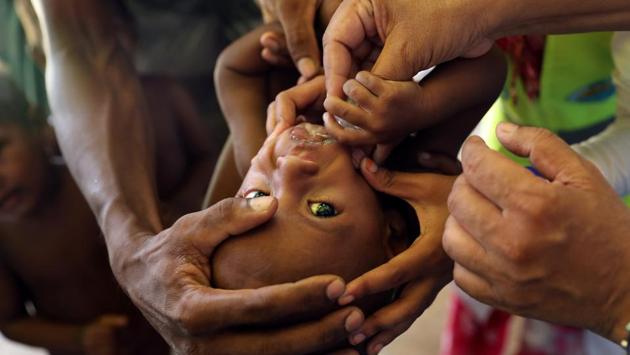
According to WHO, 14,500 children have been treated for severe malnutrition leaving them vulnerable to cholera. With 10,000 cases of diarrhoea already reported, the organisation has warned of a potential cholera epidemic. (Mohammad Ponir Hossain / REUTERS)
6/10
 View Photos in a new improved layout
Updated on Oct 12, 2017 1:26 PM
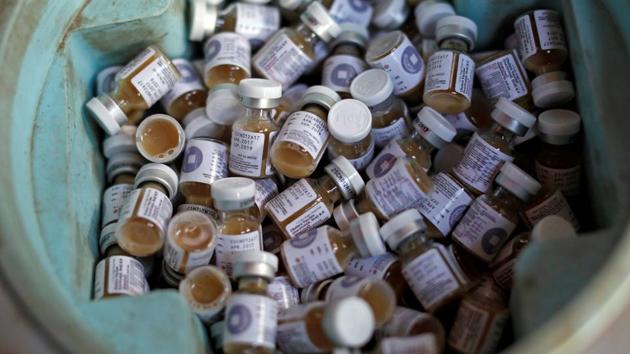
Bottles of cholera vaccines to be distributed among Rohingya refugees seen at a camp in Bangladesh. For the campaign, 900,000 doses of the vaccines have been mobilised and are being delivered by over 200 vaccination teams. (Jorge Silva / REUTERS)
7/10
 View Photos in a new improved layout
Updated on Oct 12, 2017 1:26 PM
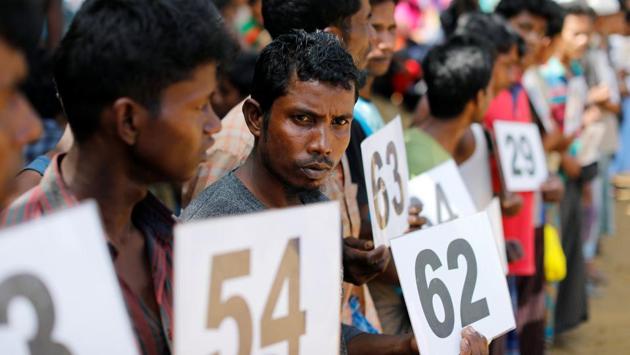
The first round of the campaign will cover 650,000 people aged one year and older while the second round, expected to commence on October 31, will target 250,000 children between one and five years with an additional dose of the vaccine for added protection. (Jorge Silva / REUTERS)
8/10
 View Photos in a new improved layout
Updated on Oct 12, 2017 1:26 PM
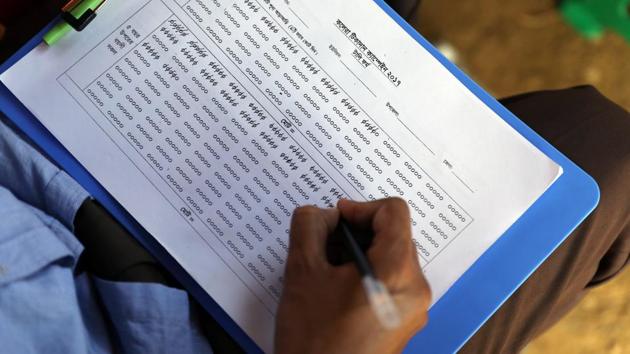
A health-care member counts cholera vaccines distributed by the WHO to Rohingya refugees at a camp in Cox’s Bazar. Although no cases of cholera have been officially recorded, WHO has tallied some 10,000 cases of diarrhea among the refugees, and says unhygienic and cramped conditions raise the potential for a cholera outbreak (Mohammad Ponir Hossain / REUTERS)
9/10
 View Photos in a new improved layout
Updated on Oct 12, 2017 1:26 PM
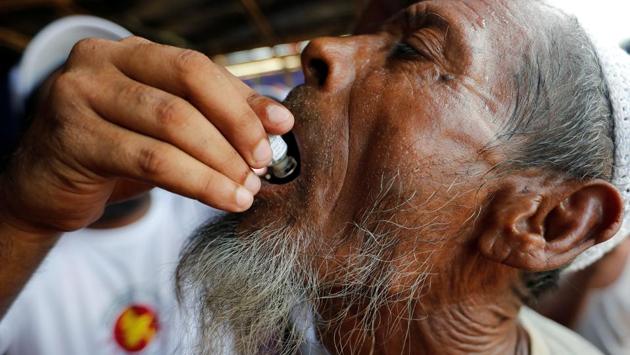
A Rohingya refugee man gets an oral cholera vaccine with the help of volunteers and local NGO’s in Bangladesh. Cholera is known to kill 95,000 people each year and affects an additional 2.9 million people worldwide.It’s an acute diarrheal infection caused by ingesting contaminated food or water. (Jorge Silva / REUTERS)
10/10
 View Photos in a new improved layout
Updated on Oct 12, 2017 1:26 PM


