
 E-Paper



Photos | Wrecked mosques, police watch: A tense Ramzan in Xinjiang
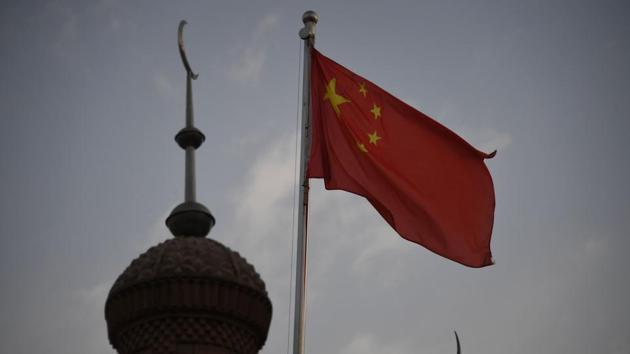
On Wednesday, Eid-ul-Fitr was celebrated by Muslims around the world, marking an end to the holy fasting month of Ramzan. However, in Xinjiang region of China, the Uighurs and other Turkic-speaking ethnic groups are facing subversion from the authorities. While dozens of mosques have been demolished in the recent years, increased surveillance and internment camps aim to ‘Sinicise’ Islam. Furthermore, the authorities aim to promote the ruling Communist Party by putting up slogans like "love the Party, love the country" at many mosques.
Updated on: Jun 08, 2019 12:03 PM IST

Share via


Copy link

1/13
 View Photos in a new improved layout
Updated on Jun 08, 2019 12:03 PM
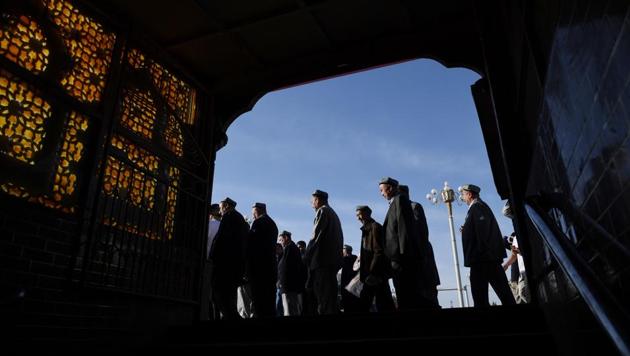
Uighur men make their way past a subway entrance after Eid-ul-Fitr prayers, marking the end of Ramzan, at the Idkah mosque in Kashgar, in China’s Xinjiang region. While Muslims around the world celebrated the end of Ramzan with prayers and festivities, the recent destruction of dozens of mosques in Xinjiang highlights the increasing pressure Uighurs and other ethnic minorities face in the heavily policed region. (Greg Baker / AFP)
2/13
 View Photos in a new improved layout
Updated on Jun 08, 2019 12:03 PM
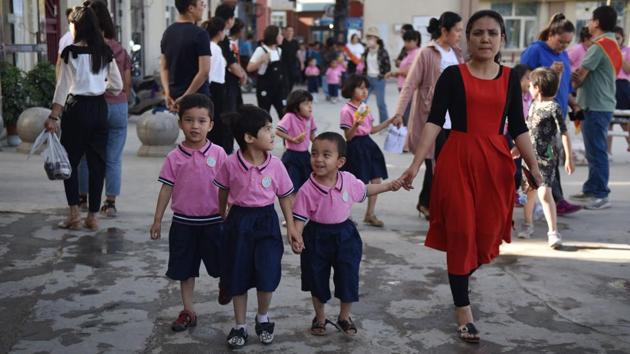
Children walk through a carpark where the Heyitkah mosque once stood in Hotan, Xinjiang. Satellite images reviewed by AFP and visual analysis by the non-profit Earthrise Alliance show that 36 mosques and religious sites have been torn down or had their domes and corner spires removed since 2017. (Greg Baker / AFP)
3/13
 View Photos in a new improved layout
Updated on Jun 08, 2019 12:03 PM
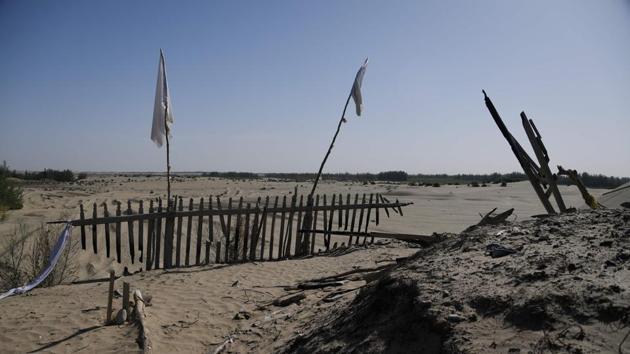
The destroyed Imam Asim shrine on the outskirts of Hotan. In Hotan on Friday -- a holy day for believers -- the only mosque in the city was empty after sundown, an important prayer session when Muslim families typically break their daily fast. Earlier in the day, at least 100 people attended a midday session but the vast majority were elderly men. (Greg Baker / AFP)
4/13
 View Photos in a new improved layout
Updated on Jun 08, 2019 12:03 PM
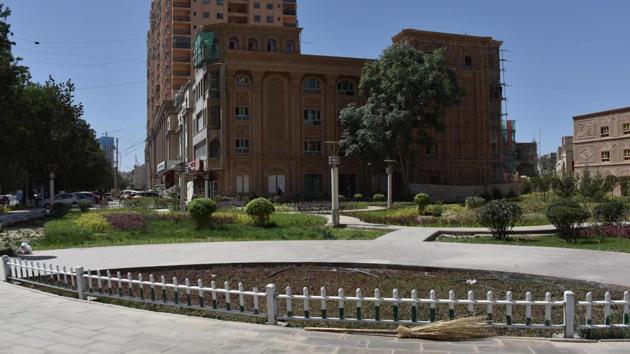
A garden where the Gujan Derwaza mosque once stood in Hotan. In recent years, Chinese authorities have ramped up controls on public displays of religion and Islamic traditions in Xinjiang. “The situation here is very strict, it takes a toll on my heart,” said one Uighur. “I don’t go any more,” he added, referring to mosques. “I’m scared.” (Greg Baker / AFP)
5/13
 View Photos in a new improved layout
Updated on Jun 08, 2019 12:03 PM
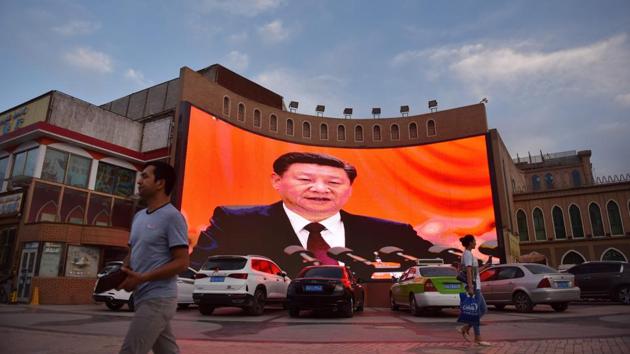
People walk past a screen showing images of Chinese President Xi Jinping in Kashgar. The ruling Communist Party “sees religion as this existential threat,” said James Leibold, an expert on ethnic relations and policy in China at La Trobe University. Over the long term, the Chinese government wants to achieve “the secularisation of Chinese society,” he added. (Greg Baker / AFP)
6/13
 View Photos in a new improved layout
Updated on Jun 08, 2019 12:03 PM
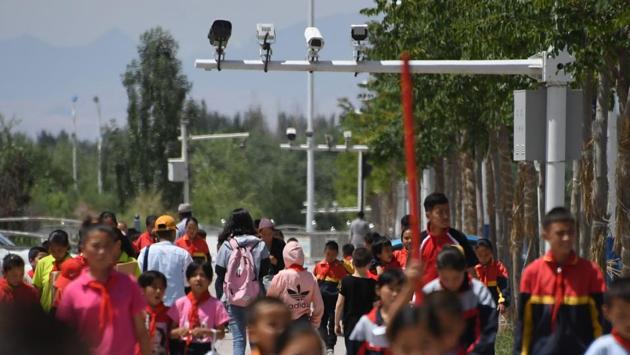
Schoolchildren walk below surveillance cameras in Akto, south of Kashgar. Authorities have thrown a high-tech security net across the region, installing cameras, mobile police stations and checkpoints in seemingly every street in response to a spate of deadly attacks blamed on Islamic extremists and separatists in recent years. (Greg Baker / AFP)
7/13
 View Photos in a new improved layout
Updated on Jun 08, 2019 12:03 PM
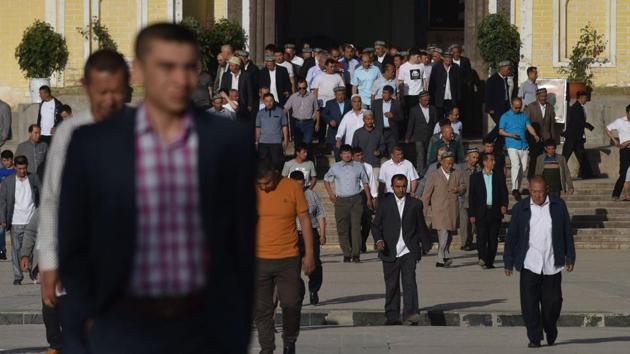
Uighur men leave after Eid-ul-Fitr prayers at Idkah Mosque in Kashgar. On Wednesday, locals celebrating Eid quietly filed into the entrance of the state-approved Idkah Mosque -- one of the largest in China -- as police and officials fenced off the wide square surrounding the building and plainclothes men monitored every person’s actions. (Greg Baker / AFP)
8/13
 View Photos in a new improved layout
Updated on Jun 08, 2019 12:03 PM
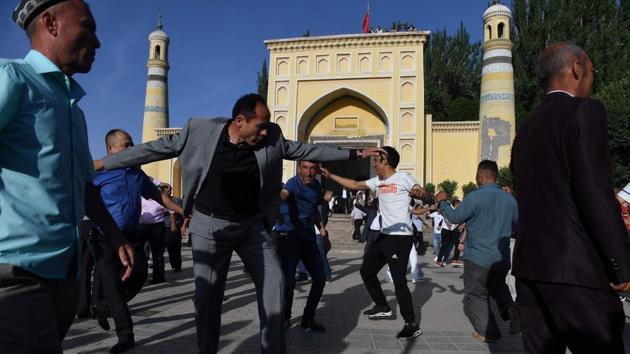
Men dance after the Eid-ul-Fitr prayers at Idkah mosque. Uighurs consider mosques and shrines “their ancestral heritage,” said Omer Kanat, director of the Uyghur Human Rights Project. “The Chinese government just wants to erase everything... that is different from Han Chinese, everything which belongs to Uighur culture or Islamic culture in the region,” he added. (Greg Baker / AFP)
9/13
 View Photos in a new improved layout
Updated on Jun 08, 2019 12:03 PM
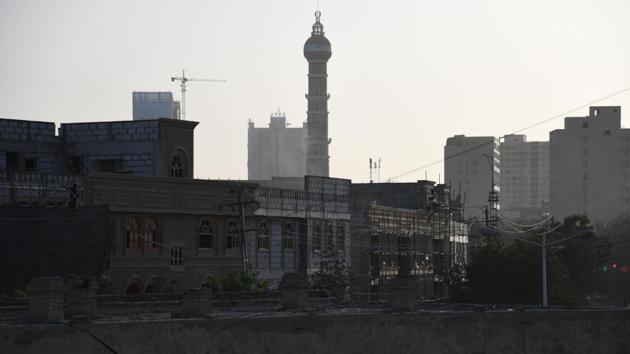
The soon-to-be destroyed Munar of Hotan. Though Beijing’s restrictions on religious piety, such as fasting, are not new, observers say conditions have deteriorated to the point where celebrations for the holy month in Xinjiang are reduced or largely invisible. (Greg Baker / AFP)
10/13
 View Photos in a new improved layout
Updated on Jun 08, 2019 12:03 PM
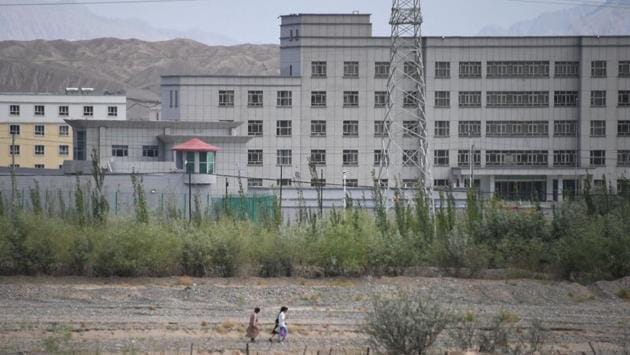
A facility believed to be a re-education camp where mostly Muslim ethnic minorities are detained, in Artux, north of Kashgar. An estimated one million Uighurs and other Turkic-speaking ethnic groups are held in a vast network of internment camps. (Greg Baker / AFP)
11/13
 View Photos in a new improved layout
Updated on Jun 08, 2019 12:03 PM
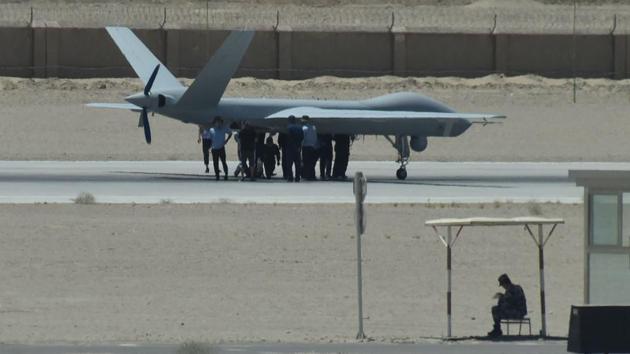
Personnel around a surveillance drone on the runway of the airport in Urumqi, Xinjiang. After initially denying their existence, Chinese authorities last year acknowledged that they run “vocational education centres” aimed at steering people clear of religious extremism by teaching them Mandarin and China’s laws. (Greg Baker / AFP)
12/13
 View Photos in a new improved layout
Updated on Jun 08, 2019 12:03 PM
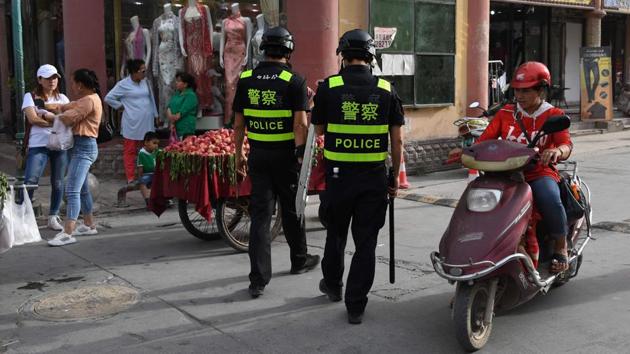
Police officers patrol in Kashgar. At state-backed mosques, religious activity is controlled as Beijing pursues a five-year plan to “Sinicise” Islam as the “only way for a healthy development of Islam” in the country, said Yang Faming, president of the state-backed Islamic Association of China, in January. (Greg Baker / AFP)
13/13
 View Photos in a new improved layout
Updated on Jun 08, 2019 12:03 PM


