
 E-Paper



Photos: Yemen rushes to stem world’s worst cholera outbreak
More than 250,000 cases of cholera have been recorded in Yemen since the beginning of 2018, with 358 associated deaths. The World Health Organization warned in October that the cholera outbreak is accelerating again with roughly 10,000 suspected cases now reported per week, double the average rate for the first eight months of 2018. Cholera, which is spread by consuming contaminated food or water, is a diarrheal disease and can kill within hours. While previous outbreaks may have helped build immunity in the population, other diseases and widespread malnutrition can weaken resilience.
Updated on: Dec 03, 2018 10:23 AM IST

Share via


Copy link

1/8
 View Photos in a new improved layout
Updated on Dec 03, 2018 10:23 AM
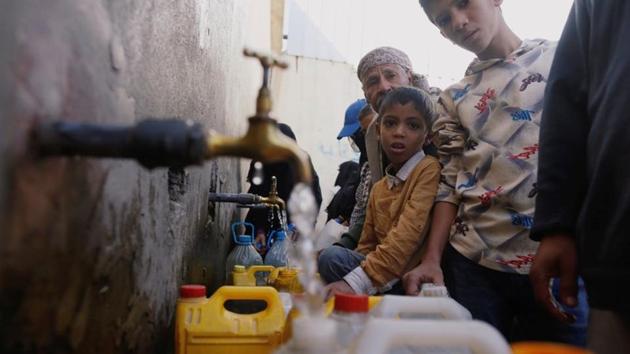
People collect drinking water from charity tap in Sanaa. Authorities in the Houthi-held Yemeni capital are sterilizing water supplies to help stem the world’s worst outbreak of cholera. Nearly four years of war between a Saudi-led coalition and the Iran-aligned Houthis have crippled healthcare and sanitation systems. Some 1.2 million suspected cholera cases have been reported since 2017, with 2,515 deaths. (Khaled Abdullah / REUTERS)
2/8
 View Photos in a new improved layout
Updated on Dec 03, 2018 10:23 AM
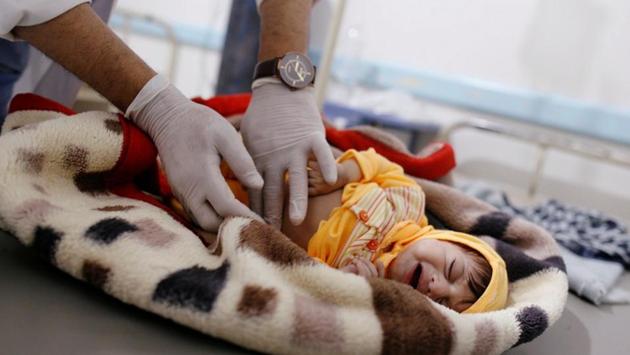
A doctor checks an infected child. The World Health Organization (WHO) warned in October that the outbreak is accelerating again with roughly 10,000 suspected cases now reported per week, double the average rate for the first eight months of 2018. Most cases have been reported in areas held by the Houthi movement, which controls most population centres after ousting the government from Sanaa in 2014. (Khaled Abdullah / REUTERS)
3/8
 View Photos in a new improved layout
Updated on Dec 03, 2018 10:23 AM
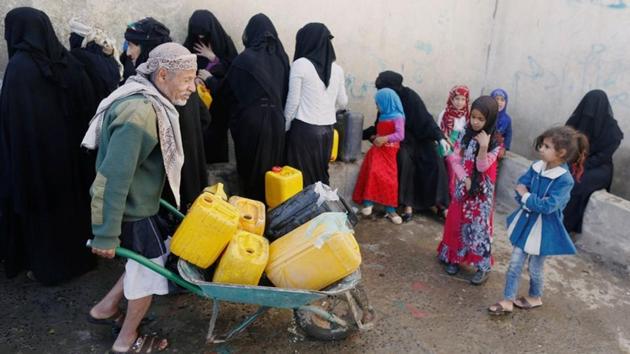
“We receive information of reported cases of cholera from the Ministry of Health, then the team sterilises the house and 20 houses around it,” Nabeel Abdullah al-Wazeer, the Houthis’ minister of water, told Reuters. “We worked from house to house and on sterilising water wells. We also worked on bus-mounted tanks, which transport water in the private sector to the citizens, as well as sterilizing local institutions which distribute water.” (Khaled Abdullah / REUTERS)
4/8
 View Photos in a new improved layout
Updated on Dec 03, 2018 10:23 AM
Workers at a sewage treatment station. Adel Moawada, director general of technical affairs at Sanaa’s main water sanitation plant, said there are currently 20 automated chlorination units in wells directly linked to the distribution network. Cholera, spread contaminated food or water, is a diarrhoeal disease that can kill within hours. (Khaled Abdullah / REUTERS)
5/8
 View Photos in a new improved layout
Updated on Dec 03, 2018 10:23 AM
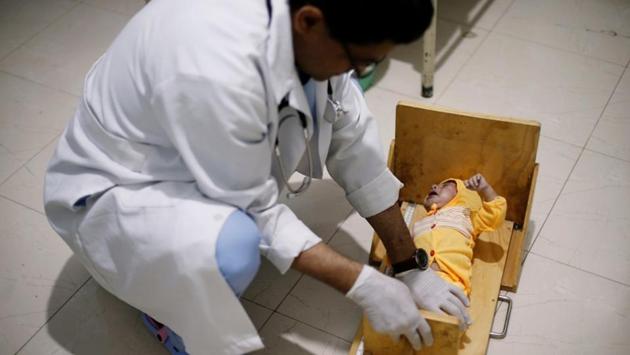
A doctor measures the length of a cholera-infected child at a treatment ward of al-Sabeen hospital in Sanaa. The United Nations says about 14 million people, or half of Yemen’s population, could soon face famine. Some 1.8 million children are malnourished, according to UNICEF. Children account for 30% of cholera infections. (Khaled Abdullah / REUTERS)
6/8
 View Photos in a new improved layout
Updated on Dec 03, 2018 10:23 AM
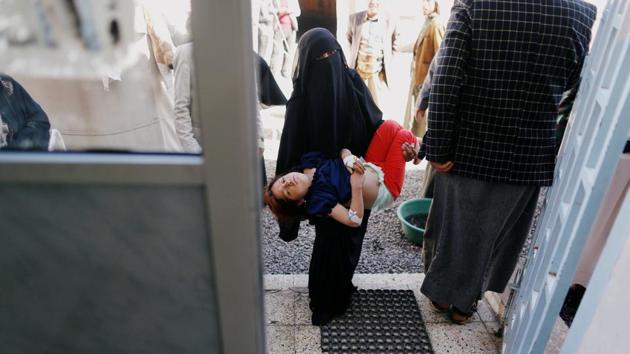
A woman carries her cholera-infected daughter to a treatment ward. Pediatrician Mohammed Abdulmughni works with children in WHO tents in Sanaa. Their beds rest on gravel and flies circle their faces. “With winter’s arrival we expected the numbers would decrease, yet the cases have been coming in at the same pace,” he said. “We expected positive (diagnoses) cases to decrease but the cases remain high.” (Khaled Abdullah / REUTERS)
7/8
 View Photos in a new improved layout
Updated on Dec 03, 2018 10:23 AM
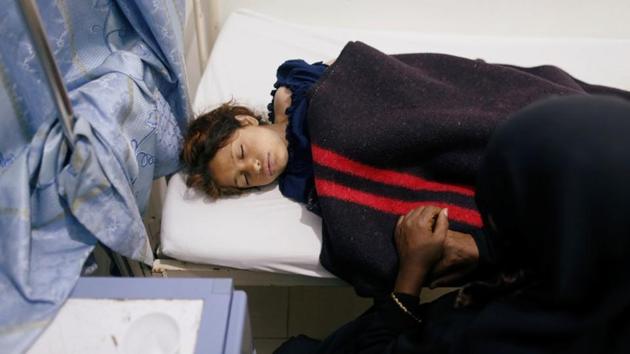
A woman sits by her cholera-infected daughter at a treatment ward. While previous outbreaks may have helped build immunity, other diseases and widespread malnutrition can weaken resilience. If caught early, acute diarrhoea can be treated with oral hydration salts, but more severe cases require intravenous fluids and antibiotics. (Khaled Abdullah / REUTERS)
8/8
 View Photos in a new improved layout
Updated on Dec 03, 2018 10:23 AM


