
 E-Paper



Photos: Yemen war binds US, coalition allies, al-Qaida against Houthis
Over the past two years, a military coalition led by Saudi Arabia and backed by the United States has claimed it won decisive victories that drove al-Qaida militants from their strongholds across Yemen and shattered their ability to attack the West. Here's what the victors did not disclose: many of their conquests came without firing a shot. That's because the coalition cut secret deals with al-Qaida fighters, often involving cash payments or amnesty and safe passage, an investigation by The Associated Press has found.
Updated on: Aug 09, 2018 11:29 AM IST

Share via


Copy link

1/12
 View Photos in a new improved layout
Updated on Aug 09, 2018 11:29 AM
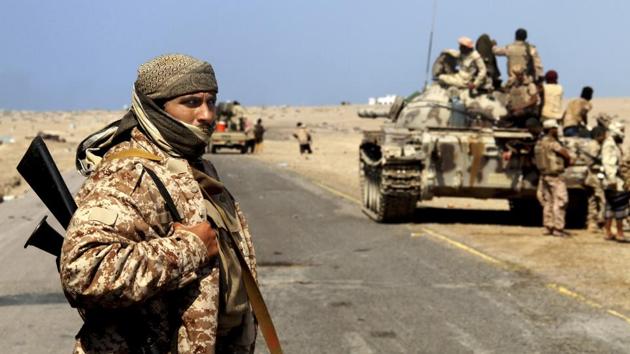
Coalition-backed fighters advance on Yemen’s Red Sea port town of Mocha on January 11, 2017. The forces eventually captured the town from Houthis. Some fighters in the unit were openly al-Qaida, wearing Afghan-style garb and carrying weapons with an al-Qaida logo, a sign of how closely the militants have been involved in the war. (AP File)
2/12
 View Photos in a new improved layout
Updated on Aug 09, 2018 11:29 AM
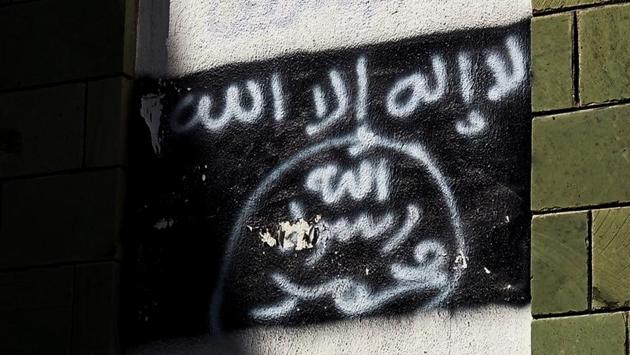
Over the past two years, the military coalition led by Saudi Arabia and backed by the US has claimed repeated victories that drove al-Qaida from strongholds across Yemen. What the victors did not disclose is many of these conquests came without firing a shot. That’s because the coalition cut secret deals with al-Qaida fighters, paying some to leave key cities and towns and letting others retreat. (AP)
3/12
 View Photos in a new improved layout
Updated on Aug 09, 2018 11:29 AM
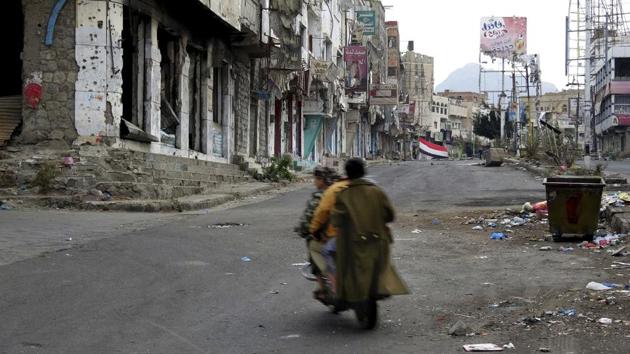
Men ride through streets wrecked by fighting in Taiz, Yemen in February 2018. These compromises and alliances have allowed al-Qaida militants to survive to fight another day. Key participants in the pacts said the US was aware of the arrangements and held off on drone strikes. The deals uncovered by the AP reflect the contradictory interests of the two wars being waged simultaneously in this corner of the Arabian Peninsula. (AP)
4/12
 View Photos in a new improved layout
Updated on Aug 09, 2018 11:29 AM
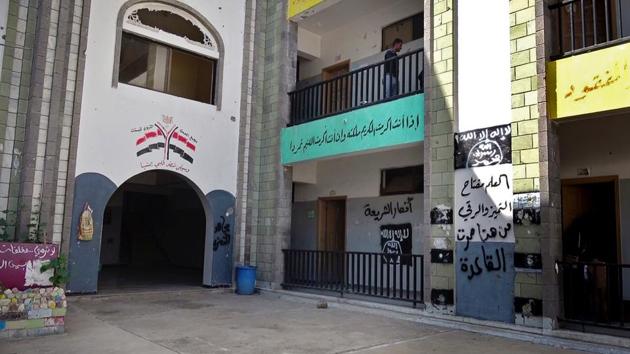
“Al-Qaida passed here,” sprayed on a wall, at a damaged school that was turned into a religious court. In one conflict, the US is working with its Arab allies with the aim of eliminating al-Qaida in the Arabian Peninsula, or AQAP. But the larger mission is against the Houthis, Iranian-backed Shiite rebels. And in that fight, al-Qaida are effectively on the same side as the coalition — and, by extension, the US. (AP)
5/12
 View Photos in a new improved layout
Updated on Aug 09, 2018 11:29 AM
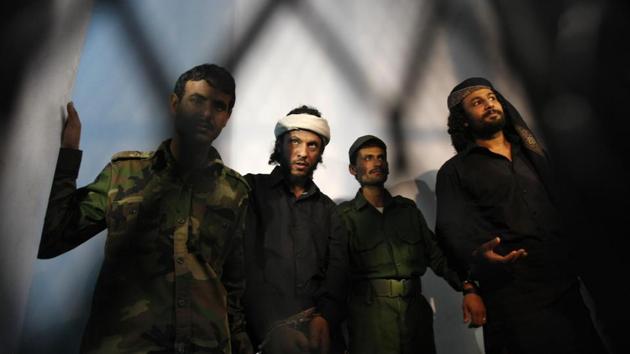
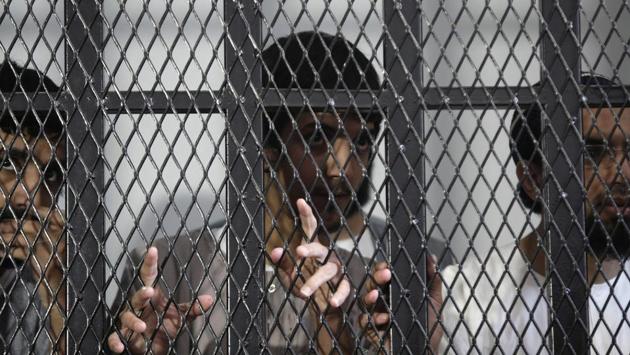
Suspected al-Qaida militants stand trial at a state security court in Sanaa. To think of al-Qaida as a terror group is to miss its other reality. For many Yemenis, it is simply a faction on the ground — a very effective one, well-armed and battle-hardened. Over the years, AQAP has woven itself into society by building ties with tribes, buying loyalties and marrying into major families. Power players often see it as a useful tool. (Hani Mohammed / AP File)
6/12
 View Photos in a new improved layout
Updated on Aug 09, 2018 11:29 AM
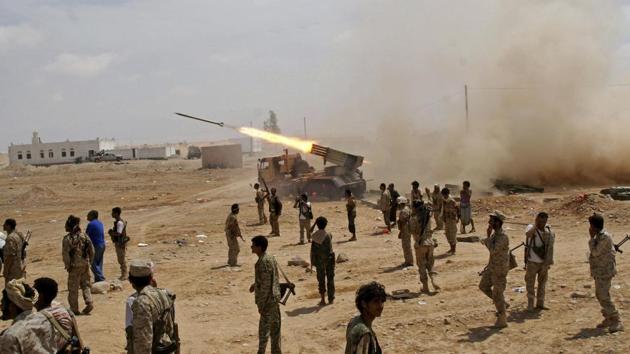
Yemeni soldiers fire at al-Qaida positions in the southern province of Shabwa in 2014. “Elements of the US military are clearly aware that much of what the US is doing in Yemen is aiding AQAP and there is much angst about that,” said Michael Horton, a fellow at the Jamestown Foundation. But supporting the UAE and Saudi Arabia against Iranian expansionism takes priority over AQAP and even stabilizing Yemen, Horton said. (Yemen’s Defense Ministry / AP File)
7/12
 View Photos in a new improved layout
Updated on Aug 09, 2018 11:29 AM
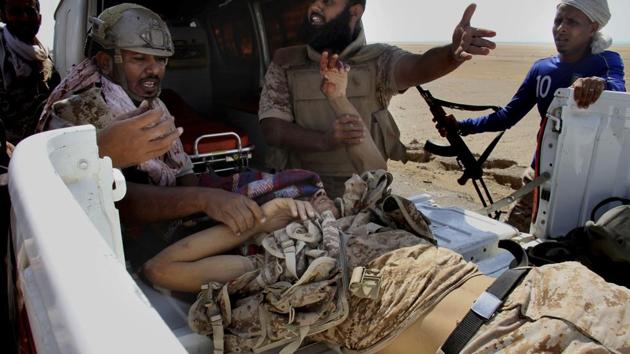
Coalition-backed fighters help a wounded man during an advance on Mocha in January 2017. Coalition-backed militias actively recruit al-Qaida militants, or those who were recently members, because they’re considered exceptional fighters, the AP found. These forces are comprised of a dizzying mix of militias, factions, tribal warlords and tribes with very local interests. And AQAP militants are intertwined with many of them. (AP)
8/12
 View Photos in a new improved layout
Updated on Aug 09, 2018 11:29 AM
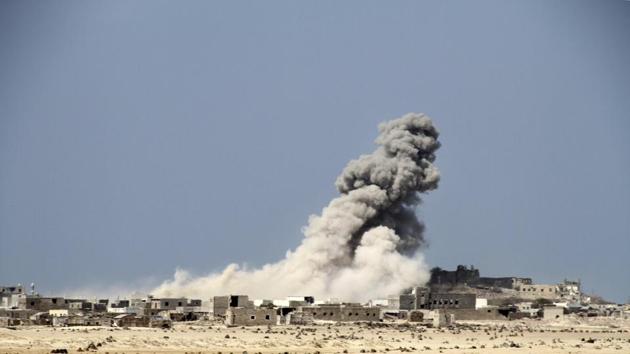
An explosion raises a cloud as coalition-backed fighters advance on Mocha. Overall, deals that took place during both the Obama and Trump administrations have secured al-Qaida withdrawal from multiple major towns and cities that the group seized in 2015. The earliest pact, in the spring of 2016, allowed thousands of al-Qaida fighters to pull out of Mukalla, Yemen’s fifth-largest city and a major port. (AP)
9/12
 View Photos in a new improved layout
Updated on Aug 09, 2018 11:29 AM
The US is aware of an al-Qaida presence among the anti-Houthi ranks, a senior American official told reporters in Cairo earlier this year. Because coalition members back militias with hard-line Islamic commanders, “it’s very, very easy for al-Qaida to insinuate itself into the mix,” the official said. Al-Qaida is leveraging the chaos to its advantage. (Hani Mohammed / AP File)
10/12
 View Photos in a new improved layout
Updated on Aug 09, 2018 11:29 AM
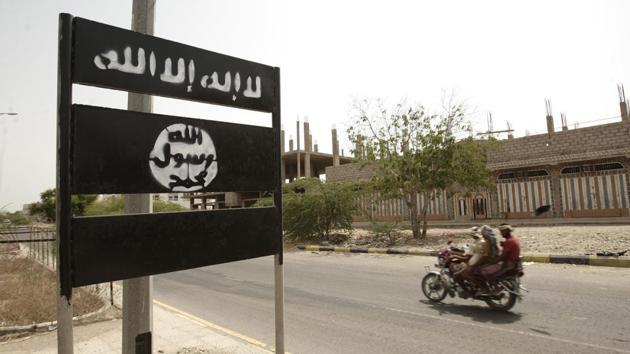
An al-Qaida commander told the AP that the front lines against the Houthis provide fertile ground to recruit new members. The impact of this intertwining is clearest in Taiz, the center of one of the war’s longest running battles. In 2015, the Houthis laid siege to the city. Residents rose up to fight back, and coalition cash and weapons poured in — as did al-Qaida and Islamic State militants, all aimed at the same enemy. (Hani Mohammed / AP File)
11/12
 View Photos in a new improved layout
Updated on Aug 09, 2018 11:29 AM
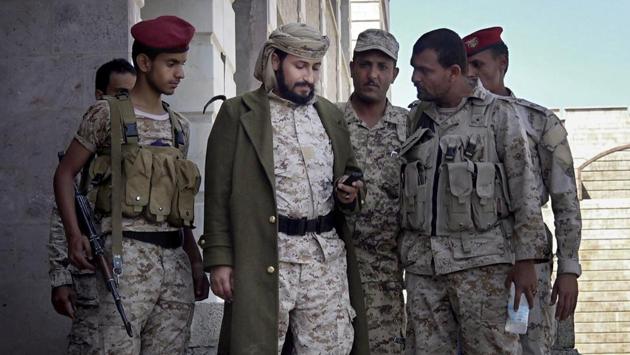
“There is no filtering in the war. We are all together,” said one activist. Abdel-Sattar al-Shamiri, a former adviser to Taiz’s governor, recognized al-Qaida presence from the start and told commanders not to recruit members. Their response was, ‘We will unite with the devil in the face of Houthis.’ One of the main recruiters of al-Qaida fighters is Adnan Rouzek (C), tapped by President Hadi to be a top military commander. (AP)
12/12
 View Photos in a new improved layout
Updated on Aug 09, 2018 11:29 AM


