
 E-Paper



Spirit mediums of Vietnam ‘Hau Dong’ revive forbidden ritual
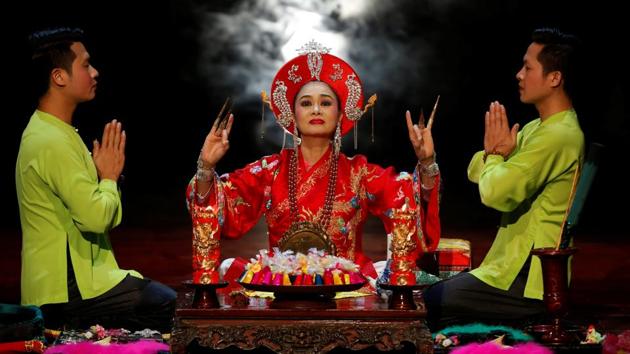
Medium An Chinh (C), is seen during a Hau Dong performance at the Viet Theatre in Hanoi, Vietnam. Dating to the 16th century, Hau Dong centres on a belief in the Mother Goddesses of three realms - forest, water and heaven. (Kham/REUTERS)
Updated on: May 27, 2017 1:33 PM IST

Share via


Copy link

1/12
 View Photos in a new improved layout
Updated on May 27, 2017 1:33 PM
Medium An Chinh (C), is seen during a Hau Dong performance at the Viet Theatre in Hanoi, Vietnam. Dating to the 16th century, Hau Dong centres on a belief in the Mother Goddesses of three realms - forest, water and heaven. (Kham/REUTERS)
2/12
 View Photos in a new improved layout
Updated on May 27, 2017 1:33 PM
Medium An Chinh walks through smoke during a Hau Dong performance. It draws from elements of Taoism, Buddhism and other religions. (Kham/REUTERS)
3/12
 View Photos in a new improved layout
Updated on May 27, 2017 1:33 PM
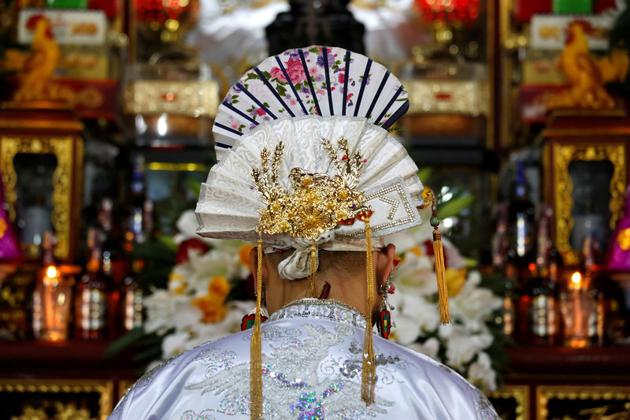
Medium Nguyen Duy Nam performs during a ritual ceremony. During rituals, spirit mediums dance to loud folk music while appearing to transform themselves into different characters from legend and history. (Kham/REUTERS)
4/12
 View Photos in a new improved layout
Updated on May 27, 2017 1:33 PM
They display changing personalities as if different spirits have entered their bodies. Sometimes they say it feels real. (Kham/REUTERS)
5/12
 View Photos in a new improved layout
Updated on May 27, 2017 1:33 PM
Believers kneel behind mediums and cheerfully grab money thrown by the spirits. (Kham/REUTERS)
6/12
 View Photos in a new improved layout
Updated on May 27, 2017 1:33 PM
Spread on the floor are offerings for the goddesses and the spirits - which can be anything from money to instant noodles to life-sized paper horses. (Kham/REUTERS)
7/12
 View Photos in a new improved layout
Updated on May 27, 2017 1:33 PM
Statues of a goddess are seen during a Hau Dong ceremony. Architect and researcher Doan Ky Thanh said that It’s for every class of society, from rich to poor, from officials to citizens and from the mountain to the plain. (Kham/REUTERS)
8/12
 View Photos in a new improved layout
Updated on May 27, 2017 1:33 PM
People react to bank notes being thrown during a ritual Hau Dong ceremony at Lanh Giang temple in Ha Nam province, Vietnam. (Kham/REUTERS)
9/12
 View Photos in a new improved layout
Updated on May 27, 2017 1:33 PM
Pham Thi Thanh drinks a glass of water used as a treatment during a medium ritual at a Hau Dong ceremony. Thanh said the appeal of the ritual had broadened as it could attract participants of either gender. (Kham/REUTERS)
10/12
 View Photos in a new improved layout
Updated on May 27, 2017 1:33 PM
Medium An Chinh is seen during a Hau Dong performance. Hau Dong’s status was reaffirmed last year when it was recognised as part of the Cultural Heritage of Humanity by the U.N. cultural organisation UNESCO. (Kham/REUTERS)
11/12
 View Photos in a new improved layout
Updated on May 27, 2017 1:33 PM
In 2005, the Communist Party lifted a ban on Hau Dong, which until then it had regarded as superstitious. Interest in the ritual has since grown, as economic liberalisation has brought greater wealth and social openness. (Kham/REUTERS)
12/12
 View Photos in a new improved layout
Updated on May 27, 2017 1:33 PM


