
 E-Paper



On the frontline: Making 6,000 chapattis in an hour... just to ensure nobody goes hungry
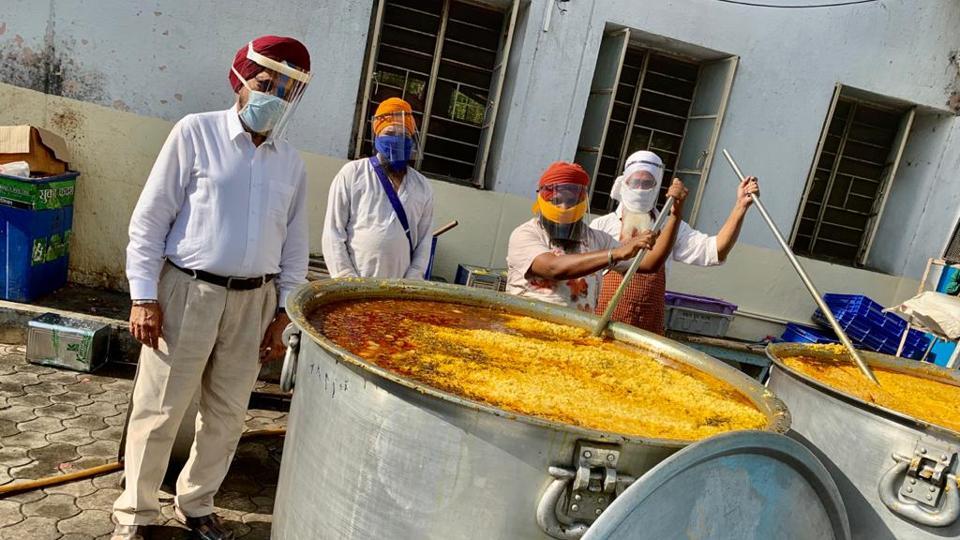
At the Gurdwara Gurunanak Darbar in Camp, a langar (community meal) is being prepared for 5,000 people every day, says Sant Singh Mokha, a Sikh community leader and chairman of the Darbar


The Sikh community in Pune is working tirelessly to deliver free meals, daily, to people struggling with financial hardship during the Covid-19 lockdown in Pune. At the Gurdwara Gurunanak Darbar in Camp, a langar (community meal) is being prepared for 5,000 people every day. Sant Singh Mokha, a Sikh community leader and chairman of the Darbar, speaks to HT about how the community kitchen safely serves meals to the poor and hungry.
What exactly is your role in this crisis?
We prepare food for at least 5,000 people daily. Our volunteers prepare the food at the community kitchen. The langar is distributed to social organisations, NGOs and the Army, who then distribute it to the poor in the city. With respect to funds, we are not facing any shortage as of now. We are coordinating with the regional gurudwaras for this. My responsibility is to ensure that no one sleeps hungry. We have two chapatti-making machines at our kitchen. While one machine can make 4,000 chapattis at a time, the other one can make 2,000 chapattis in an hour. So a total of 6,000 chapattis are made and served in one hour to feed the poor.
How does your day begin and roll out?
After waking up I do yoga for half-an-hour and also walk in my house. Post that, I take a call on what has to be done in the community kitchen during the day. I have a conversation with our volunteers who execute the plan for the day.
What precautions are you taking?
I take necessary precautions like wearing a mask, sanitising my hands and wearing gloves whenever I head out. Our volunteers who prepare the food at the community kitchen also follow social distancing norms and wear masks.
What is your assessment of Covid-19 crisis in Pune?
The officials have not been able to curb the spread of Covid-19 in slum pockets. People there have small houses which makes it difficult for them to follow social distancing norms; they are also not aware about the health and hygiene standards that must be followed. I believe that there should be equitable development where all persons can avail the same quality of life.
What gaps do you see in health and relief work?
The government has done a good job by imposing a strict lockdown. However, the areas where there are no patients must not be subjected to restrictions. The administration must concentrate on the red zones in the city to help curb the spread of virus.


