
 E-Paper



Campus connect: Pune’s SIMC is mediating media change to ensure student prowess
SIMC sets the agenda for media students, then ensures they are ready for the market. Here’s how, and why


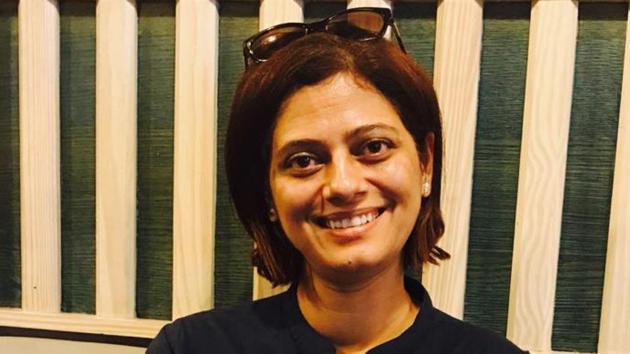
Ruchi Kher Jaggi is director, Symbiosis Institute of Media & Communication, and dean of faculty of media and communication at Symbiosis International (Deemed University), Pune. Awarded with the ‘Women in Education Leadership’ award 2017, she has been teaching mass communication and communication management students for 15 years now. She is the co-chair of the Media Education and Research section of the International Association of Media and Communication Research.
How does Symbiosis enhance student skills in terms of what journalism requires today?
While the traditional roles of journalists – reporters, editors and writers tend to stay; filmmakers, advertisers, PR professionals and media managers – these roles are getting reconfigured in the context of digital innovations. All media organizations are becoming digitally active and digital-only enterprises leaving no stone unturned to offer high levels of user engagement. Hence today’s media professionals not only have to be well-informed, but also have the prudence and skills to package the information in diverse ways for diverse reader/user/consumer- engagement. It is extremely important to distinguish between the terms ‘education’ and ‘training’. Nuanced understanding based in theoretical rigour is extremely significant when we look at media studies as an educational pursuit. Knowledge of language, political science, sociology, even psychology and marketing, engagement with subjects like gender, class, caste among others and the ability to observe, reflect and argue are the core of this field. Filmmakers depend on it. Journalists cannot survive without it. And no advertising campaigns can be successful till they hit the pulse of the audience with thorough understanding of their contexts. And this is all beyond technical skilling alone. Hence an understanding of the domain from an academic and a practice point of view is the perfect blend.
The SIMC pitch for the market today?
Symbiosis Institute of Media & Communication started in the year 1990. Today, SIMC is the largest institute of its kind in India in terms of PG student intake, across two full-time (2 year), residential programmes with distinctly different specialisations and yet, delivering a unique and complementary blend of Media, Communications and Management theories coupled with practice. SIMC offers two programmes – MA (Mass Communication) with specialisations in Journalism and Audio-Visual; and MBA (Communication Management) with specialisations in Brand Communication, Public Relations, Media Management, and Marketing & Media Analytics. Ranked among the top media institutes of the country, SIMC’s 30-year legacy resonates with its cutting-edge curriculum, state-of-art infrastructure, quality of faculty members, and the achievements of its illustrious alumni base.
Your vision for the future?
Our vision for the future spans greater recognition as an institute with proven academic standards, higher industry interactions and collaborations with other academic institutions also focusing on the Media and Communications fields, and developing ourselves as the Centre of Excellence in Communications Research in the country. In alignment with the vision of Symbiosis International (Deemed University), the institute is making significant inroads into internationalization. With a current research grant of $114,000 in collaboration with Salisbury University, USA; students will be exposed to a contemporary course in Interactive Documentary Filmmaking – a first of its kind in India. Our students are going for semester-exchange programmes with different foreign universities including Leeds Beckett in the UK and Edith Cowan in Australia. The institute is working consistently to create international mobility for its students and faculty members as well as strategising its curriculum design and delivery to match international standards through the visits of many international faculty members.
Are the digital demands of the industry re-focusing student capabilities?
Digital and social media platforms have brought in unprecedented technological shift in the media industry. New media technologies and the internet of things will keep redefining this industry in unpredictable ways in the time to come. The fact that we cater to a highly dynamic industry is both challenging and enthralling at the same time. However, form and technology can work only if the content is appealing and interesting. While skills and training are crucial for budding media professionals, they mean nothing if the content is weak and bland. Hence, media education should not lose sight of the bigger picture and ensure that technical training is effective only when complemented with rigourous academic inputs. This is the underlying vision for all our programmes and student upgradation. As a media institution, SIMC is right where the media industry is and through its focus on holistic academic training and communications research, it aims to be a step ahead in the time to come.


