
 E-Paper



Centre for Police Research should sign MoU with Pune varsity to revive research activity
Umranikar said the purpose of the centre would be defeated if it was simply generating money and not conducting research


Jayant Umranikar, former director general of Maharashtra police, has proposed that in order to revive research activities at the Centre for Police Research (CPR) on Pashan road, a memorandum of understanding (MOU) should be signed between the Centre for Police Research and Savitribai Phule Pune University (SPPU).
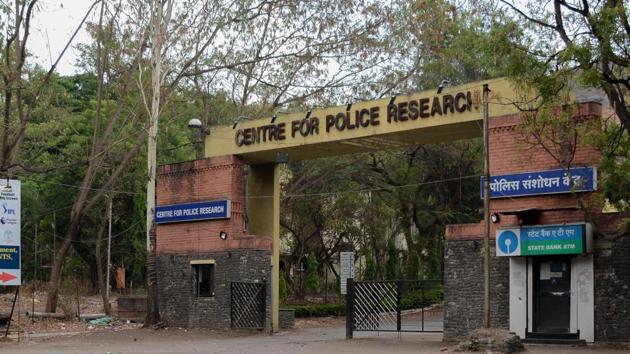
Subjects like police sciences or forensic sciences could be taken up for joint research, Umranikar suggested.
“We had made such a suggestion about a memorandum of understanding for joint activity or joint research into these fields,” he said. Umranikar had made the suggestion when he was the additional director general (state Criminal Investigation Department) from 2004 to 2007.
Hindustan Times, on April 10, (’For police research centre it is recreation over academics’) had reported how the Centre has been reduced to a recreational club, rather than being a centre for focused research.
Established in 2003, there was no evidence of any serious research at the centre.
The centre is well equipped with a computer room, library, conference hall, banquet hall, tennis court, clubhouse accommodation, gymnasium, swimming pool and restaurant which is being utilised by gazetted police officers.
The former director general of police who has worked with Research and Analysis Wing (RAW), was the Pune police commissioner and also served as director general (anti-Naxal operations), said, “The centre has been neglected because it is not under the government and there is no incentive and hence no initiative.”
Umranikar said, “The idea of the Centre for Police Research is about bookish research but about field-oriented research.”
When he was incharge of the centre, a fingerprinting substitute developed by a head constable had been taken up for research and a kit which cost barely ~5,000-~10,000 had been developed. “The cost of the kit was at least ~2 lakh in the market,” he pointed out, saying that the research was carried out basically from the revenue generated from the recreational club. He said the resto-bars and private hostels had been created as a revenue-generating activity to enable the centre to raise funds as there are no funds forthcoming from the government.
“Some officers had stopped the resto-bars and hostel accommodation, so the Centre for Police Research went into doldrums because there was no money available. The idea was to finance the research,” he said.
Umranikar said the purpose of the centre would be defeated if it was simply generating money and not conducting research.
There are some issues which are being resolved, says police chief
K Venkatesham, Pune police commissioner, refuted the Hindustan Times report and claimed that few research projects are underway at the centre. “There are some issues that we had, but we are sorting it out,” he said.
Suhas Bawche, deputy commissioner of police, zone-1, who has served in the Naxal-affected Gadchiroli district said the centre conducts training programmes and sessions on preventive action and other related topics.
“They gather inputs from officials and generate a report. These training sessions can help in conviction and welfare of the police personnel,” he said.
Bachchan Singh , deputy commissioner of police, zone-2, said, “One-and-half years ago when I was in Aurangabad, I had attended a training programme on externment. The faculty that they (Centre for Police Research) brought, the research papers they provided.. everything was very helpful. There is an annual calendar in which the sessions are listed,” he said. A communication regarding the training sessions is sent to eligible persons in that rank.
When told about the skeleton staff and general lack of research observed by Hindustan Times at the facility, Bawche said, “This may be a policy-related issue.”
When asked about what he expects from the research facility, Bawche said, “The research should provide material to help policing in the future. Ten years down the line, the material should help in policing issues like maintaining public order, crime and traffic. In the case of cyber crime, the police will need help given the speed at which the nature of cyber crime is changing.”
Singh also agreed that the research may be in need of improvement even as the available content is good.


