
 E-Paper



Jnana Prabhodhini Prashala, a faculty to spark budding minds, turns 50
What started as an idea to have a school with a purpose has grown on to complete 50 years and has become a hub for intellectually gifted students

 Prefer HTon Google


A two-hour initiative started by late VV alias Appa Pendse in 1962 to ignite a few young minds has spread beyond that period, and number. Pendse, founder of social organisation Jnana Prabhodini, was an educationist, social organiser and active ideologue. He started Prabhodh Shala (school of awareness) to engage children into learning new things.
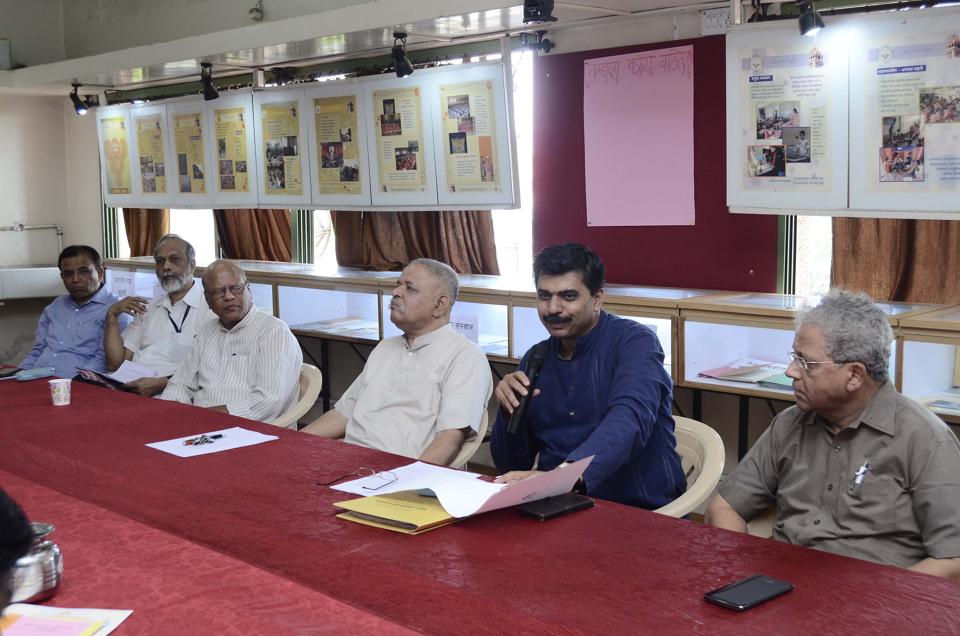
Jnana Prabhodini Prashala, launched by Pendse to realise the idea of Swami Vivekanand — to change the face of nation through man-making education, turns 50 in 2019.
The school has planned a year-long celebration.
Milind Naik, principal, Jnana Prabodhini Prashala and an alumnus of the school, said, “Students are introduced to real-life situations and given hands-on experience to handle it. We focus on self-study, reading, memory, creative thinking and communication through curricular and co-curricular activities.”
About the school’s features, Naik said that it runs an innovative programme Chhote Scientist aimed at making the subject interesting to students. The initiative covers 7,000 students from 120 schools spread across 6 cities and 4 districts of Maharashtra.
Naik said the idea is to reintroduce the practice of Gurukul system (residential schooling practiced in India during the ancient times) for city and rural areas. The school’s initiatives also include Jnana Prabodhini Navanagar Vidyalaya in Nigdi (Pimpri-Chinchwad) that practices the concept of Panch-kosha (five personality traits) and Kreedakul (sports school). The Gram Prabodhini Vidyalaya in Salmubre, near Solapur, caters to rural kids.
“An agro-based shelter for rural kids is also run at Harali (Kolhapur). We also focus on projects for the deprived. For example, sugar schools, which are run for children of families who migrate to other states for work. The ‘Back to school project’ in Solapur pursues dropouts to reconsider education,” he said.
Naik has initiated a “special interest groups” where the school encourages students to try out new things. “These classes are held prior to school hours. If 10 plus students come up to me with an idea or curiosity to learn something new, then we introduce it. We need to let them explore and experiment. We have had children enquire about learning Mandarin (Chinese language) and chess, and we have included it in our syllabus.”
The principal said that a child should be given time to learn language and subject. “We have eight levels in Mathematics and English for students from Class 5-8. They are expected to clear at least seven levels. We take a test only when they are prepared,” he said.
The Maker’s Space is another idea where children get a chance to understand a concept in real time. Creative problem solving is the basic motto of the initiative. “We do not have a fixed and repetitive list of projects or visits. We encourage new additions. Our teachers help with unique and new ideas, and it helps children,” he said.
The school looks at enrichment of affective domain. Every Saturday morning, the students do Upasana in group. “We believe that education in Jnana Prabodhini Prashala has a strong spiritual foundation rooted in Indian ethos. Students are led to this path through various Upasanas,” Naik said, adding that the school places physical development at par with intellectual development and students also learn drills, yoga, rope-mallakhamb, kabaddi, kho-kho and volleyball.
The school boasts of alumni that feature in different fields of expertise across the nation. Eminent scientist Raghunath Mashelkar and Pramod Chaudhari, executive chairman, Praj Industries, who passed out from Jnana Prabhodini Prashala, will be part of the school’s golden jubilee celebrations.
Timeline
1962: Initiation of Prabodh Shala, a two-hour programme for intellectually gifted children
1969: Establishment of full-fledged school
1973: Second and third batches were combined and passed the board examination
1974: Project methodology introduced
1975: Girls school initiated
1976: CBSE affliation
1977: 10+2 pattern adopted
1989: Gun Vikas Yojana, a scheme for skills enhancement was introduced in the curriculum of standard seventh, multi-text teaching was introduced
1990: Abhivyakti Vikas Yojana, a programme for development of aptitude in arts and crafts
1991: Self study skills part of curriculum
1994: Projects based on futurology introduced
2007: Agrani Yojana, a project for leadership development included in curriculum
2010: multiple levels for mastery of English and mathematics introduced from 5-8th standard
2012: Computerised school administration
School focuses on:
Cognitive development
Social awareness
Enrichment of affective domain
Physical development
Enhancement of leadership qualities
Golden jubilee celebrations
When: June 9, 6pm-8pm
Where: Annabhau Sathe Auditorium, Satara Road


