
 E-Paper



Monday Musings: Has Sharad Pawar’s time finally arrived?
Why did Narendra Modi make a scathing attack on Sharad Pawar at the Wardha rally? Is it because Pawar could take his place after the 2019 polls?


On April 2, Prime Minister Narendra Modi took everyone by surprise with his scathing, personal attack on the Nationalist Congress Party (NCP) president Sharad Pawar during his Wardha rally.
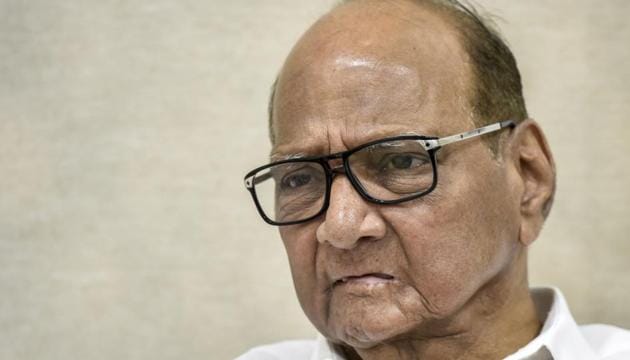
He mocked at Pawar and said that “He had once thought he could become prime minister.” He spoke of Pawar “running away from the battlefield” and being caught in a family feud “where his nephew is scheming to take charge of the party.” Modi accused Pawar of neglecting the cause of farmers, “in spite of being one,” and then blamed him for the farmers’ suicides in Maharashtra.
The ferocity of Modi’s attack on Pawar came as a surprise because this was the same Modi who had called Pawar his political guru some time back. In November, 2016, while speaking at the Vasantdada Sugar Institute, Manjari, Pune, Modi had showered extraordinary praise on Pawar.
“I have personal respect for Pawar,” Modi had said, while referring to 78-year-old Pawar as his “political mentor”. He said Pawar had helped him walk “by holding my finger” when he had taken charge as chief minister of Gujarat. Modi congratulated Pawar for completing 50 years in public life and said he was “an example for others”.
Why then this sharp and sudden animosity towards Pawar? Is it because Modi fears that Pawar could take his place by a stroke of luck, in the aftermath of the 2019 polls? On at least two occasions history has shown how political non-entities like HD Deve Gowda and IK Gujral became prime ministers in 1996 and 1997 respectively, as the consensus choice of the United Front coalition.
A similar situation could arise in the aftermath of the 2019 Lok Sabha polling if the BJP-led alliance fails to get the requisite numbers and is unable to form the government. Given his personal equations with other political leaders, his stature and vast experience in state and national politics, Pawar could well be the choice of a consensus candidate for a non-BJP alliance.
When Pawar was asked by a TV interviewer what could have been the reason for Modi’s vitriolic attack on him, he replied, one possibility could have been “the series of meetings at my residence in Delhi” in which he sought to bring opposition leaders together. Pawar is undoubtedly the superglue who can play a critical role in helping cobble up a united front if the possibility of government formation is within reach.
Modi’s ferocious attack on Pawar, therefore, does not come as a surprise. In fact, the BJP is keen to deliver a crushing blow to Pawar by ensuring his daughter Supriya Sule’s defeat in Baramati. The BJP has trained its guns specifically on Baramati where Modi is expected to address a rally on April 10.
Given his record of crony capitalism and caste-based politics in Maharashtra, Pawar is not the ideal candidate for prime ministership. But he has emerged as a possibility.
abhay.vaidya@htlive.com


