
 E-Paper



Monsoon woes, part 1: Why Pune not ready for repeat of 2019 rain fury
Flash floods during the monsoon of 2019 called for serious work to be undertaken to prevent the deathly disaster happening again. The reality is, Pune is not prepared and the 2020 monsoon is here...


Residents of Sahakarnagar in particular, and the areas of Katraj, Sinhgad road, Satara road, Kondhwa, Camp, Wanowrie, Bairobha nallah and Bibwewadi, in the intervening night of September 25-26, 2019, faced flash floods from an overwhelming outpouring of monsoon rain. These residents fear a repeat of the flood fury, as work on Ambil Odha, a stream that burst its banks, has only been partially completed.
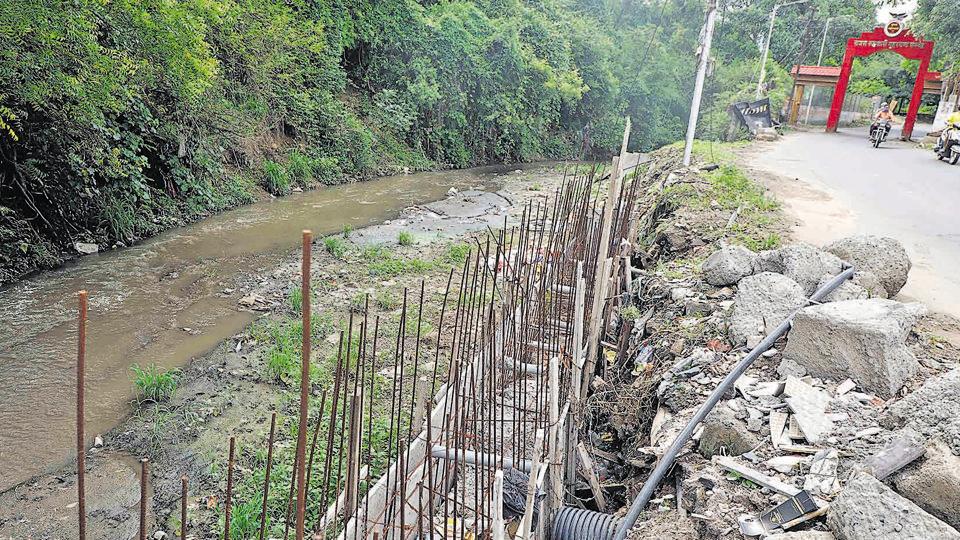
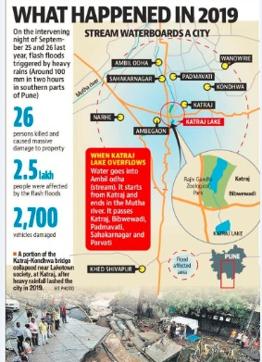
An overflowing Ambil Odha – it originates at Katraj lake and flows six kilometres through the city to merge with the Mutha river –claimed 26 lives and damaged public and private property on a scale had not witnessed in Pune in decades.

The Pune Municipal Corporation (PMC), post the 2019 monsoon disaster, said it would spend Rs 300 crore, primarily, to build a retaining wall along the Ambil Odha and repair sections where the bank and barriers had collapsed.
On the ground though, work on the retaining wall hasn’t begun and the civic body has only partially completed its pre-monsoon cleaning of drains and nallahs.
2019’s flash floods were borne out of incessant rainfall and came without forecast or warning. The city received 100 mm rainfall in just two hours.
During the flash floods, residential societies located in Katraj, Sahakarnagar, Padmavati, Ambegaon and Sinhgad road were the worst-affected as flood water entered societies, shanties and houses situated in low-lying areas.
At least 2,700 vehicles – two- three- and four-wheelers - were destroyed or washed away from these localities; such was the current and depth of water over-flowing.
The 2020 monsoon has begun and Pune has already completed its June quota of normal rainfall – 151.6mm in 20 days received, as against the normal mark being 137mm.
The cash-strapped Pune civic body, during the first week of November 2019, had cleared a proposal to build a three-km retaining wall with culverts at 45 locations along the affected areas of the stream at an estimated cost of Rs 78 crore, for which a tender was passed.
Even before the Covid-19 pandemic reached Pune in March, no work on Ambil Odha had begun.
PMC commissioner Shekhar Gaikwad, who recently visited the flood-hit areas, said, “We have so far completed construction of the retaining wall at three places, though at most locations where there are housing societies, PMC will not be able to build walls. To ensure the city does not witnesses a flash-flood like incident, PMC has cleaned Ambil Odha and constructed new outlets for Katraj lake. These outlets will allow discharge of water automatically once the lake starts filling up in the monsoon.”
Pune’s member of parliament (MP), Girish Bapat of the BJP said, “I had taken review meeting of the issue with the PMC commissioner and it was decided to earmark funds for the work. Right now due to the corona crisis, adequate work has not been done. However, I had directed deeper cleaning of nallahs and stormwater drains for facilitating smooth flow of rain water.”
Pune mayor Murlidhar Mohol said, “We have spent ~100 crore on battling the Covid-19 crisis and currently no additional funds are available . Walls must be constructed, but it would require ~70 crore. The state must fund the project.”
Ground reality
PMC officials on the ground have accepted that work along the Ambil Odha, and other affected areas, has not been completed.
Kanhaiylal Harilal Lakhani, ward officer, Dhankawadi- Sahakar nagar ward office, said “Ambil Odha’s cleaning work has been stopped now due to the monsoon. The construction of the retaining wall work is yet to be completed, as the administration is looking into the matter.”
Sambhji Khot, ward officer, Sinhgad road, said, “We could complete works worth Rs 10 lakh, only. Currently, 10 per cent of the work is complete and lots still needs to done. We have a limit of Rs 25 lakh and the current work of constructing a retaining wall and other flood prevention measures will cost crores of rupees. A lot of work needs to be completed and it is being directly done by the PMC administration.”
Santosh Warule, ward officer, Warje, said, “Most affected areas had private fencing which fell down during the deluge. The residents want that PMC re-construct the walls, but the PMC cannot do it as it these walls are private property.”


