
 E-Paper



Pune explores Marathi stand-up comedy trends as world laughter day rings in
Over the past few years, stand-up comedians have taken the Marathi scene by storm as they perform for a niche audience and in the regional language. Here’s a look at the trend

 Prefer HTon Google


The first Sunday of May is celebrated as the World Laughter Day. Initiated by general physician Dr Madan Kataria, founder of the worldwide laughter yoga movement, the day aims at spreading positivity and powerful emotion through laughter. Since 1998, the day has been celebrated across the globe. Honouring the day, we look at the reasons that are leaving Puneites in splits. And, Marathi stand-up comedy seems to top that list. From worshipping writer-director-playwright-screenplay writer-actor-music composer PL Deshpande to finding inspiration from everyday observations, these comedians have gone the extra mile to make regional comedy popular.
The rise of Marathi stand-up comedy
When Sahil Horane started Hindi stand-up four years ago, little did he know that later he would be cracking up the Marathi fans. The Pune-based comedian took the plunge eight months ago and is glad he did. “The response is overwhelming and there are more audience for Marathi open mics and shows,” says Sahil.
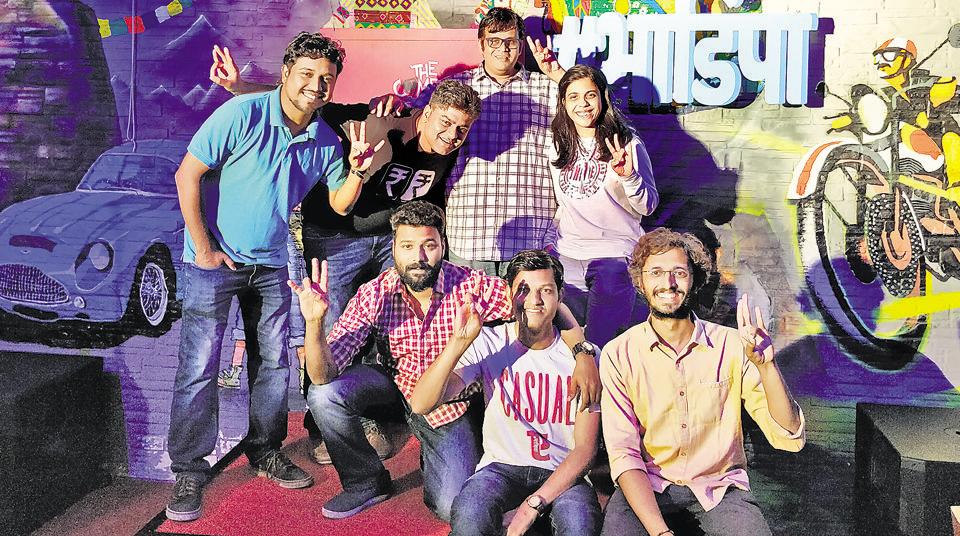
In 2017, Bharatiya Digital Party (BhaDiPa) started Marathi stand-up as an experiment and today they proudly host open mics and shows across the state and more recently internationally too. Paula McGlynn, chief executive officer and founding director of Gulbadan Talkies Pvt Ltd and Marathi content brand BhaDiPa, says, “The idea came up when Aditya (Desai, co-worker) came up to us and asked whether he could perform on BhaDiPa’s first anniversary. He has experience in English and Hindi stand-up. However, he wanted to explore the Marathi space. We thought it sounded interesting and decided to keep it a secret.”
Paula and team gathered friends for a trial, but kept the people guessing. It was a private stand-up session enjoyed thoroughly. “That’s when we decided to have a proper show and call it Secret Marathi Stand-up. A lot of people approached us and we asked people to email us their videos. We got close to 50 entries,” Paula says.
The team started jamming and many comedians who were interested in Marathi stand-up got in touch. Paula says, “These were people who were keen on performing in regional languages, but never had a place to perform. We had workshops because when you change you set to another language, the effect changes.” It was a risk and Paula admits that they were concerned initially about its success. “Cut to two years later, we organised a show in Dubai and are readying for a US tour,” she says.
Pushkar Bendre started Marathi comedy a little over a year back. He always wanted to perform in Marathi, his mother tongue. “For someone who was born in Maharashtra, but having spent majority of his life outside the state, comedy in Marathi was a new challenge. The response has been phenomenal so far. Maharashtrians who traditionally stayed away from Hindi and English stand-up have turned towards Marathi form,” he said.
Trupti Khamkar started off as a Hindi comic and moved to Marathi comedy when she realised that she could explore her mother tongue. “If you know the language and have the means then why not. I was sceptical initially, but then I took the plunge.” She says that the response has been amazing and that could be because the language comedy has not been exploited much.
“Of course, it is not easy to please the Marathi audience, but they are appreciative. They follow your humour and also come out in numbers to watch the show,” she says. Trupti recalls how senior women from interior parts of Maharashtra came up to her and recognised her at a local event. “It was great to see that my work has reached remote areas and is been appreciated and loved,” she says.
The trend
Marathi stand-up comedy has been gaining popularity and acceptance in the recent years. Stand-up comedian Chetan Muley feels that there is no secret sauce to the popularity of the Marathi comedy. However, relatable content is something that always clicks.
“My set Ek Ghanta Tumnchyasathi (one hour with you) is a one hour show where I talk about the 90s, growing up, my equation with parents. Anecdotes of dealing with my father and family garner maximum laughter,” says Chetan.
Personal stories and everyday observations work well with the audiences. Paula says, “We have seen the crowd go crazy over Marathi content. It has better and closer connect with the local crowd. Also, it is relatable because of the mother tongue.”
Sahil says that people have begun to enjoy humour that is connected to their soil and home. Comedy is no longer elitist and that is what people enjoy. “For example, Marathi has a lot of hard consonants. It is easy to be rude when speaking the language. So, a lot of humour comes from that inherent rudeness. Also, it gives space to rural comedians to voice their talent,” he says.
Pushkar says, “The regional comedy scene is comparatively new, so we get a lot of participants and audience for open mics. The participants mostly have very less idea about stand-up comedy, so the passion with which they perform is fantastic.”
Changes in the industry
Overall, the stand-up industry is still very new. While Chetan feels it is still going through a lot of change and needs time, Paula feels open mics and individual organisation are yet to be explored. “Not many know how to put together a show or self-organise in the city. I hope they work towards that as it is cheaper and more efficient. It is safe to explore and experiment and the audience doesn’t have high expectations too,” Paula says.
Chetan says that people should focus on writing better jokes that relying on cuss words to garner laughter. “The art is there, it’s just that we need to put the craft in place,” he says.
Sahil says, “The scene needs to be more street like and not just urban centric. We need to do for Marathi what Zakir Khan has done for Hindi. Also, we need to explore more subjects such as philosophy like Pu LA did and different aspects and angles of humour and not just stick to dating or love.”
Industry is opening up and will evolve with audience. Pushkar says, “Once the audience understands the nuances of stand-up comedy and gets a little more mature, we can start experimenting different forms of humour and can touch upon more complicated matters.”
What’s next
Paula says, “We have been working on an outreach project that intends to introduce marginalise voices and people from different backgrounds. It is called Kay Boltay. For the last two months, we have been doing shows in parts of Maharashtra where we are introducing stand-up comedy to communities. Soon, we will conducting a workshop where we will be working with selected people from different communities helping them work on stand-up comedy as an art form and as a form of expression so that they can tell their story through it. We will then work with the new comics and do shows with them across Maharashtra. We will also teach them how to run open mics and have their own sets.”
Sahil wants to tap the street side of the language. He wants to shake off the text book or purist form of language used most often. “I want to explore the raw voice in smaller towns, it has less puns but it is in your face kind of comedy.”


