
 E-Paper



Startup Saturday: A2 milk the latest talk of the town
Close look at two startups who follow different ways of operating milk business, reaching out to customers

 Prefer HTon Google


A2 milk suddenly is all the rage. It’s supposed to be great for diabetics, for good health and even though more expensive than regular milk, the demand for it is only growing. The past three years have seen quite a few big and small players venture into this field. There is Amul the big daddy of them all who has also recently introduced A2 milk, there is Provilac, Woohoo, Cowania, Vedas. Indian Zebu and a few unorganized players who see the market opening up.
Simply put A1 and A2 are genetic variants of the beta casein milk protein that differ by one amino acid. A genetic test originally developed by the a2 Milk Company New Zealand determines whether a cow produces A1 or A2 type protein in its milk. This is now done in India by the National Bureau of Animal Genetic Resources (NBAGR) Karnal in Haryana and recently Bharat Vikas group( BVG) group has also made it available in Maharashtra. While globally A2 milk has been around since early 2000, in India, it has emerged about three to four years back, promoted largely by health enthusiasts, even the Art of Living and Iskcon followers who believe in the benefits of milk from the gau mata.
Here we present stories of two startups in the milk business who followed different ways of doing the milk business. Woohoo A2 was launched in the market in May 2015 and Indian Zebu just three months back. While both serve the same needs of providing milk in a market that has been successfully entrenched by the old players of the White Revolution, we take a look at how they penetrated the market.
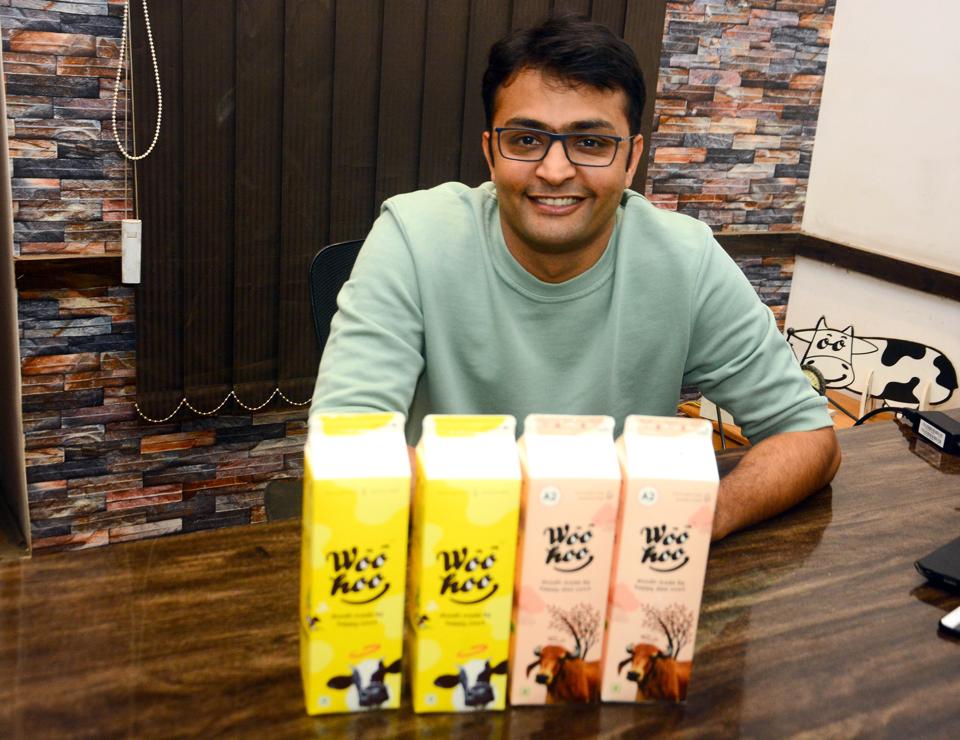
Rahul Uppal, founder, Woohoo Milk
After my MBA I worked with multinationals for a year and thereafter was a partner at a firm which advised start ups, Part of the job was a project on dairy farming. We worked on it for one and a half year doing research for a client from Chhatisgarh. When all was ready the family had some issue and they decided not to go ahead at that time. I was convinced about the opportunity, so I thought why not do this business myself. I pitched to a few investors and the CEO of NetSurf, Sujit Jain got interested and invested in us and we set up our dairy business. 
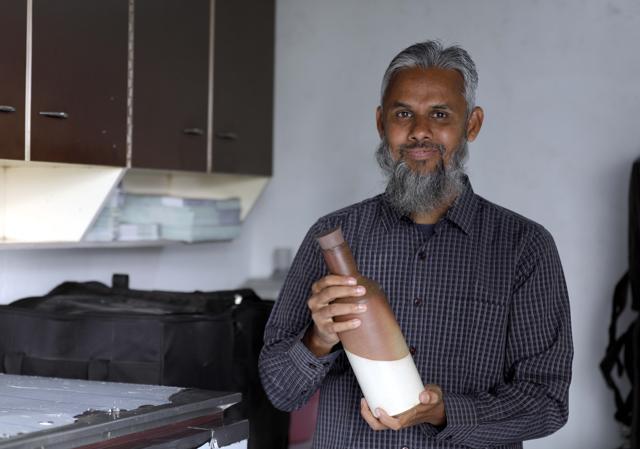
Akil Patel and Zahir Shaikh, co-founders Indian Zebu
Both are IT professionals and always interested in nature. We have some family land near Satara where we would visit as often as possible. “When my daughter was born I wanted that she get the best quality Indian cow milk and found none. So this paucity and my love of nature pushed me into giving up my job and setting up my own dairy farm near Satara” says Akil
What did it take?
Rahul: I knew that own-your-dairy farm model would not work as the milk industry model in our country is based on sourcing from small (or large) farmers. India is the largest producer of milk. What would happen to all these small producers? And why reinvent the wheel? So I contacted all the dairy farmers in Maharashtra to get them on board. But the problem was to ensure quality. Traditionally the farmer would milk his cow or buffalo and keep the can anywhere even at places where there was cow dung or urine. There was no system they followed. And I wanted milk that was clean, hygienic and healthy.
So I designed a new incentive system focused on nature aligned farm practices (carrot and stick method). I knew that a farmer would for as little as 50 paisa not think twice about adulterating the milk. I reversed this. I told them that if they followed nature aligned farm practices I would pay them more. Of course we had to educate them about this as well but it worked out very well and today our farmer partners earn Rs 20,000 a month more as both, their yields and quality have improved.
Apart from milking there was the issue of the feed given to the cows, the techniques to keep the breed healthy. Cows need to roam freely so that their hip muscles stay healthy and their nails get naturally cut whilst walking on the ground. They need to have green as well as brown hay so that the milk they produce is of good quality. Education and rewards worked. In the first few months we had about 10 farmers and 500 cows. Of course now if upon testing there is a problem with quality we fine the farmer and do not accept their milk. We designed our collection centre to be close to them. Within a 10 kms radius so that they can bring the milk in half an hour.
Akil:I decided that I should have complete control over the milk I produce. That every aspect of milk production should be managed by me so that I have a 100% guarantee of the quality. Moreover I wanted to supply only A2 milk, milk that is got from the Indian breed of cows. This involved buying two acres of land for my dairy farm, purchasing traditional Indian breeds of cows like Gir, Sahiwal and Kankrej. I now have 50 plus cows on my farm.
I also wanted the farm to be a pastoral one where the cows could freely graze in the open virgin environment free from sound, water and air pollution, thus we bought two and half acres of land located at an extremely remote location where we could make this environment available to our cows. Since their feed is very important to the quality of milk, I had to ensure they got the right balance of green, dry fodder and the concentrate feed. To meet their needs currently one third of the feed comes from open grazing, one third from our own organic farm produce and the last one third from hydroponics.
In times of shortage we buy fodder from local farmers, but in about two months time I should be able to produce the entire requirement myself. I have hired and trained people who take the cows grazing, who milk them and send it to my collection centre in Wanowrie within 24 hrs.. It is very difficult because I do not have enough resources, but I am sure to find a way. :
Funding
Rahul:I did not start my business until I had the funds. Net Surf CEO invested in us and with that I set up a collection center, cold chain, packaging and distribution network. It is only now after three years that we have broken even.
Akil: We invested Rs One Crore of our savings. This was utilized to part purchase the land, cows, insulated cans to carry the milk to my collection centre, our special earthern bottles. There is still some time to break even
Marketing
Rahul:After having set up the supply side, we had to look at selling. In the early days, my team and I must have met thousands of people personally and informed them about our milk. We started with regular milk in May 2015 and and A2 milk in Nov 2017. Even today our regular woohoo milk sales are more than A2. We sell about 550 litre of regular woohoo milk daily and about 450 litres of A2 milk.
After the initial rounds of housing societies, food festivals, several experiments we got our early traction of 300 customers in the first six months, now that we have 1500+ customers we have started using digital marketing quite effectively. We understand our customer profile and create messages accordingly. We have a dedicated digital marketing agency that works with us on this.
Also we were the first in the country to use a recyclable paper based milk packaging called gable top. We partnered with Parksons packaging and imported the first NIMCO machine for packaging of milk in India from California. The idea was to be a responsible brand across the value chain of milk.
Akil Marketing is really difficult. My partner and I both distribute pamphlets and flyers, we visit housing societies and urge people to take a trial of our milk. In the three months that we have been in the market we have managed to get 60 customers. I have not yet explored digital marketing but aim to do so soon.
UNIQUE SELLING PROPOSITION
Rahul:We deliver fresh milk within 24 hours of milking (not packaging) at the doorstep of our consumers between 5-8 in the morning, our milk comes from farms which follow nature aligned practices and we are the first in India to use recyclable paper based packaging for milk. Our distribution system is completely refrigerated which ensures freshness, we do not add any preservatives.
Akil:Our milk is 100% pure and near organic and made available from traditional Indian breeds. Even our packaging is truly unique. We have crafted a clay bottle that is glazed from the inside. I feel that milk in plastic bottles/pouches changes the taste as milk is a very sensitive product and absorbs everything around it. Our cans are insulated so when the milk reaches our collection centre it is still fresh. We do not pasteurize or homogenize our milk as I believe when it’s so pure you need to do nothing more.
The future
Rahul:We plan to enter into the Mumbai market very soon and after that we will launch value added products, the first being Desi Cow ghee which will be made via the traditional curd churning bilona method. The vision is to create a layer of quality on the existing supply of milk in India and delight our customers with great dairy products and state of the art delivery and service channels.
Akil:As of now our plans is to increase our markets share. We don’t want to get into the by-products business as of now.


