
 E-Paper



Startup Saturday: Robotic RaaS-tafarians data-beating a revolution
The attempt seems to be to get as far away from the traditional imagery of a “robot” to Software as a Service (SaaS) evolving into Robotics as a Service (RaaS)


PUNE : The robots are here. In India and in Pune. And it is in manufacturing.
Vipin Raghavan, CEO and founder of Haber, a company founded in 2015, classifies his robotics endeavour as a service.
In fact, the attempt seems to be to get as far away from the traditional imagery of a “robot” to software as a service (SaaS) evolving into Robotics as a Service (RaaS).
Says Raghavan, “RaaS it is, simply because we felt that this will be the need of the future.”
Digitisation of manufacturing in India is not yet a major industry, political, or social talking point.
Yet, on the shop floor, innovation is taking place almost on par with the Valley, or countries like Israel and China, cue Haber. 
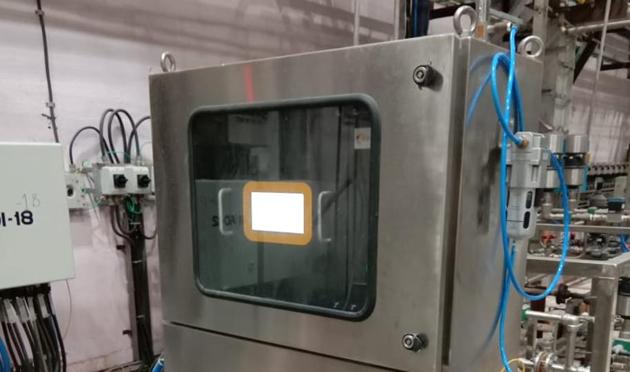
Says Raghavan, “Our robots generate data, but we do not stop there. eLIXA (robot name) takes action based on data generated at site. And it also gleans data from other sites to offer the best possible solution.”
The example of eLIXA in action is a paper and pulp manufacturing company, a Haber client.
“They manufacture tissue rolls and one of the several tasks is to get the colour of the tissue paper right. Wood is a natural raw material, but may not generate the same colour (in this case) as there are several variations in the wood being used. During manufacture, a sample has to be physically taken to the lab on site and measured. Depending on the data, the optical brightening agent (OBA) has to be recalibrated,” Raghavan explains.
“With eLIXA, not only will the test be done during the process of manufacturing, but corrective action will also be taken. Without anyone having to pick out a sample, trudging to the lab, testing and then physically adding the OBA,” he claims.
In the beginning
In 2015, Raghavan, who had worked for several years at various companies including Zynga, the social gaming giant, saw that though there was some amount of digitisation in the manufacturing sector, but it was minimal.
“In the paper industry there is about 15% wastage. IoT could tell you that it is on account of raw material or mechanical reasons, but we felt, why just leave it at generating data? Why not take action? And this we felt could be done with the help of not just IoT, but robotics,” he says.
Haber in 2015 had a multidisciplinary team of five engineers (software, electronic and mechanical) to design eLIXA.
“Software engineers were given the task of designing the code, mechanical engineers on various aspects of manufacturing... We also needed people to do plant surveys and coordinate with the engineers. We were aiming at the various processes in paper, mining and dairy industry, so we needed a multi-disciplinary team. Today, we have a team of 50,” says Raghavan.
Money, money, money
Raghavan started Haber with his own funds (undisclosed) and had a seed round with an Asian VC. In 2019, Haber has completed a series A led by an American VC fund.
Rev?-par
“Our revenues are based on production and KPIs. We do not just offer robotics services. If say a dairy processing unit has 20% losses and we say we can reduce that to 10%, then it is only upon reaching this target that the company pays us a percentage of their revenue,” says Raghavan.
Today, Haber claims 50 robots in service in different factories all over India. “We are planning to enter Indonesia and Thailand. We want to become the first in mind when it comes to AI for the markets we compete in. Our solution is first of its kind anywhere in the world,” muses Raghavan.
The competition
“In Pune, and India at least, there are two big giants - ABB and Honeywell - who offer solutions much like ours. However, if a company wanted to automate certain processes in the manufacturing unit then that had to be custom built. This means capital investment. Add to that cost of maintenance. Often, sensors used in such machines have a lifespan of about two years. So, why not robotics as a service, instead of a product?” says Raghavan.
And, the future?
New sensors. “Data is gold and if you do not have good sensors you don’t have high quality data. Which is why we are focusing on developing sensors because the quality of the ones available today don’t meet high standards of scale and performance,” says Raghavan.


