
 E-Paper



Startup Saturday: Unicorns rise from the ashes of slowdown
The cloud cover of the rampant monsoon season this year has been overshadowed only by the storm winds of a dreaded economic slowdown. The past week key indicators for India- stock markets and manufacturing; auto in particular- nose dived. How does the economic sandstorm affect the startup space?


Investors have eyes on buzzing biz

‘Recessions see birth of success’
Dr Apoorv Ranjan Sharma, founder, Venture Catalysts

Firm that incubates and invests
Economic slowdowns and recessions are a positive sign for the startup industry. First of all because people lose jobs many of them will look at entrepreneurship as an option. A general observation is that recessions see the birth of many unicorns.
However, there are a few things startups must bear in mind when the economy slows down. One is, ‘cut the carbs’, i.e. reduce burn rate.
A founder will know where the burn is during expansion. Try to reduce this whilst keeping growth in mind. Do not stop the growth during slowdown, but find ways to optimise costs and reduce expenses.
Whatever money you have remember to stretch it for a year at least, that’s how you will survive. Keep a strong control on your unit economics. Use technology instead of traditional marketing methods, use influencers, be creative, be innovative.
‘Regular businesses need profits to grow , startups need customers (at all costs)’
Dr Abdulla Hassan, CEO, Dhow Capital

To assume that the startup sector is funded by market economics is just a myth. People who invest in “ Ideas” and not “ businesses “ are those that have more or less given up on the conventional asset classes. They are eager to place their bets on 10 maybe 20 or more startups, so that one or two of them acquire the privilege of being unicorns. Such patience and excitement is not seen in conventional sectors.
Most successful startups today have very unhealthy P&Ls, and while conventional market wisdom would have seen such businesses close down, in the startup world they may prosper further. The global startup economy is about $2.8 trillion in economic value. There are now nearly 50 regions worldwide creating at least $4 billion each in ecosystem value.
Economic turmoil may surround conventional markets to suffer and even wipe out billions in stock market worth, but the startup industry remains oblivious to such shakeups. In fact, it can be the only hope for investors and the job market in such desperate times. The ecocycle of a startup needs to be understood to realise this fact.
Startups don’t function like regular businesses. Regular businesses need profits to grow , startups need customers (at all costs) to grow. Startup investors look for recognition in “customer numbers”.
Conventional investors look for recognition with profits and EBITDA numbers.
Startups are established and they survive on investor funds, which generally are one or two rounds in the initial phase, followed by another two rounds of funding to grow the business. All of this generally takes three-five years, which is more than enough for any economic crisis to have elapsed. Funding for startups is done by VCs and Angel investors who believe in “hitting the last ball six” and not waiting for an entire innings to win a game.
Hence, during any economic crisis startups will be the only hope left.
If the government provides more tangible benefits to investors (institutional and Angel ), like tax-free holidays for any returns made from startups investment and provide some level of governance to ensure the Indian startup industry is not run by a few VCs, possibilities are endless. Imagine every new startup can employ at least 10-20 employees, hence, if we are able to launch 100,000 startups across the nation in 2020 we could create one million new jobs that don’t need government support and relieve the government by adding to the GDP.
While economic crises have surfaced in India , the twilight of economic stability could be right around the corner. If the government decides to embrace this, it is an opportunity.
‘India’s long-term story is based on our demography and aspirations are very strong’
Prashant Girbane, director general, MCCIA
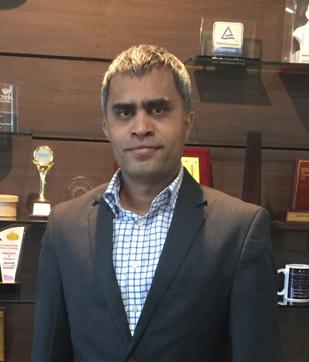
We all must accept that there is definite slowdown in the broader economy. Fortunately, it hasn’t had major impact on the startup ecosystem. In the first seven months of the year, 10% more investment happened in this space taking the total to $4.7 bn. Number of deals also increased. There are a few reasons for this. First of all, VCs take longer term views (not cyclical) when they fund startups. India’s long-term story is based on our demography and aspirations are very strong.
Given that percentage market share of a startup in given sector is usually very low, almost insignificant in many cases; it needs to see large headroom for growth and continue to focus on the basics of ascertaining the need gap, developing unique value propositions, testing them in the real market and reaching out to funding entities, while they still have some runway.
Pune’s startup ecosystem is very vibrant and supportive with sets of mentors, incubators and accelerators, led by TiE, Venture Centre, Bhau Institute, Autocluster and Pune International Centre (for social enterprises). Many academic institutions and corporates have also contributed to this eco-system. This is encouraging.
How companies stay afloat
Silver lining has to exist; find it, use it, grow it
Shehnaz Chawla, founder, Boomerang Digital (digital marketing)

In Pune at least, most companies have digital marketing as the last thing they will do, it’s just not a priority with them. When the economy slows our services will be the first to be knocked off their marketing budgets. Asking people to leave is the most obvious thing to do, but growth is mandatory. What we are doing is focusing our energies on clients that are still doing good business despite the economic slowdown. Our retail clients are gone, but we have noticed that travel, hospitality, education and the healthcare industries are still doing good business. Instead of sending our marketing team to cover all industries we are focusing on just these few sectors. We are also looking at different geographies that are not yet touched by the slowdown.
Anirudh Singla, founder, Pepper, (content marketplace)

Honestly, we have not yet witnessed a slowdown in our industry. I think it is industry specific and people are discussing it and taking cognisance of it; but I have not seen it impacting any major decisions that would affect us. Our customers still need our services as they did earlier. If you were a startup in the logistics or mobility sector I guess you would feel the heat. Our plan is to use the time to develop our product which is an automated content creation work flow, that would recommend to our customers content creators best suited for the job.
NBFCs leave startups money short
Rajeev Randive: founder, Pixy electric cars

“Since I sell mostly to the defence establishment I would say that I am lucky my business is not impacted on the demand side. However the slowdown has thrown up a peculair problem. I have orders, but money is not easily available to meet the demand. I have always relied on self-funding and debt. With the NBFC issue, banks have become very tight fisted. Even if I do manage to get funds, it is miniscule and cannot help me fulfill my orders.
On the other side is the supplier. They are impacted deeply by the auto slowdown and I have to give them an advance so that they can fulfill my order. The slowdown has affected our money supply. I may have to shed some equity, something I am not very happy with.
Narayan Mahadevan, founder, Bridegalabz (employability in workforce)

“Even though there is news about layoffs in the auto sector we are not seeing any contraction in our business. In fact, the demand for the tech work force is only increasing. Technology increases productivity so the requirement for technically skilled people is in fact growing.
According to a McKinsey report there will be a requirement of 25 million to 50 million globally in next 12 -15 yrs. In addition to this, about 300 million jobs overall will get disrupted, so despite any slowdown, more and more companies will need tech employees. This year we have seen a huge leap in our growth figures (does not want to reveal) and despite that, the issue that we face is raising funds. The slowdown has impacted NBFCs making them risk averse. So now we have to approach VCs and dilute our equity to raise funds to ensure growth.


