
 E-Paper



Sutradhara’s tales: Pune- the hero with a thousand faces
Throughout the course of history, Pune has been growing, changing and has been influenced by nature, various rules, cultural processes, development ideas and socio-economic factors, says Saili K Palande-Datar


There is no great agony of holding an untold tale of glorious times inside you!
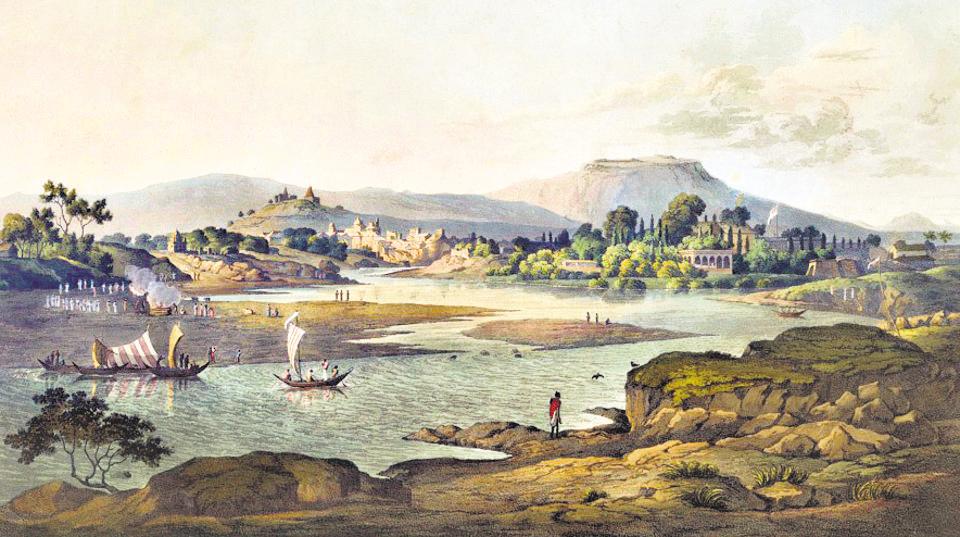
Our very own city of Pune holds that fascinating personal story within it.
In my capacity as an indologist and historian, I appoint myself as its biographer and take on the task of “sutradhara”, thus, narrating this story through a series of write-ups.
Beyond academic studies, technical reports, analytical information, town planning maps and cultural festivals, there is so much more to our collective dwelling place we call home, the dearest Pune.
Through this column, I urge to you to wear your detective hat and embark on this journey of discovery of Pune.
The history of Pune can be traced back to prehistoric times when first man/woman might have set foot on this land and made it home. Throughout the course of history, Pune has been growing, changing and has been influenced by nature, various rules, cultural processes, development ideas and socio-economic factors.
It would not be wrong to say that Pune is not a monolith. There are many “Punes” residing in the present Pune city.
Every stone in the corner, pit dug for new construction, monument raised, and bridge built, areas developed and erased, have a bearing of how the city is shaped.
What we lack in text, documentation or oral history, is fulfilled by the presence of historical artefacts and heritage structures.
These physical aspects in the form of caves, forts, building, temples, wadas, and monuments bear living, yet silent testimony, to the history of the city.
We are quite fortunate to find these scattered signs and symbols in our neighbourhood, which point to a distant past or bring forth an interesting fact.
This is not just about physical manifestations, but even ideas, reforms, movements, wars, historical and cultural events, have a bearing as to how the city operates today.
Pune has a rich history of documenting history and some of the important movements of nationalistic history writing were born in Pune.
Through studying contributions of important research institutions working in faculties of Archaeology, History, Indology, Anthropology, Ecology and multidisciplinary sciences, we can put together a far more complete and colourful picture of Pune.
So, the protagonist or the hero of our story is Pune.
And as famous mythology professor, Joseph Cambell, may put it, it is a hero with thousand faces and multiple identities.
The landscape of Pune was occupied way back over few thousands year ago, but the first name Pune has been referred to (afaik!) in a copperplate grant of Rashtrakuta (the dynasty associated with excavation of world famous Kailas at Ellora) king Krishna I, dated to October 16, 758.
Pune is referred to “Punya” and a district like headquarter (vishaya) presiding over few thousand villages. We shall see more about it in due course, but the take away is the root and word “Punya” (ṇ and not n- as an ardent Punkar would point out!) which translates to sacred.
In subsequent references in other copperplates, Pune has been called Punak-vishaya. In early medieval Pune, it is being referred as Punyeshwar after the temple of Punyeshwar.
A 15th century disciple of Chaitanya Mahaprabhu (the famous saint from Bengal), Gurudas, describes it as Punyanagar and praises the knowledge and scholarship of the pathshalas (learning centre for Sanskrit scriptures) of Pune.
It was renamed for a brief period between 1703-1707 to Persian Muhiyabad by Mughal Emperor Aurangazeb after his own name, Muhi-ud-Din, to commemorate his grandson, Muhi-us- Sunnat according to some scholars.
It was medieval Kasbe Pune of the 17th century where Kasba meant a settlement of artisans.
It was rechristened “Poona” and “Poonah” under British rule. In cultural context, it is always called as Punyanagar, Punya-kshetra or Punyanagari.
Over the years, it has also amassed many epithets such as “Pensioners’ Paradise”, “ Cycle city”, “Oxford of the East”, “Vidyeche Maherghar” (the maiden knowledge hub) , cultural capital of Maharashtra, “Educational hub”, “ IT City”, “Automobile City”, “City of Trees and Hills”, and so on.
Each of the above represents the peculiar yet special aspect of Pune’s identity.
If you read newspapers (which you are right now!), you might have come across some such as these - “City of Traffic” , “ City of Two-Wheelers” , “Most Polluted City”, “City of Accidents”, all with distinct negative connotations.
The recent uncontrolled urbanised development in the city has huge role to play here. But, as we change for better and live up to the name of the “original” smart city, we need to take stock and look back to trace how much our city has lived through.
So, welcome everyone on this exciting and yet humbling joy ride we undertake - ‘The Pune Saga’!
Palande-Datar is an indologist, environmentalist, history researcher and farmer. She can be reached @ sailikdatar@gmail.com


