
 E-Paper



Morning downpour brings Chandigarh, Mohali to crawl, office-goers battle long traffic jams
Commuters reported spending anywhere between 30 and 45 minutes negotiating the stretches that normally take less than 10 minutes on regular days, even during peak hours

 Prefer HTon Google


A spell of heavy morning rain brought both Chandigarh and Mohali’s rush-hour traffic to a near standstill on Tuesday, leaving thousands of office-goers stranded in long queues as several low-lying roads got inundated, leading to multiple intersections being congested.
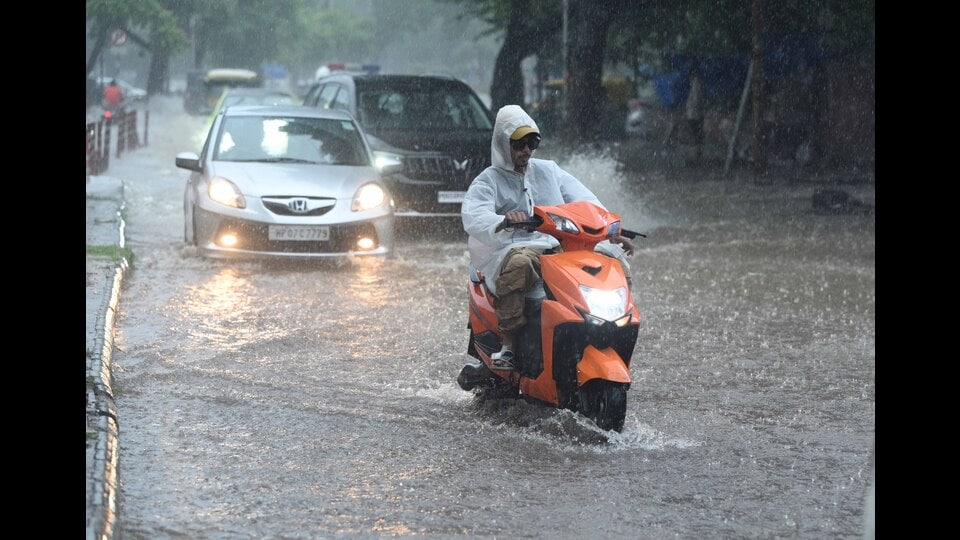
The worst-hit stretches of the UT included the Sector 17/18 dividing road, Sector 32/33 dividing road, Sector 36/37 light point, Aroma Chowk in Sector 22, the JW Marriott roundabout, parts of Madhya Marg, Panjab University, and the road leading to Chandigarh railway station. Waterlogging at smaller junctions across the city further slowed traffic movement.
Commuters reported spending anywhere between 30 and 45 minutes negotiating the stretches that normally take less than 10 minutes on regular days, even during peak hours. Long queues of vehicles were seen on approach roads to major intersections as police manually regulated movement after traffic signals were rendered non-functional amid the heavy load. At a few intersections, personnel switched to manual traffic management to ease congestion.
“I left my home in Sector 20 at my usual time for my office in IT Park, but got stuck on Madhya Marg for nearly 40 minutes. This happens almost every time it rains. Despite paying taxes, we continue to suffer because of poor drainage,” said Manas, a businessman.
Priya Sharma, a PU student, said the area around the campus remained waterlogged during the morning rush. “The roads were submerged and vehicles were crawling near Gate 3. It delayed classes and caused complete chaos,” she said.
Rajesh Kumar, who was headed to the railway station to catch a train, said he barely made it in time after spending over half an hour in traffic. “Waterlogging near several junctions created bottlenecks. Every monsoon, the same locations are affected but there seems to be no permanent solution,” he said.
Zirakpur, Mohali residents question the drainage system
Rainwater accumulation on roads in Zirakpur and Mohali also once again disrupted daily movement, with residents of VIP Road, Peer Muchalla, Dhakoli and nearby areas questioning the preparedness of civic agencies ahead of the monsoon.
Residents of VIP Road said stretches near housing societies turned into water pools after rainfall, forcing commuters to slow down and pedestrians to look for alternate routes. They alleged that repeated complaints about poor drainage have failed to bring a permanent solution.
“Every monsoon, the same problem comes back. We do not need temporary pumping, we need a drainage system that works before the rain arrives,” said Harsh, a VIP Road resident.
In Peer Muchalla, residents said water remained accumulated on internal roads and near residential areas, affecting people travelling to work and schools. Clogged drains added to the problem, they said.
“Authorities know the waterlogging points. They only act after residents start facing problems. Why is there no preventive action before the rains, every year we face the same problem, but a permanent solution is still missing. Our vehicles get damaged, roads become difficult to use and children are forced to walk through water. Why should residents suffer every monsoon when the authorities know these problem areas?, said Sanjay, a resident of Peer Muchalla.
Residents in parts of Mohali also raised concerns over water accumulation on roads, saying stagnant water creates problems for motorists and pedestrians. They said potholes become difficult to spot during waterlogging, increasing the risk of accidents.
“Driving on these roads becomes a challenge. A small pothole hidden under water can throw a two-wheeler rider off balance,” said a commuter.
Although traffic gradually eased after the rain subsided, commuters said recurring waterlogging and inadequate drainage continues to disrupt daily life every monsoon. According to residents rapid construction and increasing population have elevated the pressure on existing drainage infrastructure.They have demanded municipal authorities to identify waterlogging spots, clear blocked drains and prepare a long-term drainage plan instead of relying on temporary measures during rainfall.


