
 E-Paper



Thousands trapped in Maharashtra’s Kolhapur floods; more rains forecast over 48 hrs
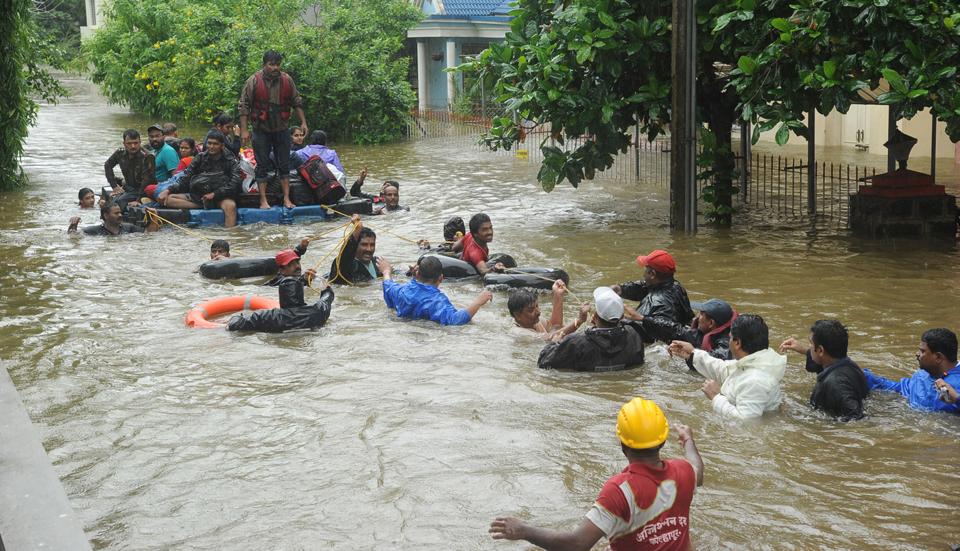
In Kolhapur district, the district authorities have evacuated around 15,000 people even as disaster management teams, including those of the National Disaster Response Force, were engaged in rescuing an estimated 35,000 people trapped in the floods.


Incessant rains followed by heavy discharge of water from Radhanagari and Koyana dams in western Maharashtra has led to floods in Sangli and Kolhapur with at least 139 villages marooned over the last 48 hours, district officials said on Wednesday.
India Meteorological Department (IMD) has forecast heavy to extremely heavy rainfall for Satara, Sangli and Kolhapur regions on Wednesday and Thursday, which could worsen the flood conditions in western Maharashtra.
In Kolhapur district, the district authorities have evacuated around 15,000 people even as disaster management teams, including those of the National Disaster Response Force (NDRF), were engaged in rescuing an estimated 35,000 people trapped in the floods.
“The NDRF and navy rescue operations are going on a war footing,” said Pune’s divisional commissioner Deepak Mhaisekar.
On Wednesday morning, an Avro aircraft of the navy landed in Kolhapur with a rescue team from the Indian Coast Guard to assist flood victims. The aircraft which took off from Goa was held up in Ratnagiri on Tuesday due to bad weather, Kolhapur’s district collector Daulat Desai said.
The stretch of National Highway No 4 between Kolhapur and Belgaum was shut for vehicular traffic due to flooding, Kolhapur Police said.
District administration official said the water level in the Panchganga River has touched 51 feet and if the prevailing situation continued, it could cross the 53-feet mark which was recorded during the 2005 floods.
On Wednesday morning, Koyna dam and Radhanagari dams released 1,20,375 cubic feet per second and 8,856 cusecs of water at 8am leading to heavy flooding in several talukas.


