
 E-Paper



Bytheway: Kiku, Pita-G, and reverse psychology via Sirsa
If Kiku Sharda had to face jail, if at all, it should’ve been for his obnoxious ‘Palak’ act on Kapil Sharma’s consistently crass show. Mimicking the Sirse-wale Babaji was, in fact, among his more refined performances. Ask anyone who’s dabbled in acting, and you’d know that it’s easier to lampoon a non-existent Palak than it is to play a living super-person with the required finesse.


If Kiku Sharda had to face jail, if at all, it should’ve been for his obnoxious ‘Palak’ act on Kapil Sharma’s consistently crass show. Mimicking the Sirse-wale Babaji was, in fact, among his more refined performances. Ask anyone who’s dabbled in acting, and you’d know that it’s easier to lampoon a non-existent Palak than it is to play a living super-person with the required finesse.
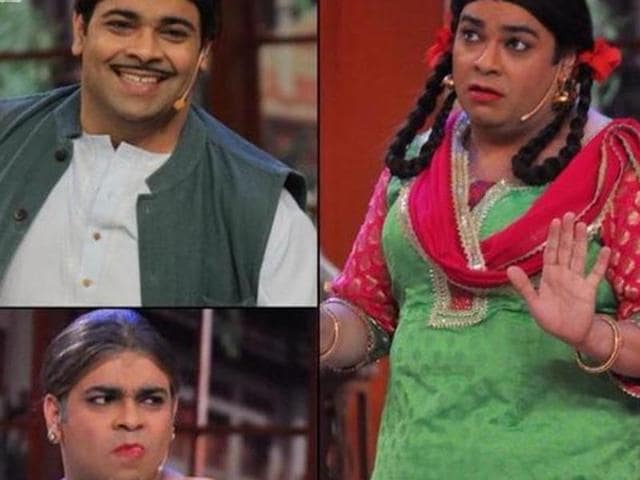
That, too, when it’s someone as super as Super-Saint Gurmeet Ram Rahim Singh Ji Insan! Kiku managed it really well. The proof is in the persecution, some would say.
What’s odd to me, however, is that Pita-G’s followers seem to have taken offence to how Pita-G is. Did they not watch ‘MSG’, the unworldly saint’s movie debut in which he succeeds massively at not lampooning himself ? It’s already had a sequel.
As for Pita-G himself, he tweeted: “I was busy shooting OnlineGurukul; just got to know, devotees are hurt due to Kiku’s action. If he has apologized, no complaint from my side.” I am tempted to wonder what this ‘OnlineGurukul’ is; but we must concentrate on the matter at hand and on the key words in his tweet: “If he has apologized…”
So, Pita-G agrees that an apology was in order! Does that mean The Grand Master apologises to himself when he looks in the mirror, especially when he wears those multi-coloured pants that have re-popularised Parle Poppins? No, that can’t happen. Perhaps Pita-G — being such a non-narcissist — doesn’t even look into the mirror very often. But, in that case, another question arises: How does he set all that abundance of hair so immaculately, especially those spools that grace his shoulders?
Read : It was unintentional: Kiku Sharda on ‘spoofing’ Gurmeet Ram Rahim
Trivia can wait, though. Today, as a starry-eyed spectator of the Pita-G Phenomenon that has been unfolding at a giddy pace in the last decade — especially since that year when Pita-G himself was accused of mimicry of the blasphemous kind — it’s my bounden duty to be analysing the subaltern context of this Babamimicry thing.
To the simpler mind, Pita-G’s 2007 act of “unintentionally” dressing like the tenth Sikh guru was a display of utter self-love with an emulation-worthy conviction. Even Kiku may have thought Pita-G and his people are cool with things like that. He was wrong. Pita-G was playing reverse psychology, you see. With his mimicry act — which led to a court case that was later withdrawn by divine designs, and communal strife — Pita-G only wanted to tell the world what not to do. Kiku got it wrong.
But Kiku’s was an honest mistake, the kind that people make when they interpret a piece of sarcastic writing in its literal sense, or vice versa. Let me explain with an example. Every time I write on Pita-G — which is quite often since I am the designated Premi in our office — I see a barrage of response from the followers of Pita-G’s Dera Sacha Sauda on Twitter and Facebook. While most of them praise me and understand that I am merely underlining the awesomeness of their sect supremo, there are some oddballs who think I am being sarcastic. Even some fellow journalists get it all wrong and tell me to take it easy lest I get myself arrested.
But I am no Kiku Sharda, whose mistake has meant that people finally know his real name and may not call him Palak all the time. Did you listen to his apology with folded hands? He was more afraid than apologetic. I have nothing to be afraid of. Pita-G’s blessings are with me. I am sure He understands.


