E-Paper



IIM to study impact of primary school merger in Jharkhand
State education dept finished merging 4,600 primary schools, and the result of that exercise will now be evaluated


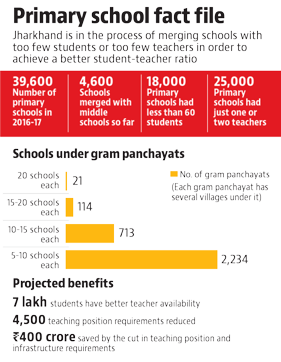
The Indian Institute of Management (IIM), Ranchi, will evaluate the merger of primary schools in Jharkhand. The state education department has roped in the institute for a detailed study of 4,600 merged schools to find out if the reorganisation has brought about any improvement or not, department officials said.
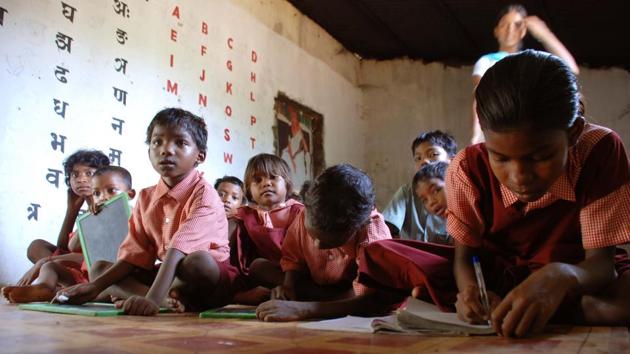
State education secretary AP Singh said, “IIM Ranchi would see if the reorganisation has brought any benefits for students as well as the education system. It would also evaluate if the initiative brought about any improvement in the education of those students who were shifted to other schools in the merger process,” he said. “We have sought a financial proposal from the institute for the study.”
The reorganisation exercise of schools had also caught the interest of IIM Bangalore, which expressed its willingness to carry out a study on the process and its benefits, said the secretary.
Merging schools with low enrolment is an exercise that has been undertake by Rajasthan and Jharkhand in the country with the support of the Union government and NITI (National Institution for Transforming India) Aayog, the policy think tank of the Government of India. Jharkhand started the merging procedure in 2016-17.
Jharkhand Education Project Council (JEPC) director Uma Shankar Singh said that there were 39,600 schools in 2016-17 under the education department in Jharkhand. “Of them, 18,000 schools had 60 or fewer students. These schools had an average of one or two teachers per school. Providing quality education was a major challenge. One teacher was handling four-five classes at a time. How could one expect a better education in these schools?” he said.
The council said that a four-step process — field inspection; cross-district verification; block and district consultation; and final notification — was undertaken to merge the schools.
Singh said that 98% students from the 4,600 primary schools had been shifted and 96% of the students had expressed satisfaction with the consolidation. “We faced difficulty in shifting 150 schools due to some technical reasons. Now, the issue has been resolved, and students from 120 schools have been shifted,” he said.
The reorganisation of primary schools benefited seven lakh students, giving them better teacher availability, and cut the requirement of 4,500 teaching positions. The merger process saved the government ₹400 crore by reducing teaching positions and infrastructure requirements, said JEPC officials. The officials added that the funds thus saved would be spent on strengthening the education infrastructure of the merged schools.