E-Paper



Bengaluru floods: From affordable areas to upscale layouts, India’s tech capital struggles to stay afloat
From upscale neighborhoods to tech corridors, relentless rains have laid bare Bengaluru’s fragile infra, raising concerns about the city’s urban planning

 Prefer HTon Google


Continuous rainfall has left several prime localities in Bengaluru inundated, with floodwaters entering homes, apartment complexes, and streets submerged across the city. From upscale residential neighbourhoods to key tech corridors, the downpour has exposed the city's fragile infrastructure and inadequate drainage system, raising serious concerns about urban planning and real estate development in flood-prone zones.
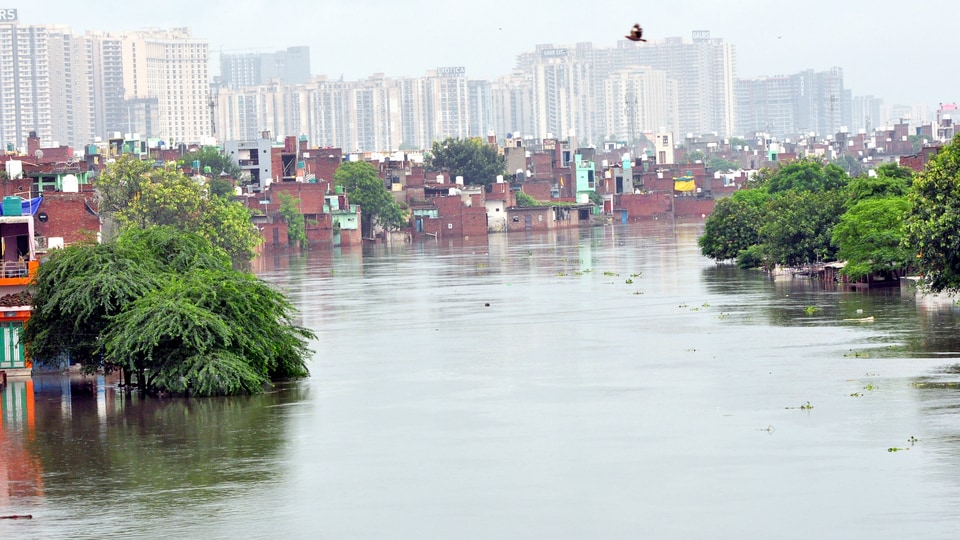
In North Bengaluru, Mahadevapura was among the worst hit, experiencing severe flooding. In the eastern IT corridor, Sarjapur Road witnessed major waterlogging, disrupting life in one of the city’s busiest tech hubs. Further southeast, Bellandur faced heavy flooding, worsened by ongoing restoration work at Bellandur Lake.
The relentless rain has severely impacted daily life in Karnataka’s capital. Roads have turned into rivers, stranding residents and making commutes nearly impossible in several areas.
Read More: Bengaluru floods: IT hub resembles Venice as major tech parks and prime apartments flooded
Experts raise red flags over Bengaluru’s infrastructure-deficient real estate boom
Experts are sounding the alarm on Bengaluru’s rapid real estate expansion, warning that development continues to outpace critical infrastructure. Without robust systems for sewage and drainage, the city remains a “disaster waiting to happen,” they say.
“Drainage infrastructure must be part of every homebuyer’s checklist,” said Sanjay Upadhyay, senior advocate at the Supreme Court. “Every time it rains, the city gets waterlogged. This isn’t just an inconvenience—it’s the result of neglected urban planning. Bengaluru’s choked traffic and flooding issues are symptoms of the same problem: a failure to integrate civic infrastructure from the ground up, as seen in better-planned cities like Noida and Delhi.”
"Basic civic infrastructure is not a luxury — it is a fundamental right. Sadly, even water harvesting is not being implemented the way it should be," he said.
Parts of Bengaluru worst hit by heavy rainfall
Mahadevapura (North Bengaluru): Severe flooding across residential and commercial areas
Sarjapur Road (East Bengaluru): Major waterlogging disrupted daily life in the IT corridor
Bellandur (Southeast Bengaluru): Inundation worsened by ongoing lake restoration work
Yemlur, Marathahalli, and Whitefield: Affected, with floodwaters entering homes and offices
Read More: “Does the area flood?” Bengaluru homebuyers and investors now have fresh real estate worry
Mahadevapura in North Bengaluru faces severe flooding after heavy rain
Mahadevapura in North Bengaluru experienced significant flooding following heavy rainfall over a 24-hour period, recording 93 mm of rain between May 18 and May 19. The downpour led to widespread waterlogging across several localities, with Sai Layout in Horamavu among the worst affected.
According to BBMP officials, over 100 homes in Sai Layout were submerged under 4–5 feet of water. Residents reported that flooding persisted well into the next day. “Sai Layout flooded again last night (May 19), and by 3 pm today (May 20), the water was still at least two feet high,” a resident posted on social media platform X. “Being a Bengaluru Development Authority (BDA) layout, the BBMP claims it can only offer temporary relief like water pumping and compensation. And this is just the pre-monsoon.”
On May 19, BBMP administrator Tushar Giri Nath visited the flood-hit areas in Mahadevapura, inspecting the damage using a tractor to reach inundated zones. He noted that Sai Layout is particularly vulnerable due to its low-lying location. Rainwater from the Hebbal Valley and Nagavara areas flows through a stormwater drain that passes via Geddalahalli, ultimately collecting in the layout.
Giri Nath confirmed that other surrounding areas were not facing similar levels of waterlogging. However, he emphasized the need to widen the railway vent near Geddalahalli to improve drainage and mitigate future flooding. “Work orders have already been issued, and I’ve directed officials to expedite the project,” he told reporters.
Flooding returns to Bengaluru’s Eastern IT corridor and Bellandur following heavy rains
The eastern IT corridor of Bengaluru, particularly Sarjapur Road, was hit by major waterlogging following heavy rainfall, bringing traffic to a standstill. Known as one of the city’s prime tech stretches, the area was submerged in knee-deep water, with several users sharing visuals of traffic chaos and flooded roads on social media.
“Please look at the Sarjapur Road main road near Junnasandra or Wipro corporate office bus stop. This is repeating every year, and floods after small rains. With famous IT company's entrance in the area, flood waters is definitely not “Brand Bangalore," one of the users posted on X.
In southeast Bengaluru, Bellandur also witnessed severe flooding after torrential rain on May 18. BBMP officials said the situation worsened due to ongoing restoration work at Bellandur Lake. Stormwater, which would typically flow into the lake, was temporarily diverted into a large channel. However, this channel turned into a bottleneck during the downpour, causing flooding in parts of the Koramangala-Challaghatta Valley.
BBMP chief commissioner Maheshwar Rao visited the inlet junction near Bellandur Lake on May 19 to assess the situation. Officials noted that reduced width at the confluence of two major stormwater drains—K-100 and K-200—led to slow water flow, resulting in waterlogging in upscale localities such as Dollars Colony, Koramangala 6th Block, and Ejipura.
“To resolve the issue, a temporary bund was removed using a JCB near Bellandur to restore water flow. Immediate instructions were issued to officials for clearing blockages and preventing further flooding,” BBMP said in a statement.
Bengaluru’s most affordable areas also bear the brunt of flooding
Even the city’s more affordable neighbourhoods weren’t spared, as severe waterlogging hit areas known for budget-friendly rentals and property prices.
Several users took to the social media platform X to share videos showing flooded streets and rainwater entering homes.
"BTM Layout streets submerged, rainwater enters homes as the city grapples with poor drainage once again. When will this end?" one of the X users wrote while posting a video of submerged apartments in the area.