E-Paper



“Does the area flood?” Bengaluru homebuyers and investors now have fresh real estate worry
Bengaluru’s floods have exposed major infra flaws, shifting the focus of homebuyers and investors from amenities to a more urgent question: Does the area flood?

 Prefer HTon Google


Incessant rainfall has brought Bengaluru to a standstill, with torrential downpours causing widespread waterlogging and flooding across the city, including in some of its most upscale neighborhoods. The crisis has exposed deep infrastructural gaps and is forcing a shift in how homebuyers evaluate real estate.
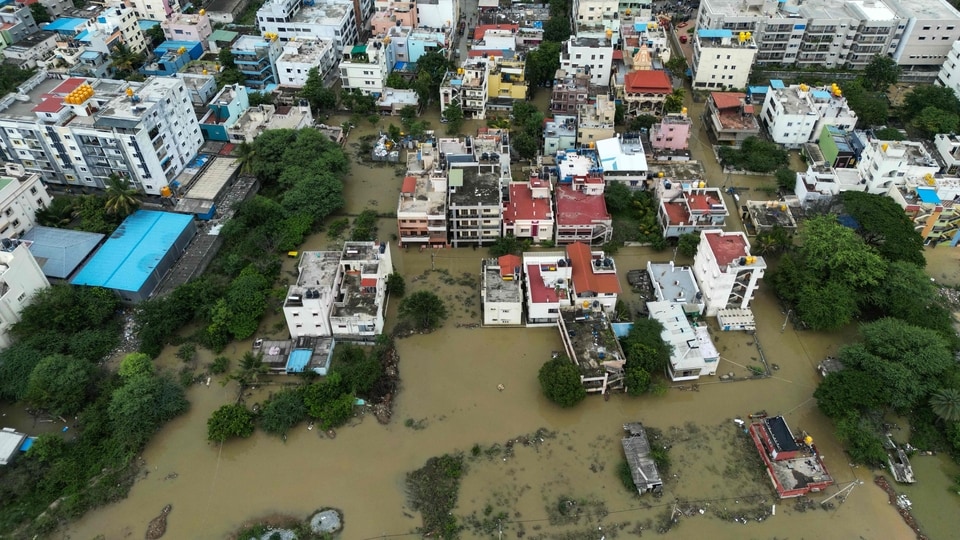
In Bengaluru’s rapidly growing real estate market, homebuyers are shifting priorities. Instead of focusing only on amenities or a developer’s reputation, many are now asking a more critical question: Does the area flood?
Flood risk has become a key concern for investors, say real estate experts. “The first thing buyers want to know today is whether the location is prone to flooding,” said Disha Mohan, a realtor at Coldwell Banker. “In areas near lakes, particularly in Sarjapur and the eastern parts of the city, flooding has become a serious issue. Investors are definitely more cautious and discerning now.”
Frequent waterlogging in high-demand localities like Sarjapur, Marathahalli, and Yemlur has made flood risk a decisive factor in home-buying decisions. Experts say even premium gated communities and luxury villas have been hit by rising water levels during the monsoon, prompting both investors and end-users to reassess where—and how—they invest in Bengaluru.
“Thinking of buying property in Bengaluru? Skip the brochures and sunny-day site visits,” said one resident. “The real inspection begins when it rains—because that’s when the truth shows up, and it doesn’t lie.”
Also Read: Bengaluru's flood crisis: Can the Greater Bengaluru Authority save the day?
Unchecked urbanisation and real estate expansion blamed for Bengaluru flooding, say experts
Despite being India’s tech hub, experts argue that Bengaluru’s worsening flood crisis stems from two long-standing issues: unchecked urbanisation and rampant real estate development.
“Bengaluru once had numerous lakes—now only around 80 remain,” said Sarang Kulkarni, Managing Director of Descon Ventures. “Many of these lakes have been built over by developers. While it may seem feasible to fill in a lake and construct buildings, the natural contours of the land don’t change. Water will still follow its original path, flooding roads and low-lying areas.”
Built on undulating terrain, Bengaluru was shaped by a system of interconnected valleys radiating from a central ridge. The city’s three major valleys—Hebbal (207 sq. km), Vrishabhavathi (165 sq. km), and Koramangala-Challaghatta (255 sq. km)—once served as natural drainage channels. However, unregulated construction has constricted these waterways, drastically reducing their capacity and increasing flood risk in vulnerable zones.
Recent flooding in areas like Manyata Tech Park in the north and the eastern IT hub of Whitefield is a case in point. “If you look at the current master plan, much of north Bengaluru is still classified as a green zone, with limited development permissions,” Kulkarni explained. “But developers are acquiring large tracts of agricultural land and launching projects through Joint Venture Agreements. The problem is, these areas lack basic drainage infrastructure.”
T.V. Ramachandra, a scientist at the Indian Institute of Science, echoed these concerns. He noted that over the past 45 years, Bengaluru has witnessed a 1,055% increase in built-up area, while losing 79% of its water bodies and 88% of its vegetation. Crucially, the natural connectivity between lakes—which once allowed excess water to flow and settle—has been lost.
“Infrastructure should come before development, not after,” said Kulkarni. “But in Bengaluru, it’s the reverse. We should take cues from cities like Amaravati, where infrastructure was laid out first before opening the area to companies and real estate developers.”
As flooding becomes more frequent and severe, experts agree: without a fundamental shift in how the city grows, Bengaluru’s infrastructure—and its residents—will continue to struggle.
Flooding fears hit property demand and prices in key Bengaluru locations
Frequent flooding in certain areas of Bengaluru has led to a noticeable dip in real estate demand, according to real estate brokers. Riyaz Ahmad, owner of Access Realtors, said demand has dropped by around 12–15% in several localities. “We’ve seen around a 15% drop in interest along Mysuru Road and Kengeri due to recurring waterlogging. Even in once-hot zones like Hennur Road, which benefited from its proximity to the airport, buyers are more cautious. Their first question is: Does the area flood? That shift in mindset has led to a similar decline in demand.”
“Flooding is now a key concern for homebuyers, and it's visibly impacting demand,” said Manoj Agarwal, Director of Sales and Leasing at Agarwal Estates.
Even Bengaluru’s most exclusive pockets haven’t been spared. On the city’s so-called Billionaire Street, where prices hover around ₹25,000 per sq ft, appreciation has slowed noticeably due to persistent flooding issues.
“Flooding is something we’ve almost come to accept in Bengaluru—but it’s not going away,” Agarwal said. “It continues to affect areas like Marathahalli, Yemlur, and Billionaire Street. Property demand dipped, and resale activity stalled. Recovery has been slow, and even now, these properties haven’t appreciated like those in other parts of the city.”
Also Read: Bengaluru floods: IT hub resembles Venice as major tech parks and prime apartments flooded
Experts say 'flooding concerns' on every property buyer's checklist in Bengaluru
As Bengaluru continues to grapple with recurring floods, experts urge homebuyers—especially those investing in high-value properties—to factor flood risk into their decisions.
“Bengaluru is a cosmopolitan hub and the IT capital of India, but its infrastructure tells a different story,” said Kiran Jeevan in an interview with HT.com. “Once known as the 'City of Lakes,' the city is losing that identity to unchecked development.”
Jeevan recently served a ₹50 lakh legal notice to the Bruhat Bengaluru Mahanagara Palike (BBMP) over the city's deteriorating road conditions. “Flooded roads have become a persistent issue. It’s shocking that a city of this stature still struggles with such basic infrastructure,” he said.
Your property checklist for buying a home in Bengaluru: Flood risk now a priority
With flooding becoming a recurring threat in Bengaluru, experts say homebuyers must take extra precautions before investing in residential projects. Due diligence is no longer just about builder reputation or amenities—understanding the land's history and regulatory compliance is now essential.
1. Check historical data
Start by reviewing historical satellite images on Google Maps to identify signs of past water accumulation in and around the project site, said Kulkarni.
2. Refer to village maps
“Buyers should examine village maps to check for natural features like streams or water bodies within the survey numbers covering the project land,” said Kulkarni. “If such features exist, developers are required to get approvals from the Revenue Department for any realignment or diversion.”
3. Review Master Plans
Consult both current and proposed master plans to see if there are any planned roads, reservations, or zoning restrictions affecting the land, he said.
4. Look into flood history
Search local news archives for reports of past flooding in the area. This can offer a clear picture of the site's flood risk and how it’s impacted nearby properties in previous years.
5. Confirm RERA Registration:
Ensure the project is registered with RERA (Real Estate Regulatory Authority), which provides legal safeguards and ensures the developer complies with key regulatory norms, he said.
Sneha Nandihal, convener of I Change Indiranagar—a collective of RWAs—emphasised the importance of flood awareness. “Flooding should be at the top of every buyer’s checklist in Bengaluru,” she said. “This city is meant to drive our economy, yet its citizens are constantly let down by poor planning. I love my Indiranagar, but with the current state of things, I sometimes just want to escape to the wilderness.”

Experts agree: in a city like Bengaluru, understanding flood risk isn’t optional—it’s critical.