E-Paper



Independence Day 2025: Bombay to Mumbai – From worker chawls and planned suburbs to luxury condos and redevelopment
In 1947, Mumbai’s skyline was defined by worker chawls and planned suburbs. Today, Worli Sea Face boasts of sea-facing flats priced at almost ₹3 lakh per sq ft

 Prefer HTon Google


In 1947, as India stepped into freedom, Mumbai’s urban landscape reflected decades of meticulous planning, from worker chawls built by the Bombay Development Department to thoughtfully laid-out suburbs like Dadar and Matunga. Today, that vision has evolved dramatically, with prime sea-facing homes selling for record-breaking prices and redevelopment projects such as Dharavi taking centre stage.
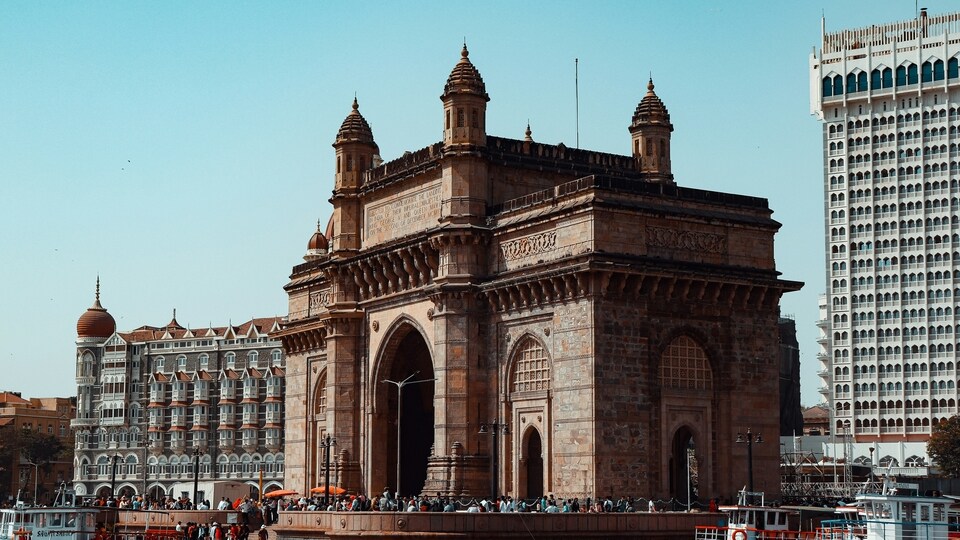
In the years leading up to independence, then-Bombay was shaped by decades of colonial-era planning and infrastructure development. Much of the city’s built environment reflected early 20th-century initiatives such as the Bombay Development Department (BDD), which, from the 1920s, reclaimed land along Marine Drive and built affordable BDD chawls to house mill workers.
By the time India gained freedom in 1947, suburban pockets like Dadar, Matunga, and Shivaji Park were already taking shape under City Improvement Trust plans from the 1930s. These neighbourhoods were designed with low-rise housing, generous open spaces, and close integration with schools, colleges, and public parks, historians told HT.com.
Fast-forward to today, and the transformation is staggering. Mumbai has gone from constructing worker chawls and planned suburban layouts to selling apartments for nearly ₹3 lakh per sq ft along Worli Sea Face.
"Housing societies were few like the Salsette Cooperative Society and Saraswat Cooperative society and there were only few cooperative housing societies in the city. Low rise buildings were found in Parel, Dadar, Bhoiwada, Girgaum, Kalbadevi and in Bora Bazar Street Parsi Bazar Street, Gunbow Street in Fort area, Marine Drive, and opposite Oval Maidan. At the time, housing societies were rare, and most buildings were landlord-owned, with flats rented out to tenants,” said Deepak Rao, a Mumbai-based historian.
Real estate in post-Independence India: How planners envisaged housing in Bombay
A report titled 'An Outline of The Master Plan For Greater Bombay' was prepared in 1948 jointly by NV Modak, a special engineer at Bombay Municipality, and Albert Mayer, an architect and town planner based in the USA, along with Engineer SD Patel and architect VN Ambedkar.
“Modak and Mayer’s chapter on housing seems to follow a simple philosophy: access to affordable and humane housing is a fundamental right of all. Their vision included providing housing for high-income-groups, middle-income-groups, and low-income-groups, as well as rental housing. The aspiration of having a roof over one’s head was not primarily seen as means of maximizing profits, but as a means to meeting the fundamental needs of all citizens,” Robert Stephens, author of a book titled ‘Bombay Imagined’ told HT.com.
Dharavi, featured in Bombay’s city planners’ report, was envisioned as a mixed-income development with 7,600 housing units
The urban planners studied the city from Mahim to Colaba, and sought to mitigate overcrowding of the Island City by the construction of 95,000 housing units across Salsette in suburbs over three development periods.
“Their end goal was clear: access to affordable and respectable houses for all. There were plans for Parel, Mahim and Dharavi, among several other localities in the report," Stephens said.
“Their plan was that every neighbourhood should have no more than 1,000 housing units, with a school at the centre of each development (within walking distance for children), spread across around 30 to 40 acres. Modak and Mayer anticipated the exodus of industry from the mill lands in Central Mumbai, and proposed large parks and playgrounds on these lands, interconnected by elevated pedestrian greenways, intermixed with a few high density housing clusters,” Stephens told HT.com.
"Dharavi was to become a mixed-income development of 7,600 housing units, and especially relevant today is their vision for the Mahalaxmi Race course….the duo proposed that the Race Course should be moved out of the city limits, and in its place, a public park and rental housing units were recommended,” Stephens said.
Influx of refugees post Independence
After independence, Bombay experienced an influx of Sindhi refugees from Pakistan, further increasing residential demand.
Beginning in 1957, the government settled thousands of refugee families in Maharashtra, especially Mumbai, which was known as Bombay at that time. Around 1,200 refugee families in around 1,200 apartments across 25 buildings were housed in Mumbai's GTB Nagar.
Following partition, the central government undertook the rehabilitation of thousands of Hindu Punjabis, Sikh Punjabis, and Sindhi refugees who had crossed into India. In Maharashtra alone, over 30 such colonies were developed, including several in Mumbai, said experts.
Also Read: GTB Nagar redevelopment: 5 facts about the Sindhi refugee colony in Mumbai
Most of these refugees, originally from Pakistan’s Sindh and Punjab provinces, were allotted homes under the Displaced Persons (Compensation and Rehabilitation) Act, 1954.
In the late 1950s, each apartment allotted to the Sindhi Community cost around ₹5,380, with a per sq ft rate of ₹14–15. Refugees were allowed to pay in installments, making homeownership feasible, as per media reports.
However, today the property rates in the locality range between ₹20,000 and ₹30,000 per sq ft, and with the redevelopment, prices might touch ₹40,000 to ₹45,000 per sq ft, local brokers said.