E-Paper



MHADA, Rustomjee arm, and housing societies sign pact for GTB Nagar redevelopment in Mumbai
Mumbai redevelopment news: MHADA in 2025 had appointed Rustomjee Group for the redevelopment of GTB Nagar, which aims to rehabilitate 1,200 Sindhi families

 Prefer HTon Google


Co-operative housing societies in Mumbai that are part of the Guru Tegh Bahadur Nagar (GTB Nagar) Group Redevelopment Project in the Sion Koliwada area have signed a tripartite development agreement with the Maharashtra Housing and Area Development Authority (MHADA) and Keymidtown Developers Private Limited, a subsidiary of the Rustomjee Group.
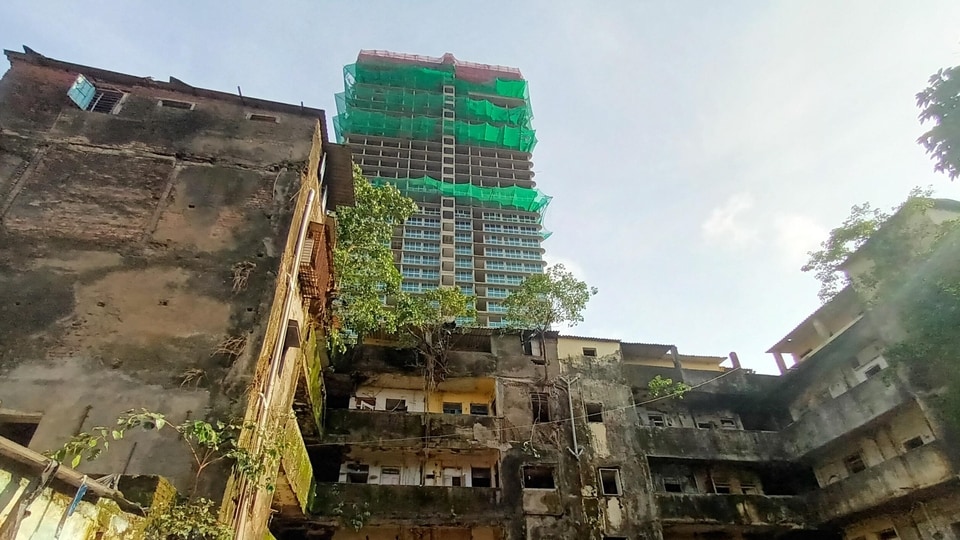
The project aims to rehabilitate around 1,200 Sindhi families who migrated to India from Pakistan after Independence.
The agreements were signed on March 5 at the MHADA headquarters in Mumbai in the presence of Sanjeev Jaiswal, Vice President and Chief Executive Officer, MHADA, and Boman Irani, Managing Director of Keystone Realtors (Rustomjee Group).
According to Rustomjee Group, the redevelopment project spans approximately 11.54 Acres (46,731.15 square meters). This large-scale redevelopment will benefit over 1,200 members and is expected to unlock approximately 20.7 lakh sq ft of saleable area.
“We are delighted to share that the Development Agreement and a separate Construction and Development Agreement with MHADA for the redevelopment of GTB Nagar have now been formally signed with Maharashtra Housing and Area Development Authority (MHADA), marking a significant milestone in this transformative journey," said Boman Irani.
Also Read: GTB Nagar redevelopment: 5 facts about the Sindhi refugee colony in Mumbai
"We remain committed to working closely with MHADA and all stakeholders to ensure that the existing residents of GTB Nagar receive their new homes at the earliest, and that the neighbourhood evolves into a vibrant, inclusive and future-ready community," Irani said.
According to a statement issued by MHADA, this will be the first redevelopment project on private land to be implemented through MHADA.
MHADA had announced the appointment of Rustomjee Group for the redevelopment of GTB Nagar in July 2025.
Under this redevelopment, three modern residential towers ranging from 39 to 48 storeys will be constructed for approximately 1,200 eligible beneficiaries. As per Development Control Regulation 33(9), a minimum FSI of 4.5 (inclusive of fungible FSI) will be made available. Each eligible beneficiary will receive a free 635 sq. ft. self-contained residential unit with modern amenities. The project will be developed as a gated community, with accessible multi-level basement and podium parking facilitated through conventional ramp access," MHADA said in a statement.
Also Read: High power panel greenlights revamp of 3 clusters in city
Upon receipt of the Commencement Certificate (CC) from the competent authority, all eligible resident beneficiaries will receive monthly rent compensation of ₹20,000. Further, after project completion, MHADA will undertake the maintenance and management of the buildings for five years," MHADA said.
History of refugee families
Since 1957, the Maharashtra government has settled over 1,200 refugee families in approximately the same number of apartments across 25 buildings constructed specifically for them.
At the time, each apartment cost around ₹5,380, with a per-square-foot rate of ₹14–15. Today, property rates in the locality range between ₹20,000 and ₹30,000 per sq ft. Refugees were allowed to pay in instalments, making homeownership feasible, as reported by Moneycontrol.
Following the Partition, the central government decided to rehabilitate several thousand Hindu Punjabis, Sikh Punjabis, and Sindhi refugees who had crossed into India. In Maharashtra, over 30 such colonies were developed, including in Mumbai and Bombay.
Most of these refugees, originally from Pakistan's Sindh and Punjab provinces, were allotted homes under the Displaced Persons (Compensation and Rehabilitation) Act, 1954.