E-Paper



Mumbai completes 2,545 slum rehabilitation projects in three decades; 18% finished post-COVID
Maharashtra Economic Survey 2025–26: A total of 2,545 SRA projects completed in Mumbai, rehabilitating about 2.83 lakh slum families

 Prefer HTon Google


A total of 2,545 slum rehabilitation projects (SRA) have been completed in the Mumbai real estate market over nearly three decades. Of these, around 500 projects, or about 18%, were completed in the last five years following the COVID-19 pandemic, according to the Maharashtra Economic Survey 2025–26.
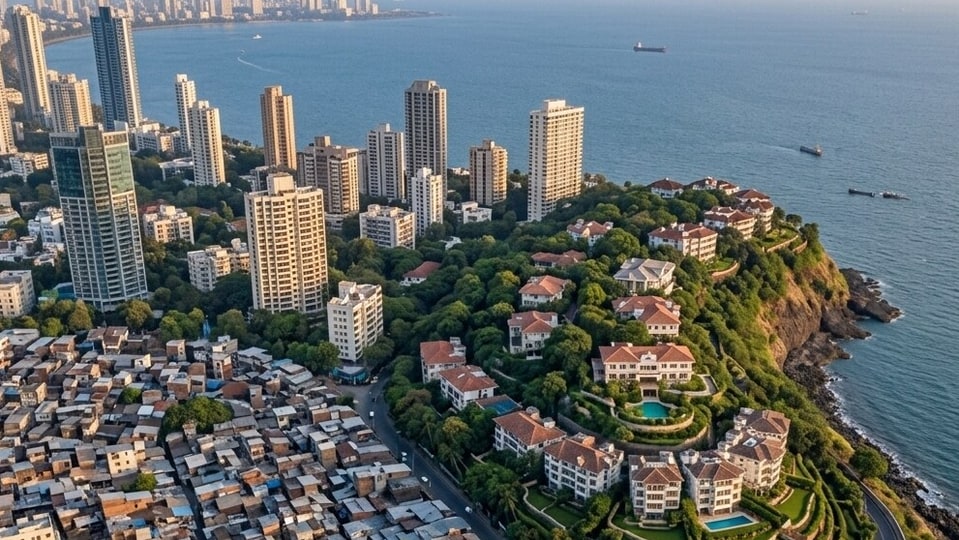
The survey, tabled in the state assembly last week, also noted that since the scheme’s inception up to December 2025, 2,83,955 slum-dwelling families in Mumbai have been rehabilitated into formal housing through these projects.
In Thane, all 51 projects have been completed, and the survey found that 7,815 families residing in slums were rehabilitated. Compared to this, as of August 2021, a total of 2,067 SRA projects had been completed, and 2,23,471 families had been rehabilitated from slums.
The data showed that more than 1,000 SRA projects have been undertaken in the last 10 years. As of December 2015, nearly 1,512 projects had been undertaken, and 1.62 lakh slum families had been rehabilitated.
What is the Slum Rehabilitation Authority?
The Slum Rehabilitation Authority (SRA) is a government body responsible for implementing slum redevelopment projects in Maharashtra. Established in 1995, it enables private developers to provide free housing to slum dwellers while allowing them to build and sell additional apartments on the same land to recover project costs. Instead of rehabilitating slum dwellers, developers obtain additional construction rights, enabling them to build more flats to sell in the open market.
Affordable housing in Maharashtra
Apart from SRA, several other bodies, including the Maharashtra Housing and Area Development Authority (MHADA) and the City Industrial Development Corporation (CIDCO), also construct affordable housing units in Maharashtra.
The MHADA is the nodal agency for providing affordable housing in the State. Since its establishment (1977) up to November 2025, MHADA has constructed 5.27 lakh dwelling units in Maharashtra, according to data shared by the Maharashtra government Economic Survey 2025-26.
On the other hand, CIDCO, which has been implementing a housing development programme in a planned manner in Maharashtra since 1970 up to December 2025, has constructed a total of 2.30 lakh units, according to the data.
PMAY status in Maharashtra
The Union government's flagship Pradhan Mantri Awas Yojana (PMAY) scheme is also being implemented in Maharashtra, aiming to build 19.40 lakh houses in 409 cities across the state through government bodies and public-private partnerships. Of these, up to December 2025, as many as 10.15 lakh dwelling units have been sanctioned, and 8.75 lakh dwelling units have been completed, according to the data.
Also Read: Economic Survey: More than 96 lakh homes delivered to beneficiaries under PMAY-U
Apart from this, the Central government has also launched Pradhan Mantri Awas Yojana-Urban (PMAY-U) 2.0, under which financial assistance will be provided to one crore urban poor and middle-class families across the country.
In Maharashtra, up to December 2025, a total of 3.21 lakh beneficiaries have been registered under PMAY 2.0, and the central government has disbursed ₹246.93 crore.