E-Paper



Mumbai Real Estate: Developers waive floor-rise premiums to attract buyers amid surging inventory
After experimenting with 'Buy Now, Pay Later' schemes, Mumbai real estate developers are eliminating floor-rise charges to close sales amid growing supply

 Prefer HTon Google


With housing sales moderating and unsold inventory piling up in the Mumbai real estate market, developers are increasingly adopting aggressive pricing strategies to lure fence-sitters.
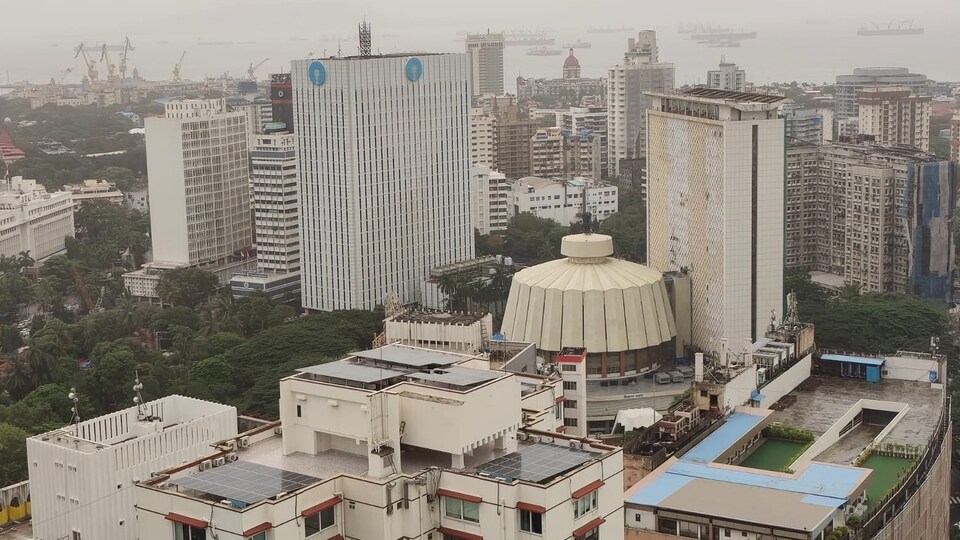
After experimenting with schemes such as ‘Buy Now, Pay Later’ and subvention plans, some developers are now scrapping the traditional floor-rise premium altogether and offering uniform pricing across all floors.
The fierce competition in Mumbai’s property market over the past three years has brought back the trend of ‘No Floor Rise,’ particularly in high-rise projects where supply is abundant.
Even Grade A developers, facing intense pressure, have begun eliminating floor-rise charges to stay competitive. As a result, Grade B developers, who previously leveraged floor-rise pricing to boost revenues, are now reversing course, adjusting their marketing strategies in response to the oversupply and expanded choices available to buyers.
In contrast, developers in Delhi-NCR continue to charge Preferential Location Charges (PLC) for upper-floor units. Buyers in the region often pay a premium for apartments on higher storeys, especially those offering views of landscaped greens or other desirable surroundings.
Also Read: Are Mumbai real estate prices moderating, giving homebuyers more room to negotiate?
What is floor rise?
Several real estate developers in Mumbai typically charge an additional ₹100 to ₹500 per sq ft for higher floors, citing advantages such as better views and greater exclusivity.
Developers say floor-rise premiums help offset the increased construction costs associated with building higher floors and are likely to remain a standard pricing component.
“Floor-rise charges are a premium that is here to stay, especially in a city like Mumbai. Not only do they help cover the higher construction costs of upper floors, but they also reinforce the status and exclusivity that many buyers associate with elevated living,” said Parthh K Mehta, CMD of Mumbai-based Paradigm Realty. “However, offering ‘No Floor Rise’ is an effective promotional tool, attractive for homebuyers,” he said.
"The reason this promotional tool has become the new trend of sorts is that it works, both for developers and homebuyers. We have experimented with the ‘No Floor Rise’ offer in two of our projects in Mumbai at Chembur and Borivali, and we saw a 25% boost in sales for the projects in a month, a noticeably higher impact compared to other recurring promotions," Mehta said.
What is the ‘Buy Now, Pay Later’ scheme?
Several Mumbai Metropolitan Region (MMR) developers, including Rustomjee Group, Hiranandani Group, Raymond Realty, Arkade Developers, and Kalpataru, had earlier offered potential homebuyers flexible payment plans, also known as ‘Buy Now, Pay Later.’
A flexible payment plan allowed potential homebuyers to pay in instalments. Homebuyers paid only 10% or 20% initially, and the rest on possession.
This payment plan gained popularity between 2015 and 2019 and was aimed at boosting homebuyer sentiment. However, a few developers in the Mumbai real estate market even permitted homebuyers to move into the apartment after depositing 20% of the cost. The remaining 80% had to be paid in equal instalments over the year from the date of getting possession.
Also Read: Mumbai real estate market: Planning to sell a flat in an old building? Here’s why it can be tough
Is increased competition fuelling the ‘No Floor Rise’ trend?
Developers say that intense competition in Mumbai’s real estate market over the past three years has led to a trend of the 'No Floor Rise' pricing strategy.
The real estate market in the Mumbai Metropolitan Region (MMR) is extremely dynamic and quite competitive. To stand out from the competition and incentivise prospective homebuyers, developers offer time-bound, strategic deals.
Anuj Goradia, director of Dosti Realty, said, “For our Thane project, we introduced a limited-period ‘No Floor Rise’ campaign, which significantly boosted sales while still enabling us to maintain overall pricing.”
Developers maintain that offers such as ‘No Floor Rise’ are being made despite strong demand in MMR.
"Although the demand for residential real estate in Mumbai is still quite strong, measures such as these can inject vibrancy into a sales cycle, and help certain projects and developers to gain more visibility," Goradia said.
Another marketing tactic?
According to real estate consultants, the oversupply of high-rise inventory in Mumbai and intense competition, even among Grade A developers, have prompted many to eliminate floor-rise premiums.
As a result, Grade B developers, who previously relied on floor-rise charges as a revenue enhancer, are now unable to sustain this pricing in a market flooded with options. In response, they are reversing their marketing strategies and adopting more buyer-friendly pricing models to stay competitive.
“Floor-rise premiums have become rare in Mumbai’s Metropolitan Region (MMR) over the past two years, with only a few top-grade developers still able to charge extra for higher floors, and successfully so. However, due to high inventory levels and intense competition, many developers struggle to maintain these premiums. As a result, mid-tier (Grade B) developers, who commanded floor-rise premiums around three years ago before COVID, have largely lost this advantage in today’s market,” said Ritesh Mehta, senior director and head (North and West), Residential Services and Developer Initiatives at JLL India.
Homebuyers will always pay for the view
While the elimination of floor-rise premiums is an emerging trend, developers agree that exceptional views continue to command a premium.
In Mumbai’s competitive market, apartments on higher floors with breathtaking vistas such as sea views, skyline panoramas, or unobstructed landscapes still attract higher prices compared to mid-level units.
“In a premium market like Bandra in Mumbai, our experience shows that homebuyers are willing to pay a significant premium for higher-floor apartments, especially when these units offer exceptional views such as sea-facing or panoramic sea views. The ability to command a floor-rise premium isn't uniform; it heavily depends on the quality of the view and the overall positioning of the project," said Sharan Babani, promoter of Satguru Builders, which has both sea-view and sea-facing projects in the Bandra area.
"In projects where the location and orientation deliver truly outstanding vistas, the value appreciation on higher floors can be substantial. This is something developers and investors must assess carefully on a case-by-case basis," Babani said.
Mumbai real estate market registration dips
Mumbai's real estate market saw property registrations fall by 4% in May 2025, with 11,565 properties registered compared to 12,000 in the same period last year, according to data from the Maharashtra Inspector General of Registration (IGR).
However, stamp duty collections increased by 3% in May 2025, totalling ₹1,062 crores, compared to the ₹1,034 crores collected in May 2024. In terms of month-on-month comparison, April 2025 saw 13,080 properties registered, with stamp duty collections amounting to ₹1,115 crore.
Residential property registrations continued to dominate in May 2025, accounting for 80% of all registrations in the Mumbai real estate market, according to Knight Frank India, a real estate consultancy firm.