
 E-Paper



Pune real estate faces ‘sticker shock’, housing sales decline despite lower interest rates
Pune housing sales have dropped by 8%, driven by a growing mismatch between rising prices and buyer expectations, leading to widespread ‘sticker shock’

 Prefer HTon Google


Despite a drop in interest rates that should have boosted affordability, Pune’s residential real estate market recorded an 8% decline in annual home sales. According to a report by Gera Developments, sales fell from 93,737 units in June 2024 to 86,666 units in June 2025, even as average prices rose moderately by 7.3%.
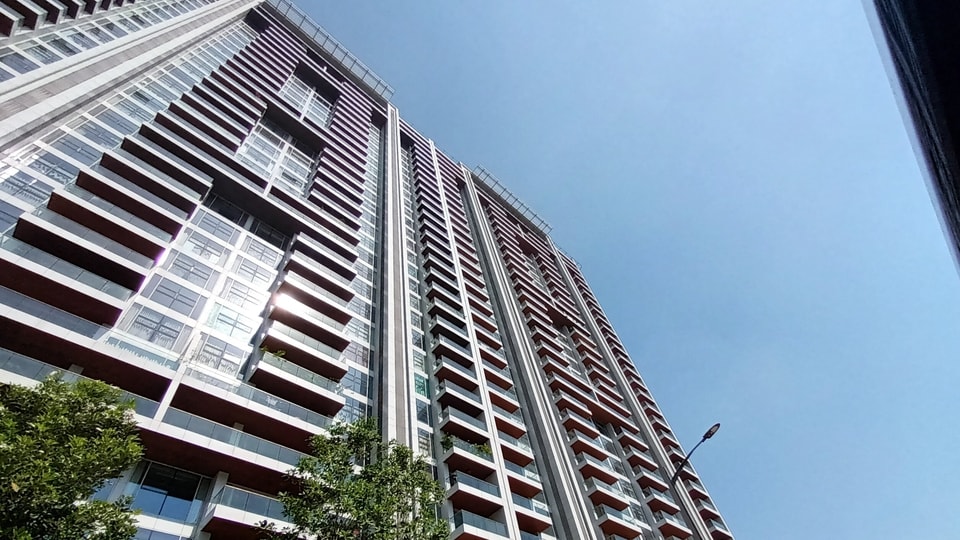
Rising prices in Pune have led to widespread ‘sticker shock,’ especially for smaller flats. “It’s like going to buy shampoo and seeing a ₹1,200 price tag, you just walk away,” said Rohit Gera, MD, Gera Developments
This sharp jump in listed prices has deterred many potential buyers, especially in the mass and upper-mid segments, effectively pricing them out. The result: slower purchase decisions, weakening sales volumes, and developers now being forced to recalibrate pricing and product strategies.
Affordability has clearly worsened over the past year, with the average homebuyer facing significantly higher entry barriers than before.
The report said that new launches fell by 10.3% over the past year, dropping from 99,166 units to 88,941.
The report said that homebuyers are experiencing a ‘sticker shock,’ with average ticket sizes surging 76% over five years, driven by a 40% rise in prices and a 25% increase in home sizes.
According to the report, housing demand shifted with sales of homes under 1,200 sq ft falling 17%, whereas those above that threshold gained 13%.
The report said that affordability weakened significantly, and unsold inventory overhang climbed to 10.78 months, its highest level since 2020, as total available stock reached 77,825 units. Structurally, the sector has seen a marked shift: large projects with over 500 units have increased by 70% since 2018, while small-scale developments continue to decline.
Also Read: Pune real estate: Property registrations dip by 3% to 11,930 units in May 2025
Sales are down despite interest rates coming down
"Despite the interest rates having come down (thereby increasing affordability), there has been a slowdown in the overall number of homes sold (8% fewer homes sold as compared to the previous 12 months). The slowdown in sales had led to a reduction in the number of apartments brought to the market by developers (10.3% fewer homes added as compared to the previous 12 months). The pace of price increases has also slowed down (7.31% increase in rates as compared to 8.92% in the previous 12 months),” Gera said.
“Our analysis of the various factors leading to the consolidation of the market has led us to conclude that the slowdown is a result of sticker shock. Before buying, home buyers typically have a budget and the number of bedrooms they wish to buy,” Gera said.
"The steep increase in sticker price has led to sticker shock and has caused people to slow down their purchase decisions. This sticker shock has effectively priced out many buyers from the mass and upper-mid segments, throttling sales volumes and forcing developers to recalibrate their strategies. Affordability has demonstrably worsened over the past year, with the average buyer now facing significantly higher entry barriers than before," he said.
According to Gera, the outcome of the sticker shock is that unsold inventory levels have risen, with inventory overhang increasing from under 10 months to nearly 11 months. Against this challenging local backdrop, broader economic fundamentals have strengthened significantly.
'Sticker shock' has not affected all homebuyers
According to the report, ‘sticker shock’ has not affected all homebuyers equally. The data reveals a stark divergence: while sales of compact homes ( below 1,200 sq ft) have plummeted by 17%, larger homes have gained favour with a 13% increase in sales. This counterintuitive pattern reflects a market where affordability constraints are pushing budget-conscious buyers out of the market entirely, while premium buyers are adapting by demanding more space for their investment.
Luxury real estate is out of the coma in the Pune real estate market post-COVID-19
According to Gera, the luxury real estate market was in a coma for eight years before the COVID-19 pandemic in Pune, and his company had an unsold inventory of ₹200 crore. However, COVID-19 came, and all inventory was sold in eight months. “Hence, we say sticker shock is for apartments below 1,200 sq ft. It is like going to buy a shampoo and seeing it costs ₹1,200, based on the price tag, and not buying it because of the sticker shock,” he said.


