E-Paper



RERA update: Can investors approach real estate regulator for stalled commercial projects?
Legal experts say that RERA's implementation guarantees that construction on new commercial projects can begin only after they receive the required clearances

 Prefer HTon Google


The Real Estate (Regulation and Development) Act, 2016 (RERA), is primarily designed to safeguard homebuyers' interests and promote transparency in the real estate sector. Although RERA is often associated with residential real estate projects, it also applies to commercial real estate projects under specific conditions, legal experts say.
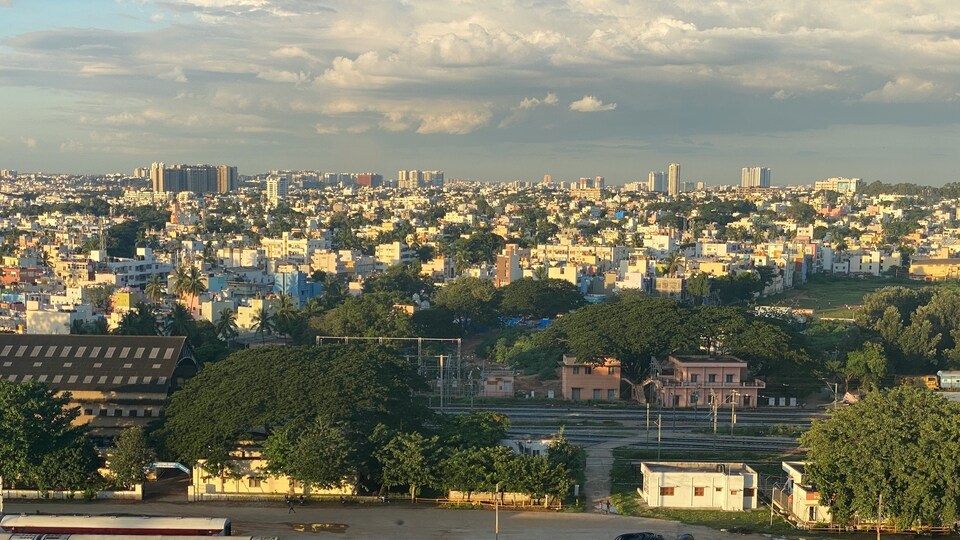
Recently, Karnataka RERA directed a developer to refund ₹57 lakh to a buyer after failing to complete and hand over a commercial project. Queries have been sent to the developer. The story will be updated once a response is received.
The unregistered project, PVR Pinnacle, developed by Vikram Structures and located in North Bengaluru's Hebbal, was originally scheduled for completion before 2022.
Also Read: Bengaluru real estate: Homebuyer approaches police after developer sells his flat to a new buyer
Referring to Section 18 of the RERA Act, KRERA emphasized that if a developer fails to complete a project or hand over possession within the agreed timeframe, they are liable to refund the amount along with interest and compensation.
Legal experts say that RERA's implementation guarantees that new commercial projects are only started after all required clearances have been received. Additionally, developers must keep sales revenues in an escrow account and utilize them only to build the property.
Can commercial projects be registered under RERA?
Reynold D’Souza, an advocate practicing at the Karnataka High Court, stated that RERA defines real estate as ‘property.’ Therefore, commercial projects can be registered under the RERA Act, provided the developer intends to sell the units rather than lease them.
However, there are certain key points to consider when registering a commercial project.
Commercial and residential projects covering an area of 500 square meters or more must be registered under RERA, while smaller projects do not require registration. Additionally, any project, whether residential or commercial, that involves eight or more units must be registered under RERA.
Legal experts emphasize that similar to residential projects, developers must register their commercial projects with RERA before advertising or selling them.
"However, if a developer plans to lease out the units, the company is not required to register the project under RERA, as leasing does not involve the transfer of ownership. However, if a portion of the total units is leased while the rest are sold, the developer must still register the project under RERA," explained advocate Akash Bantia.
Also Read: Bengaluru's property registrations dip 21% amid E-khata implementation woes
What do investors need to keep in mind while buying a commercial unit?
Legal experts emphasize the need for greater awareness among buyers when it comes to commercial transactions. "The buyers need to first check the registration of the under-construction project and also make sure the developer has obtained all the approvals required for the project," Dsouza said.
Buyers should also check whether there are any ongoing litigations related to the project land, as this is one of the most common causes of disputes. Additionally, they should verify that the carpet area matches the documents and confirm the Undivided Share (UDS) of land, Bantia added.
UDS refers to a portion of a property (common amenities, staircases, etc) that is collectively owned by multiple owners or homebuyers.
Can investors approach the real estate regulator for disputes?
"Buyers can approach the RERA Authority, as the Act covers all segments of real estate that involve the transfer of ownership. However, we must allow space for the higher judiciary and state governments to provide further clarity on this matter. More interpretations will emerge as cases continue to arise," said D’Souza.
Legal experts noted that commercial property disputes often involve contractual obligations, which can lead to civil litigation, proceedings before the National Company Law Tribunal (NCLT), or private arbitration. However, while civil cases typically take over 10 years to resolve, RERA orders are generally issued much faster.
"That being said, it is important to understand that when property owners lease out commercial spaces, any delays or disputes arising from such leases do not fall under RERA’s purview, as no transfer of ownership occurs," explained advocate Akash Bantia.
Bantia also highlighted loopholes in the Act, where some developers avoid registering their under-construction commercial projects by claiming they intend to lease rather than sell. "We have handled several cases where reputed developers failed to register their commercial properties, citing personal use, only to later sell them upon completion—when the project no longer falls under the scope of the RERA Act," he added.