
 E-Paper



A new device lets severely paralysed patients communicate more effectively
Eventually they might be able to control robots or exoskeletons


 Prefer HTon Google


Brain-computer interfaces have come a long way quickly. The first successful decoding of vowel sounds from a neural implant was reported in 2009. In 2021, a team from Edward Chang’s lab at the University of California, San Francisco decoded the words and sentences of a patient who could not speak.
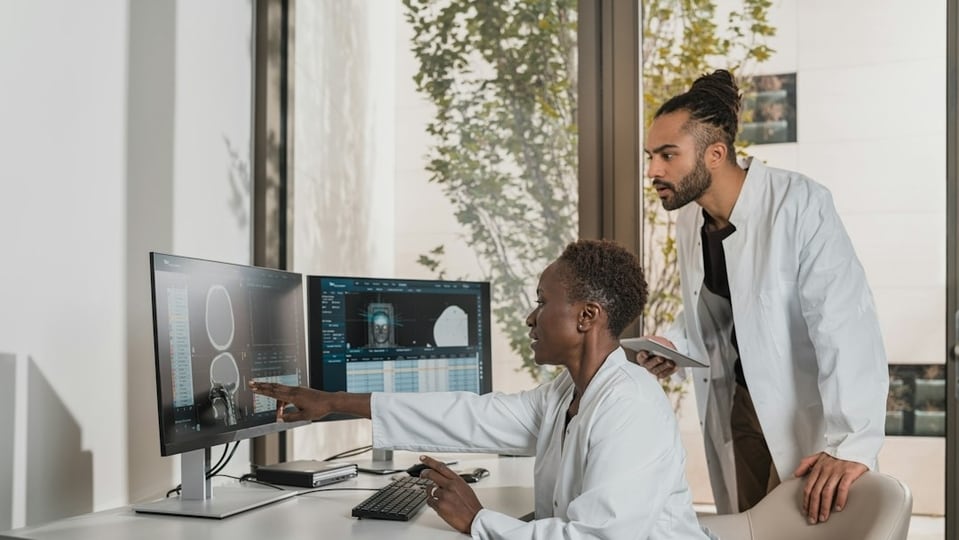
A new paper by Dr Chang’s group, published in Nature Neuroscience, describes the passing of another milestone. He and his colleagues have enabled two severely paralysed people to communicate with them, by means of an avatar, using both words and gestures. That is an auspicious result for the several million individuals around the world paralysed by strokes, traumatic injuries and degenerative illnesses such as motor-neuron disease.
The group did this by implanting, through a small incision in the skull of each patient, an array of sensors that covered a large part of the motor cortex—the brain region responsible for controlling bodily motion. This operation took over two hours, in part because the process for connecting the sensor array to a data-carrying cable is fiddly. But the team are working on a short-cut using a wireless device that would reduce the duration to 40 minutes.
The implants themselves allowed Dr Chang and his team to collect signals as the patients attempted to say particular words and make particular gestures. They then used those data to train two machine-learning models for each patient—one to decode the words and the other the gestures—allowing them to reconstruct both actions concurrently with approximately two-thirds accuracy. It is the first occasion that such simultaneous decoding has been achieved, allowing patients to communicate more expressively.
There is further to go. These two initial individuals were restricted to a vocabulary of about ten words and phrases, such as “hello” and “nice to meet you”, and a similar number of gestures, such as a clap or a shrug. But Dr Chang and his collaborators are working on scaling the technology up to handle over 100 actions. Moreover, not only will the sensor array improve the ability to communicate; he also hopes its wide reach across the motor cortex means that it may be possible to monitor actions intended for the whole body. That might permit paralysed individuals to operate devices such as robots and exoskeletons, which really would be life-changing.


